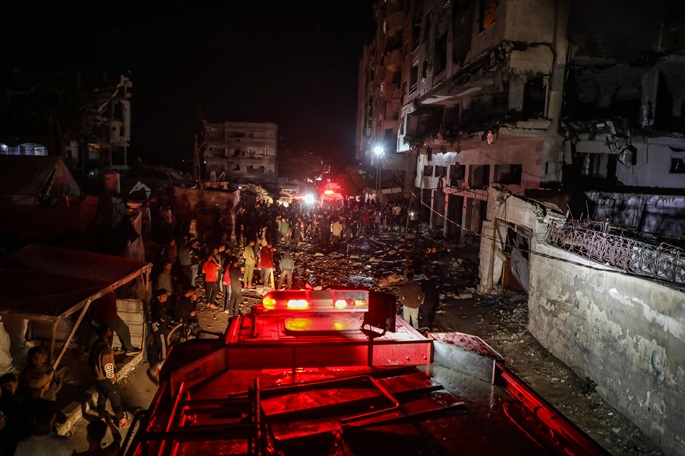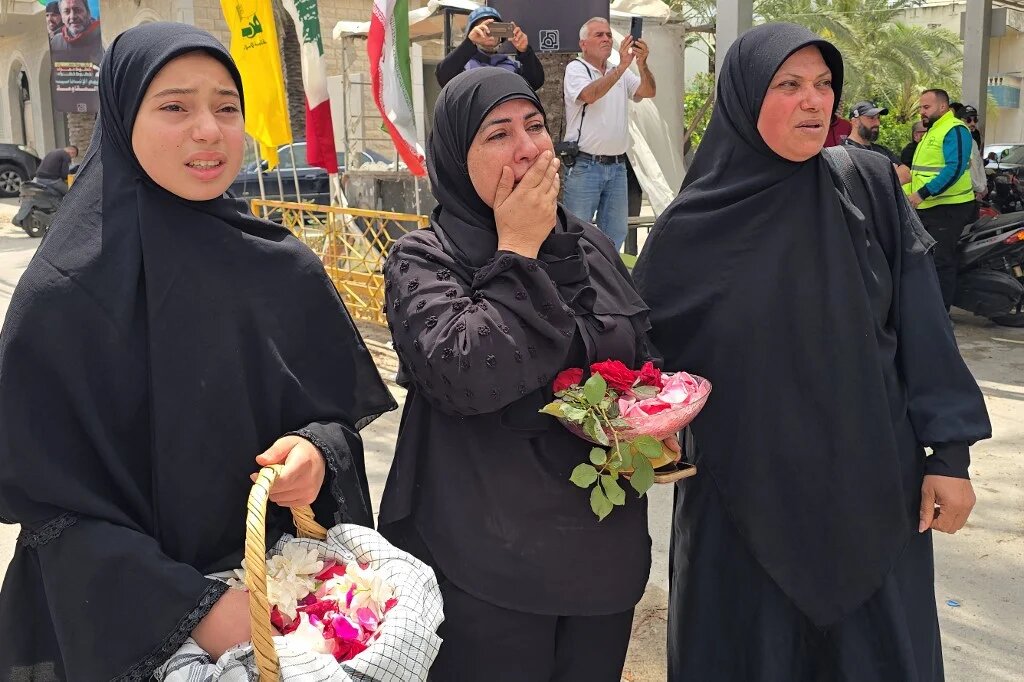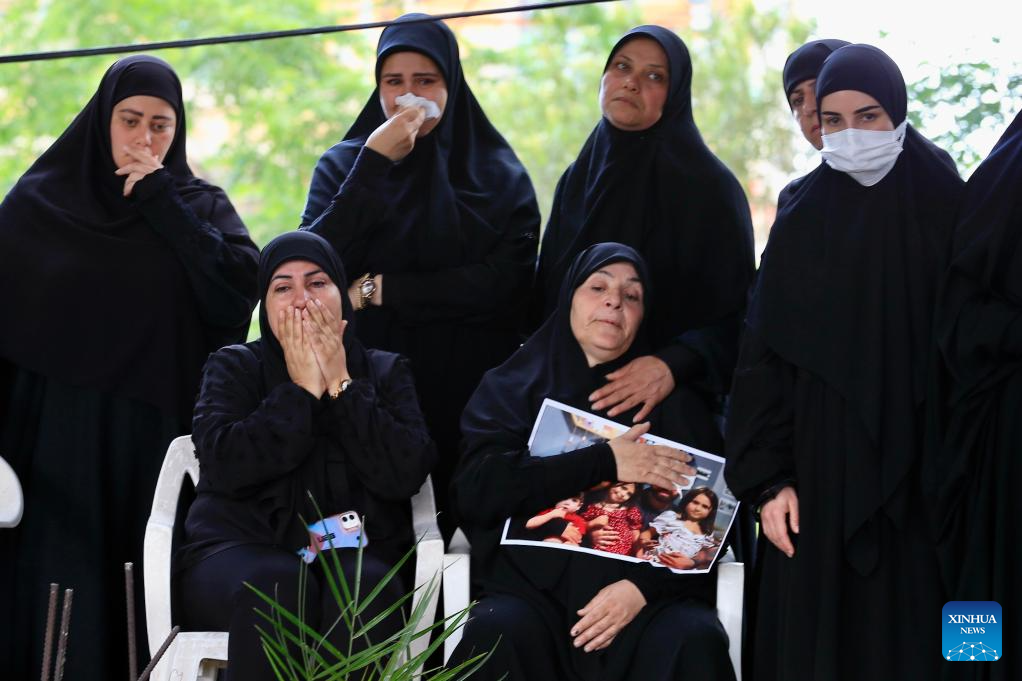
Lebanese mother-of-two Hala Farah is collecting photos and videos to preserve the memory of her hometown, Yarun, which she states has been completely destroyed by Israeli forces, as Israel carries out massive airstrikes and a ground invasion in southern Lebanon in response to Hezbollah's attacks. Farah claims Israel is attempting to remove essential elements of life, describing it as "urbicide." She stated, "All that's left are memories and some pictures that we and the neighbors are trying to collect... So that we can tell our children what Yarun was like." Farah added, "I had hoped my daughters would grow up in the family home." She believes, "What happened during the truce confirms that Israel's goal is the urbicide of the south, including Yarun."
Imad Bazzi, another resident, stated that Bint Jbeil has experienced "total annihilation," affecting residential buildings, water and electricity infrastructure, the hospital, schools, and gas stations. Bazzi characterized the events as "a blatant change of geography" and "systematic destruction." The widespread destruction in dozens of Lebanese towns and villages since the start of the Israel-Hezbollah war on March 2 has been documented through testimony from residents and officials, as well as satellite images and photographs taken by AFP journalists. Farah expressed hope for an end to hostilities, saying, "We hope this will be the last war, because our villages in the south... Are currently on life support." She further wished for Israeli withdrawal, stating, "We hope the Israelis will withdraw from every inch of our land and let us... Create new memories for our children, erasing the echoes of the strikes that still ring in their ears."
Escalating Destruction Post-Ceasefire
Since a ceasefire commenced on April 17, destruction, demolitions, and bulldozing in southern areas of Lebanon have intensified, impacting homes, infrastructure, schools, places of worship, and farmland. This escalation followed a period where Israel carried out massive airstrikes and launched a ground invasion in the south in response to Hezbollah’s attacks. Chadi Abdallah, speaking on the situation, stated that "Most buildings in Bint Jbeil are destroyed." He further indicated that the majority of these demolitions have occurred since the truce began.
Abdallah elaborated on the nature of the operations, asserting, "The Israelis are not conducting military or clearing operations; they are entering to destroy the land, the people, and the infrastructure." He added that "They are trying to erase the memory of the people in this region and to erase its history." This destruction has been widespread, with approximately 12,000 housing units reported to have been completely or partially destroyed since the truce took effect. The agriculture ministry has estimated that Israeli attacks have damaged more than 560 square kilometers of farmland, further noting the extensive impact on the region's resources and economy.
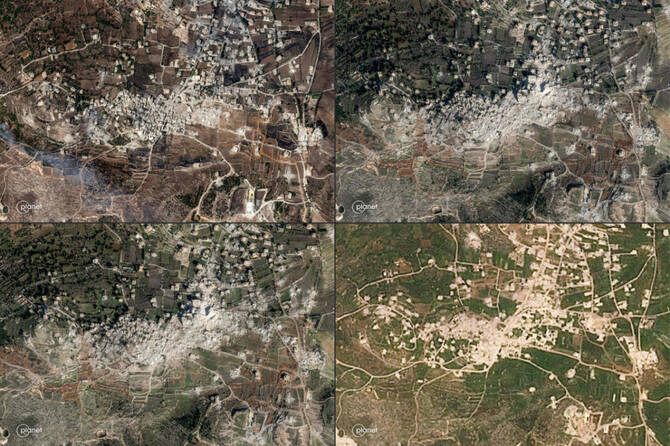
The town of Yarun, for instance, had been largely destroyed by early 2025 following an earlier Israel-Hezbollah conflict, leaving its Saint George church with only three walls standing. Hala Farah stated that everything in her hometown Yarun, less than a kilometer from the Israeli border, has been destroyed. Farah’s house in Yarun has also been reduced to rubble. She further detailed that Israel’s demolitions in Yarun have included the church hall, a convent, and the Saint George school. However, satellite images from early April showed no significant damage in Bint Jbeil, located approximately six kilometers north of Yarun, indicating a more recent escalation of destruction in that area. A month later, Bint Jbeil appeared to have been razed almost entirely, including the stadium where Hezbollah chief Hassan Nasrallah delivered his 'liberation' speech in 2000.
Human Toll and Personal Accounts
Hala Farah, a Lebanese mother of two, stated that everything in her hometown of Yarun, located less than a kilometer from the Israeli border, has been destroyed. Farah’s house in Yarun has also been reduced to rubble. She described the impact on her family, saying, "All that’s left are memories and some pictures that we and the neighbors are trying to collect... So that we can tell our children what Yarun was like." Farah added, "I had hoped my daughters would grow up in the family home." She further asserted that Israel’s demolitions in Yarun have included the church hall, a convent, and the Saint George school.
Farah claimed that "Israel is trying to remove all the essential elements of life necessary for return," and that "What happened during the truce confirms that Israel’s goal is the urbicide of the south, including Yarun." Her statements reflect a broader sentiment among those affected by the ongoing destruction. Approximately one month after the initial reports of destruction in Yarun, the town of Bint Jbeil, located six kilometers north, also appeared to have been nearly entirely razed. This destruction included the stadium where Hezbollah chief Hassan Nasrallah delivered his 'liberation' speech in 2000. Imad Bazzi further elaborated on the devastation in Bint Jbeil, stating there is a total annihilation of the town, encompassing residential buildings, water and electricity institutions, the hospital, schools, and gas stations.
The extent of the devastation has led displaced families to pool resources, sharing the cost of purchasing satellite images at $140 to view the current condition of their hometowns. This practice notes the desperate measures residents are taking to grasp the scale of the changes to their communities. The impact of the conflict has also reached further north; for instance, the three-story home of an anti-Hezbollah activist’s grandfather in Nabatieh was wrecked in an Israeli strike. The intensification of destruction, demolitions, and bulldozing in southern areas since the April 17 ceasefire has affected homes, infrastructure, schools, places of worship, and farmland, creating a dire situation for residents. The agriculture ministry has estimated that Israeli attacks have damaged more than 560 square kilometers of farmland, adding to the extensive damage to infrastructure and residential areas across the region.
Farah expressed a desire for an end to the hostilities, stating, "We hope this will be the last war, because our villages in the south... Are currently on life support." She articulated a hope for a peaceful future for her children, adding, "We hope the Israelis will withdraw from every inch of our land and let us... Create new memories for our children, erasing the echoes of the strikes that still ring in their ears."
Historical Context and Accusations
Testimony from residents and officials, alongside satellite imagery and photographs taken by AFP journalists, indicates widespread destruction in dozens of Lebanese towns and villages since the Israel-Hezbollah war began on March 2. Environment Minister Tamara Zein accused Israel of committing an "urbicide" in the southern areas. Israel maintains that its actions are aimed at protecting its communities from Hezbollah attacks. This justification is often cited in response to the massive airstrikes and ground invasion carried out in southern Lebanon following Hezbollah's attacks.
According to the Lebanese National Council for Scientific Research (CNRS), Israeli attacks since 2023 have resulted in the destruction of more than 290,000 housing units. Of these, 61,000 housing units have been destroyed since the start of the latest conflict. Lebanese officials report that Israeli attacks have killed more than 3,000 people since Hezbollah's involvement drew Lebanon into the broader Middle East war. The agriculture ministry has estimated that Israeli attacks have damaged more than 560 square kilometers of farmland, adding to the extensive damage to infrastructure and residential areas.
Israel occupied south Lebanon until the year 2000. Recent estimates from the agriculture ministry indicate that Israeli attacks have damaged more than 560 square kilometers of farmland. In a separate development, Lebanon and Israel commenced their first direct talks in decades last month in Washington, offering a potential diplomatic avenue amidst the ongoing conflict and destruction. These talks represent a significant attempt at dialogue between the two nations, which have historically lacked direct engagement on such a scale. The discussions in Washington took place against a backdrop of intensified cross-border hostilities and widespread damage in southern Lebanon, showing the urgency of finding diplomatic solutions.