Lebanese President Joseph Aoun stated in a two-part interview aired on Friday and Monday that Iran's interference is destroying Lebanon, with its people paying the price for actions that serve Iran's interests. The interview, which provided a full look into the President's views on regional stability and national sovereignty, noted the profound impact of external forces on Lebanese society. Aoun remarked, "other countries are trying to help us, but you are not trying to help us. You are destroying the country for the sake of your own interests." He specifically stated that the people of Lebanon are paying the price for Iran's actions, with their homes being destroyed to serve Iran's interests, illustrating the tangible and devastating consequences faced by ordinary citizens.
President Aoun urged diplomacy as the best way to resolve the ongoing conflict, asking, "Do you want to live in perpetual war?" This rhetorical question showed his belief that military solutions are not sustainable paths to peace. Aoun added that both Lebanon and Israel are "fed up with wars" and emphasized, "We are ready to sit and talk. … It’s time for the power of reason to prevail over the reason of power." His call for dialogue represents a significant push for a new approach to the long-standing tensions in the region, advocating for rational engagement over continued confrontation.
Iran's Destructive Influence
Lebanese President Joseph Aoun stated that Iran must honor Lebanon's sovereignty. He emphasized the importance of Lebanon's ability to govern itself without external influence, a point he has frequently made regarding the country's internal affairs. This assertion reflects a deep concern over the erosion of national autonomy due to foreign intervention. Aoun's remarks suggest a clear desire for Lebanon to chart its own course, free from the dictates of other nations, particularly those he identifies as detrimental to the country's stability and well-being. He reiterated that the ongoing interference from Iran is not only undermining Lebanese institutions but also directly contributing to the suffering of its populace, whose homes and livelihoods are being sacrificed for external agendas.
Aoun also mentioned that U.S. President Donald Trump is committed to Lebanon’s stability. The Lebanese President added that they are counting on Trump to help bring an end to the ongoing conflict in the region, suggesting a reliance on international mediation to resolve persistent tensions. This reliance on a major global power notes the perceived limitations of internal mechanisms to address the complex geopolitical challenges facing Lebanon. Aoun views the United States, under President Trump's leadership, as a key partner in de-escalating regional conflicts and fostering an environment conducive to peace. This perspective shows the intricate web of international relations that Lebanon navigates in its quest for stability and self-determination.
Call for Diplomatic Resolution
Lebanese President Joseph Aoun urged Jerusalem to pursue diplomacy, stating that Israeli military action would not bring lasting security. He articulated that a strategy relying on military force would ultimately prove ineffective in resolving regional tensions, leading only to further cycles of violence and instability. Aoun emphasized that both Lebanon and Israel are "fed up with wars," advocating for a decisive shift towards negotiation and peaceful resolution. He firmly believes that diplomacy is the best way to resolve the conflict, offering a sustainable alternative to perpetual hostilities.
"We are ready to sit and talk," Aoun said, showing Lebanon's willingness to engage in direct discussions with Israel. He added, "It’s time for the power of reason to prevail over the reason of power," suggesting that rational dialogue should replace confrontational tactics that have historically dominated the relationship between the two nations. The Lebanese President asserted that the approach currently followed by Prime Minister Netanyahu and Hezbollah is short-sighted and ultimately counter-productive for long-term stability in the region. He maintained that continuing with current strategies would only perpetuate conflict without achieving sustainable peace, warning that such an approach ignores the deeper need for reconciliation and mutual understanding. Aoun's critique of the current strategies employed by both sides notes his conviction that a fresh, diplomatic perspective is urgently needed to break the cycle of violence.
Broader Context and Opportunity
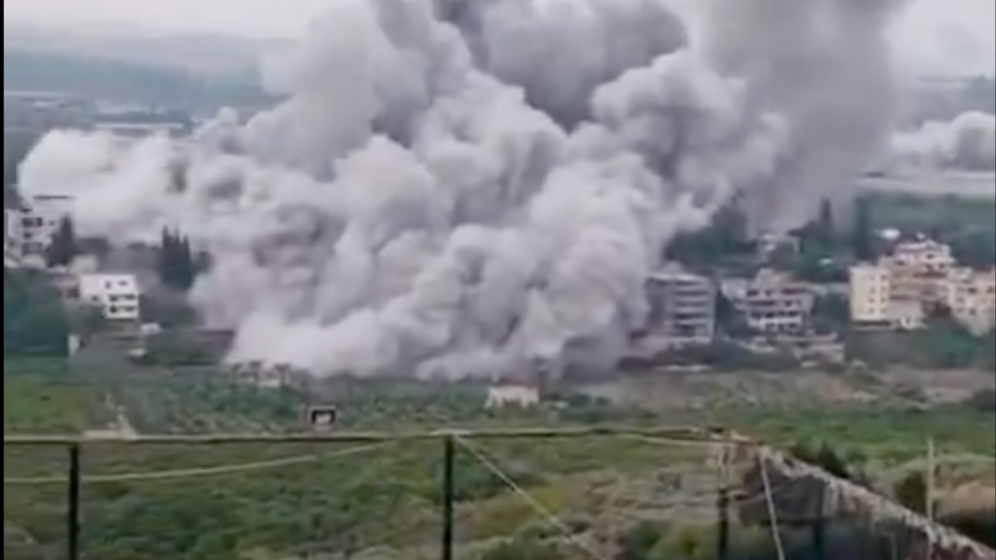
Lebanese President Joseph Aoun stated, "We have a great opportunity to end the state of hostility between Lebanon and Israel," addressing the broader context of regional tensions. This declaration signals a belief that despite the current challenges, there remains a viable path toward a peaceful coexistence. The article notes that the Iranian terror proxy Hezbollah's unprovoked cross-border attacks prompted the Israel Defense Forces to commit ground troops inside Lebanese territory, escalating the conflict. This situation, characterized by direct military engagement, has intensified calls for diplomatic solutions and noted the potential for a critical shift away from entrenched hostilities.
Aoun's remarks suggest a key window for de-escalation and negotiation, despite the ongoing military engagements. The presence of Israeli ground forces in Lebanon, following actions by Hezbollah, shows the immediate and pressing need for dialogue to prevent further destabilization in the region. He believes that this moment, fraught with tension, also presents a unique opportunity for both nations to reconsider their strategies and embrace diplomatic channels. The President's vision is one where reason guides policy, leading to an enduring peace that benefits all parties involved and allows the region to move past decades of conflict.