The Israeli army has pushed north of Lebanon’s Litani River, marking a significant incursion into Lebanese territory. This military action represents a notable escalation, extending beyond previously observed operational boundaries. The advance occurred despite the presence of the Lebanese Army in the region, which is tasked with maintaining sovereignty and security. This development strains local forces and raises considerable concerns about stability in the area, potentially altering the delicate security balance. The incursion poses new challenges for the Lebanese military, which operates under complex regional dynamics. The event was published on May 30, 2026.
Israeli Advance Details
Israeli troops are reportedly poised to encircle the major city of Nabatieh, located north of Lebanon's Litani River. This strategic maneuver indicates a deepening Israeli presence within Lebanese territory, moving into areas not typically associated with Israeli military operations. The advance positions Israeli forces to potentially cut off key access routes to the city, which is a significant urban center in southern Lebanon and a vital hub for the surrounding communities. The development follows an incursion that has seen Israeli military units move beyond the established boundary marker of the Litani River, a geographical feature that has long served as a de facto line of separation. Such a strategic positioning near Nabatieh could further complicate the operational environment for the Lebanese Army, which is tasked with maintaining security in the region and protecting its civilian population. The proximity of Israeli forces to Nabatieh marks a notable expansion of their operational scope, signaling a more assertive posture in the area. This push north of the Litani River represents a significant shift in the ground situation, demanding a strong response from Lebanese defense forces.
Army Stretched Thin
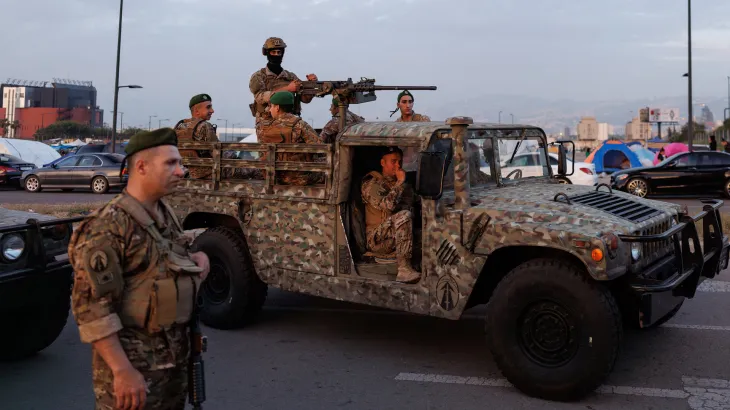
The Lebanese Army is confronting a complex operational environment as Israeli forces extend their presence north of the Litani River. The situation has placed considerable strain on Lebanon's military capabilities, which are already distributed across various sectors to maintain internal security and border control, including addressing other regional threats. With Israeli troops reportedly maneuvering to encircle Nabatieh, the Lebanese Army faces the immediate challenge of responding to an incursion while simultaneously managing its existing responsibilities across the nation. The strategic positioning of Israeli units near a major urban center like Nabatieh could necessitate a significant reallocation of Lebanese Army resources, potentially stretching its personnel and equipment thin across the southern front and other critical areas. This development compounds the existing pressures on Lebanon's defense apparatus, requiring careful strategic consideration and potentially impacting its ability to respond to multiple contingencies. The need to protect civilian populations and infrastructure in Nabatieh adds another layer of complexity to the army's operational planning.
Geopolitical Context
The Israeli incursion north of Lebanon's Litani River marks a significant development in the region, with potential long-term implications for stability. Israel's military advance towards Nabatieh, a major urban center, places further strain on the Lebanese Army, which is already managing a multitude of internal and external security challenges. The presence of Israeli forces operating beyond the Litani River, which has historically served as a critical demarcation line and a buffer zone, fundamentally complicates the existing security landscape. This action alters the operational environment for both nations, particularly as Israeli troops reportedly maneuver to encircle Nabatieh, raising the specter of prolonged military engagement. The situation shows the delicate balance of power and the potential for escalation in southern Lebanon, an area historically prone to conflict. The Lebanese Army's capacity to manage its various security responsibilities is being severely tested by this extended Israeli presence, which demands a strategic and measured response to safeguard national interests and civilian lives. The international community is likely to monitor these developments closely, given the potential for wider regional destabilization.