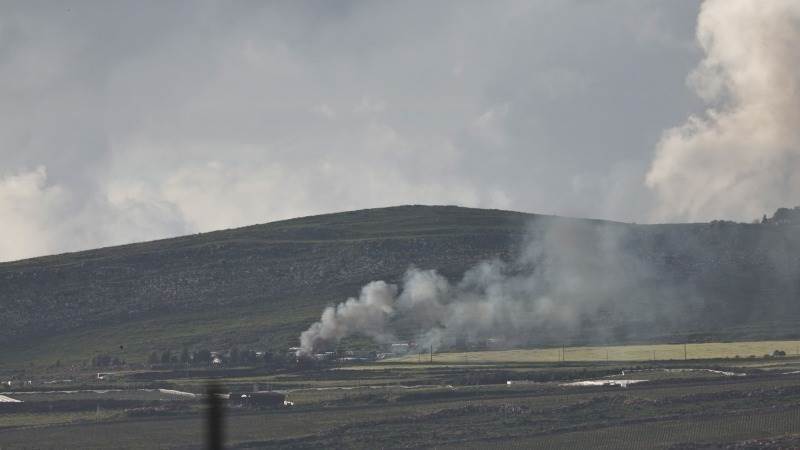
Israelis were informed by foreign officials on Friday that a ceasefire between Israel and Hezbollah had come into effect. This announcement signaled a potential halt to hostilities between the two parties, a development that drew immediate attention given the escalating tensions in the region. However, minutes after the ceasefire was declared, reports emerged of strikes occurring in several areas of southern Lebanon, casting immediate doubt on the efficacy and adherence to the newly announced truce. These initial reports noted the fragile nature of such agreements and the complexities involved in de-escalating military engagements between the involved factions. The swift succession of announcement and alleged violation showed the challenges faced by international mediators and the parties themselves in implementing and maintaining a cessation of hostilities.
Foreign Announcements Dominate Truce
The recent ceasefire announcement marked the fifth instance where a foreign party, rather than an official Israeli source, declared a cessation of hostilities. This pattern has drawn considerable attention to the diplomatic channels and communications surrounding the conflict, raising questions about the primary conduits of information regarding de-escalation efforts. The repeated reliance on external entities to convey such critical information suggests a particular dynamic in the ongoing conflict, where international actors play a central role not only in mediation but also in public dissemination of agreements. This trend contrasts with traditional state-to-state conflict resolution, where direct communication between belligerents often precedes public announcements. The involvement of foreign officials in announcing the truce implies a broader international effort to manage and contain the conflict, reflecting the significant geopolitical implications of continued hostilities in the Levant.
Despite the declared truce, Israeli military actions continued in some areas. Israel notably refrained from conducting strikes in Beirut, the capital city of Lebanon, a strategic decision that may have been intended to avoid further widespread civilian casualties and international condemnation, or to signal a limited scope of operations. However, Prime Minister Benjamin Netanyahu posted footage on X that depicted a strike in southern Lebanon. In his post, Netanyahu stated, "As I instructed, the IDF powerfully struck 150 Hezbollah targets in Lebanon and eliminated dozens of terrorists." The Prime Minister's public statement and the visual evidence provided through social media offered a direct account from the Israeli leadership regarding their operations, seemingly contradicting the notion of a complete ceasefire. These actions occurred even as international bodies reported a ceasefire was in effect, creating a dissonant narrative between diplomatic declarations and on-the-ground military realities. The discrepancy between the foreign-announced ceasefire and the visible Israeli military activity shows the multifaceted nature of the conflict and the differing interpretations of truce agreements by the parties involved.
Escalation and Failed Ceasefires
The regional situation remained volatile, with significant incidents preceding and immediately following the ceasefire declaration. Four soldiers were killed overnight in an incident in southern Lebanon, marking a significant escalation and a stark reminder of the human cost of the ongoing conflict. This loss of life heightened tensions and fueled calls for retaliation, further complicating efforts to secure a lasting peace. Following this tragic event, drone infiltration alerts subsequently sounded in the Western Galilee, indicating potential cross-border incursions and adding to the regional anxieties and security concerns among Israeli communities. The repeated sounding of these alerts noted the persistent threat of aerial attacks and the constant state of vigilance required by defense forces.
The ceasefires in Lebanon have repeatedly failed to hold, according to observations of ongoing hostilities, creating a cycle of temporary calm followed by renewed violence. This pattern of breakdown has led to skepticism regarding the durability of any new agreement. Following the incident where four soldiers were killed, Israel escalated its operations and conducted strikes in the Bekaa Valley, demonstrating a strong response to perceived threats and a determination to degrade Hezbollah's capabilities. These strikes, reaching deeper into Lebanese territory, signaled a significant expansion of the operational scope. Currently, the Israel Defense Forces (IDF) are deployed with two divisions as far as the Litani River, and even north of it, indicating a substantial military presence in the area. This deployment signifies a significant commitment of resources and personnel, underlining the strategic importance of the region to Israeli security. The positioning of such a large force beyond the Litani River, which has historically been a de-facto demarcation line, suggests a more assertive and forward-leaning posture by the IDF in southern Lebanon. This extensive military presence serves as both a deterrent and a readiness for further engagement, reflecting the high stakes involved in maintaining security along the northern border.
US-Iran Talks Affected
The diplomatic landscape surrounding the conflict is equally complex, with international actors working to de-escalate tensions. The Americans, with Qatari mediation, secured a renewed ceasefire on Friday from the Iranians and, through them, Hezbollah. This diplomatic effort unfolded amidst ongoing regional tensions, showcasing the critical role of third-party mediation in bridging divides between adversaries who may not engage directly. The involvement of Qatar as a mediator notes its growing influence in regional diplomacy. U.S. President Donald Trump later commented on the situation, stating in a post, "We didn’t meet out of desperation, Iran did. They are FINISHED! We’ll play out the 60 days. They get no money, not ten cents!" This strong statement from President Trump showed the U.S. Administration's firm stance towards Iran and its perception of Iran's position in the negotiations. His remarks suggested a belief that Iran was under significant pressure, leading them to seek a ceasefire.
A White House official informed the Associated Press that Iranian officials had shown reluctance to initiate talks with U.S. Vice President JD Vance in Switzerland. This hesitation was attributed to Israel’s military activity in Lebanon, indicating how regional military actions directly impact broader diplomatic efforts. The ongoing Israeli operations in Lebanon seemingly complicated the environment for high-level discussions, as Iran likely viewed these actions as undermining any potential for de-escalation. Iran's Foreign Ministry subsequently announced on Friday that a memorandum of understanding with the United States regarding an end to the war had been digitally signed. This development, according to the ministry, rendered the planned meeting in Switzerland less urgent, suggesting that a significant diplomatic hurdle had been overcome through alternative means. The digital signing indicated a modern approach to international diplomacy, allowing for agreements to be formalized without the need for immediate in-person meetings. The sequence of events shows the intricate links between regional military actions and high-level diplomatic engagements involving multiple international actors, demonstrating how events on the ground can rapidly shift the dynamics of global negotiations. The complex interplay between military operations, diplomatic initiatives, and public statements from key international figures continues to shape the trajectory of this volatile regional conflict.