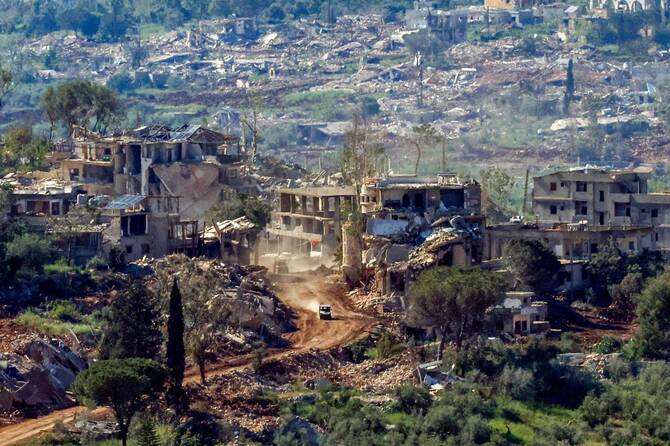
Israeli airstrikes killed at least 12 people in Lebanon on Thursday, according to Lebanon’s health ministry, as cross-border hostilities continued despite a recent ceasefire. The ministry confirmed that the Israeli airstrikes were carried out on Thursday. This action occurred in spite of a ceasefire being in effect between the parties, raising concerns about the stability of the fragile truce. One paramedic was among those killed in the strikes. An additional strike in the Marajayoun district killed one paramedic from a Hezbollah-affiliated rescue service and wounded another, the ministry reported, noting the direct impact on emergency responders.
Deadly Strikes Detail
Two of the people killed in Israeli airstrikes were children, according to Lebanon’s health ministry. The ministry further reported that 11 individuals, including two children, were killed in strikes that targeted three different villages within the Nabatieh district. These casualties contribute to the overall death toll reported by the Lebanese authorities, bringing the total fatalities to at least 12. The tragic loss of civilian lives, particularly children, has drawn significant attention to the ongoing conflict. The targeting of multiple villages in Nabatieh shows the widespread nature of the strikes and their devastating consequences for local communities.
Context of Violence
The Israeli airstrikes that resulted in 12 fatalities in Lebanon were carried out on Thursday. These strikes occurred despite a ceasefire being in effect between the parties, which was intended to de-escalate tensions and prevent further bloodshed. The Lebanese health ministry reported that two children were among the 12 people killed, with 11 of those casualties, including the two children, resulting from strikes on three villages in the Nabatieh district. This specific report detailed the impact on civilian areas. One paramedic was also killed in a separate strike in the Marajayoun district, according to the ministry, which attributed the paramedic to a Hezbollah-affiliated rescue service. The ministry also noted that another individual was wounded in this strike. The recurrence of violence despite a declared ceasefire indicates the persistent challenges in maintaining peace along the border. The incident in Marajayoun, involving a Hezbollah-affiliated rescue service, further illustrates the complex and multi-faceted nature of the conflict, drawing in various groups and personnel.
Broader Regional Tensions
Cross-border hostilities between Israel and Lebanon have intensified, particularly in recent months, with frequent exchanges of fire impacting communities on both sides of the border. The Israeli military has regularly conducted airstrikes and artillery bombardments targeting areas within Lebanon, while Hezbollah has launched rockets and drones into northern Israel, including the Upper Galilee region. These ongoing clashes occur against a backdrop of broader regional instability. The recent Israeli airstrikes, which resulted in at least 12 fatalities in Lebanon, including two children and a paramedic, in the Nabatieh and Marajayoun districts, show the persistent tensions. The Lebanese health ministry attributed the paramedic to a Hezbollah-affiliated rescue service, further illustrating the involvement of the group in the conflict. The consistent reports of casualties and property damage on both sides highlight the severe humanitarian and security implications of these exchanges. The international community continues to monitor the situation closely, urging all parties to exercise restraint and adhere to established ceasefires to prevent a wider escalation of the conflict. The continued violence, despite diplomatic efforts, reflects the deep-rooted nature of the animosity in the region.