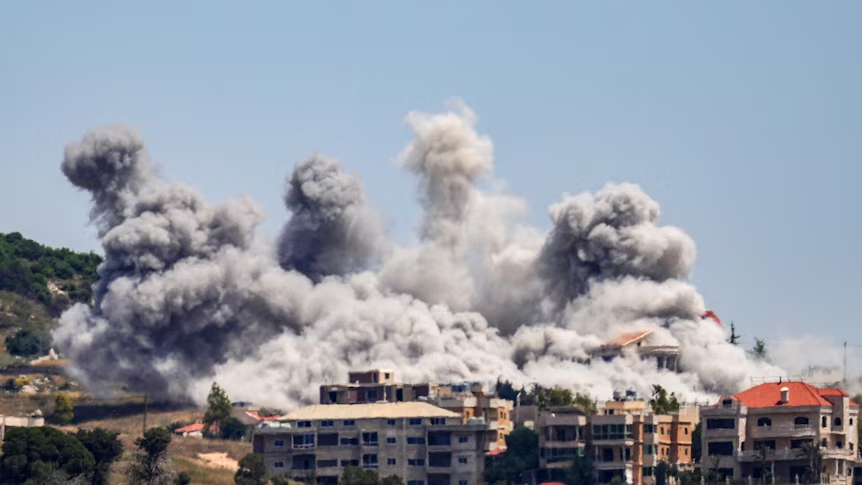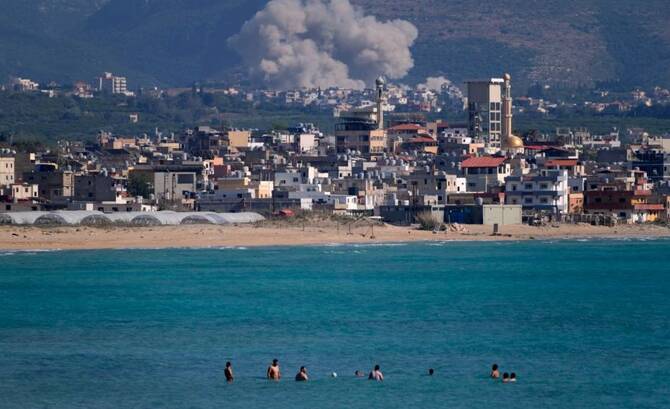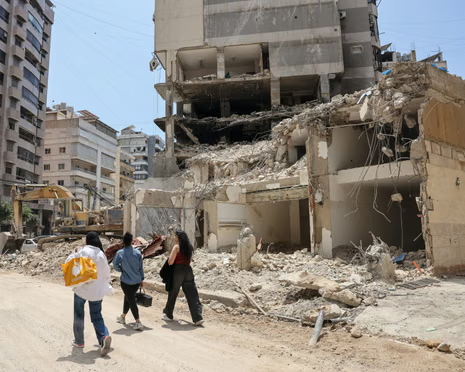
Israel and Lebanon agreed to implement a US-backed ceasefire aimed at ending hostilities, though Israeli forces indicated they would continue operations in southern Lebanon. The Israel Defense Forces (IDF) stated they would not withdraw from southern Lebanon, including the strategic Beaufort Castle. Instead, the IDF affirmed its intention to continue fire and ground operations, maintain its presence in the security zone up to the yellow line, and dismantle what it described as terrorist infrastructure. This declaration comes as several people were reported wounded in recent Israeli strikes in the southern Tyre and Nabatieh areas of Lebanon.
The Israeli military's stance suggests a complex implementation of the ceasefire, with a clear intention to maintain an active presence in the southern Lebanese territories. This approach notes the ongoing security concerns for Israel despite the diplomatic agreement. The IDF's commitment to dismantling what it terms "terrorist infrastructure" indicates a continued focus on operational objectives, even within the framework of a ceasefire. The recent Israeli strikes in the southern Tyre and Nabatieh areas, which resulted in several wounded individuals, show the volatile nature of the region and the immediate impact of military actions on civilian populations. These incidents occurred even as negotiations for a ceasefire were underway, illustrating the persistent tensions.
Ceasefire Terms and Conditions
The agreed truce between Israel and Lebanon is contingent upon a complete cessation of fire from the Hezbollah militia, according to reports on the deal's framework. This arrangement reportedly establishes "pilot" security zones within Lebanon, from which Hezbollah fighters would be explicitly prohibited. A key provision of the ceasefire involves the evacuation of all Hezbollah operatives from areas located south of the Litani River. These detailed conditions are central to the proposed framework, aiming to create a demilitarized buffer zone along the border. The establishment of these "pilot" security zones is a significant aspect of the agreement, designed to prevent future escalations by limiting Hezbollah's operational reach in specific areas. The requirement for a complete cessation of fire from the Hezbollah militia is presented as a foundational element of the truce, without which the agreement's viability would be compromised.
Despite these detailed conditions, Hezbollah has not issued a public statement regarding the ceasefire. The group previously indicated it would not accept a partial ceasefire agreement. Hezbollah's silence and prior statements introduce an element of uncertainty regarding the full implementation and longevity of the truce. The militia's position on a "partial ceasefire" suggests that its acceptance of the current terms might depend on whether it perceives them as full enough to address its own strategic interests. The lack of an official comment from Hezbollah leaves room for speculation about their internal deliberations and potential future actions, which could significantly impact the stability of the ceasefire. The evacuation of all Hezbollah operatives from areas south of the Litani River is a particularly sensitive point, as this region is strategically important for the group.
Israeli Military's Stated Intentions
Israeli Defence Minister Israel Katz stated that the military intends to continue ground operations in southern Lebanon. Mr. Katz indicated that hundreds of thousands of people who have been forced to flee their homes will not be able to return to southern Lebanon. He added that fighting will continue in the region, urging people to refrain from heading south of the Zahrani River. This directive from the Israeli Defence Minister shows the severity of the ongoing conflict and the anticipated prolonged military presence. The declaration that hundreds of thousands of displaced individuals will not be able to return to their homes in southern Lebanon notes the humanitarian crisis exacerbated by the continued hostilities. This statement from Minister Katz directly contradicts the typical expectation of civilian return following a ceasefire, suggesting that the Israeli military foresees an extended period of instability and active engagement. The warning to avoid areas south of the Zahrani River reinforces the notion that these regions will remain active combat zones, despite the broader ceasefire agreement.
The Israel Defense Forces (IDF) reportedly retain freedom of action, with American backing, to conduct strikes in Beirut if Israeli communities and territory face fire. This assertion indicates a significant level of operational autonomy granted to the IDF, even in a ceasefire environment, and suggests a continued readiness for escalatory responses. The backing from the United States for such actions further emphasizes the strategic alignment between the two nations on security matters in the region. This aspect of the agreement suggests that the ceasefire is conditional on the absence of attacks against Israeli targets, providing a clear red line for potential military responses. The explicit mention of Beirut as a potential target shows the breadth of the IDF's perceived operational scope.
The ongoing conflict in southern Lebanon led to the death of a United Nations peacekeeper. The peacekeeper was identified as Serbian Staff Sergeant Milovan Jovanović. The tragic death of Staff Sergeant Milovan Jovanović serves as a stark reminder of the dangers faced by international personnel deployed in the region to monitor and maintain peace. His death shows the volatile and unpredictable nature of the conflict, even amid efforts to de-escalate. The presence of UN peacekeepers is key for stability, and such incidents highlight the risks inherent in their mission.
Regional Tensions and International Reactions
One person was killed and more than 60 injured in an attack on the Kuwait airport. This incident led to a nearly 2% jump in oil prices, as the attacks on Kuwait tested the fragile truce. However, oil prices subsequently dropped, with main crude contracts down more than 1%, following news of the Israel-Lebanon truce. Flights at Kuwait's international airport were suspended after an Iranian drone and missile attack reportedly damaged facilities and diplomatic missions. The attack on Kuwait's airport introduced a new dimension of regional instability, extending beyond the immediate Israeli-Lebanese conflict. The immediate surge in oil prices reflected market anxiety over potential disruptions to oil supplies from the Gulf region, given Kuwait's role as a major oil producer. The subsequent drop in oil prices after the Israel-Lebanon truce was announced suggests that markets viewed the ceasefire as a positive step towards regional de-escalation, despite the separate incident in Kuwait. The suspension of flights at Kuwait's international airport showed the direct impact of the attack on civilian infrastructure and international travel. The reported damage to facilities and diplomatic missions indicates a significant and targeted strike.
Iran's Revolutionary Guard denied responsibility for firing at Kuwait's airport, attributing the damage to US interceptor missiles. In contrast, the US military stated that Iran's drones had deliberately targeted the Kuwait airport. Separately, Iranian media reported that the Revolutionary Guard attacked the US Fifth Fleet headquarters in Bahrain, a US airbase, and a vessel. These conflicting accounts highlight the deep mistrust and propaganda warfare between Iran and the United States, making it difficult to ascertain the exact sequence of events and responsibilities. The Revolutionary Guard's denial and counter-accusation against US interceptor missiles suggest an attempt to deflect blame and portray the US as the aggressor. Conversely, the US military's assertion of deliberate targeting by Iranian drones points to a direct act of aggression from Iran. The reports from Iranian media about attacks on US military installations in Bahrain and on a vessel, if confirmed, would represent a significant escalation of tensions between Iran and the United States, far beyond the scope of the Israel-Lebanon conflict. These incidents show the interconnectedness of regional security and the potential for rapid escalation across multiple fronts.
US Central Command denied reports that its bases were hit and announced it had conducted new "defensive strikes" in southern Iran. This denial from US Central Command directly refutes the claims made by Iranian media regarding attacks on American military assets, indicating a strong defense posture and a clear communication strategy to counter misinformation. The announcement of new "defensive strikes" in southern Iran by US Central Command further illustrates the ongoing military engagement between the US and Iran, even as diplomatic efforts for a broader deal were being discussed. These strikes suggest a proactive approach by the US to deter further Iranian aggression or to respond to perceived threats, reinforcing the volatile nature of the US-Iran relationship. The term "defensive strikes" implies a response to prior actions or an effort to prevent future attacks, framing the US military's actions within a protective context.
Donald Trump, addressing the broader regional situation, suggested that progress for a deal with Iran could happen over the weekend. He also commented on domestic political actions, stating, "Yesterday, in a meaningless vote, the House voted, 4 bad Republicans and all of the Dumocrats, to limit my War Powers, right in the middle of my final negotiations to end the War with the Islamic Republic of Iran. Who would do such an unpatriotic thing. They know where the negotiations stand. The Democrats are fueled by Trump Derangement Syndrome. They would rather have our Country fail than give me another, of many, victories. The four Republicans, that’s a whole other story - They’re GRANDSTANDERS! They should be ashamed of themselves. MAGA!!!" Despite these developments, Iranian negotiations with the US had not been cut off, though no progress had been made. Donald Trump's optimistic outlook on a potential deal with Iran contrasts sharply with the military actions and accusations between the two nations, noting a disconnect between diplomatic aspirations and on-the-ground realities. His strong criticism of the House vote on war powers, using highly charged language, reveals his frustration with perceived political interference in his foreign policy agenda. The assertion that the vote was "unpatriotic" and driven by "Trump Derangement Syndrome" emphasizes his belief that domestic political opposition was undermining his efforts to achieve a diplomatic breakthrough with Iran. The specific targeting of "4 bad Republicans" as "GRANDSTANDERS" further illustrates his disdain for bipartisan opposition to his executive authority on foreign policy. The fact that Iranian negotiations with the US had not been cut off, despite the lack of progress, indicates a continued, albeit stalled, diplomatic channel. This situation suggests a complex interplay of military posturing, political rhetoric, and quiet diplomacy in the US-Iran relationship.
US Political Developments
The US House of Representatives passed a war powers resolution aimed at curbing President Donald Trump’s authority in Iran, with a vote of 215 to 208. Four Republican representatives joined Democrats in supporting the resolution, which was subsequently sent to the Senate. The Republicans who voted with Democrats were identified as Thomas Massie, Brian Fitzpatrick, Warren Davidson, and Tom Barrett. This vote in the House of Representatives represents a significant legislative effort to reassert congressional authority over military action, particularly concerning Iran. The narrow margin of the vote, 215 to 208, shows the deep partisan divisions within Congress on matters of foreign policy and presidential power. The decision by four Republican representatives—Thomas Massie, Brian Fitzpatrick, Warren Davidson, and Tom Barrett—to break ranks with their party and vote with Democrats notes a bipartisan concern over the executive's unilateral ability to engage in military conflict. This cross-party support for the resolution suggests that some members of Congress, regardless of their party affiliation, believe in the importance of legislative oversight for war-making decisions. The subsequent transmission of the resolution to the Senate indicates that the effort to limit the president's war powers was moving forward through the legislative process, potentially setting up a confrontation with the executive branch. The resolution's passage reflects a broader debate within the US political system about the balance of power between the executive and legislative branches in matters of national security and international engagement.