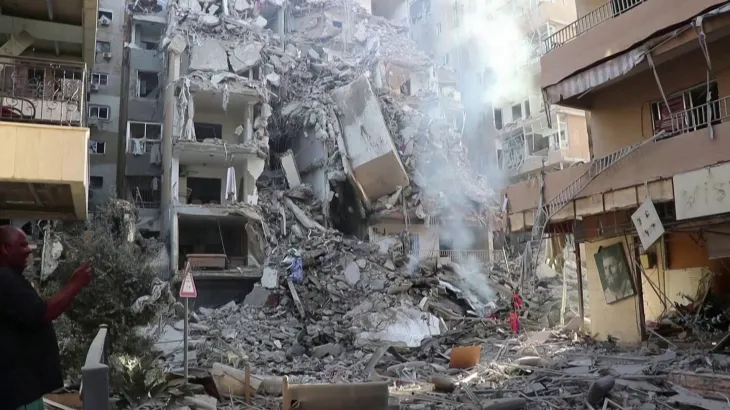
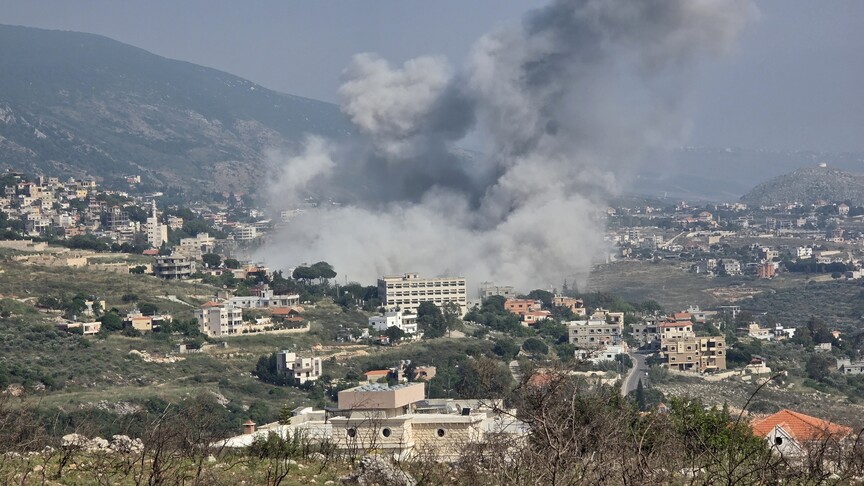
Israeli forces have advanced to positions north of Lebanon's Litani River, Prime Minister Benjamin Netanyahu stated on Friday. Netanyahu said troops pushed past the Litani River, which cuts east-west approximately 30 kilometers into southern Lebanon. "Our forces have crossed the Litani and advanced to controlling positions," Netanyahu declared. He also asserted that Israeli forces are "operating in Beirut, in the Bekaa [Valley], across the entire width of the front, and are dealing Hezbollah a crushing blow." Sources indicated that ground forces crossed back over the Litani again on Friday, but described it as not a major advance and noted it occurred at an eastern point on the Litani near the Israeli border.
The Prime Minister's remarks on Friday detailed the extent of the ongoing military operations. Netanyahu emphasized the strategic significance of these advances, particularly the push beyond the Litani River, a natural boundary that has historically been a focal point in regional security discussions. His statement showed a broad operational scope, suggesting Israeli military presence and activity in key Lebanese territories, including its capital and the agriculturally vital Bekaa Valley. This expanded engagement, according to Netanyahu, is part of an effort to inflict substantial damage on Hezbollah, an Iran-backed group that Israel considers a primary security threat. The sources further clarified that while a crossing did occur on Friday, it was characterized as a limited movement rather than a large-scale offensive, specifically noting its location at an eastern segment of the river, closer to the Israeli border.
Escalating Cross-Border Conflict
The Israeli military announced this week that it had expanded ground operations beyond a security zone its troops have occupied since April 16. This expansion marks a significant shift in the operational strategy, moving beyond previously established boundaries. Early in the conflict, Israel had issued evacuation orders for residents south of the Litani River. These initial directives aimed to clear civilian populations from areas designated for military action, indicating an anticipated escalation of hostilities. On Thursday, the military further instructed people south of the Zahrani River to flee, designating the area as a combat zone. The Zahrani River is located approximately 10 kilometers north of the Litani, signifying a deeper penetration into Lebanese territory and a widening of the conflict zone. This successive issuance of evacuation orders reflects a progressive expansion of Israeli military operations and the corresponding displacement of civilian populations.
Lebanese security sources reported that Israeli troops crossed the Litani River near the village of Zawtar al-Sharqiyah on Thursday. This specific incident noted the fluidity of the front lines and the dynamic nature of the ground engagements. However, these forces later retreated to the southern bank of the river on the same day, indicating a tactical maneuver rather than a permanent occupation at that time. These movements follow an earlier agreement between Israel and Lebanon on May 15 to extend a ceasefire by 45 days. The agreement, intended to de-escalate tensions and provide a window for diplomatic efforts, has evidently not succeeded in preventing further military actions. The latest actions indicate a continued escalation in cross-border military engagement, revealing the fragility of the ceasefire and the persistent nature of the conflict. The ongoing incursions and counter-movements show the challenges in maintaining stability despite diplomatic agreements.
Humanitarian Toll and Diplomatic Efforts
At least 77 children in Lebanon have been killed or injured in the past week, UNICEF reported on Friday. This grim statistic notes the severe impact of the conflict on the most vulnerable population. The broader Israeli conflict in Lebanon has become the most deadly spillover of the Iran war, leading to more than 1.2 million Lebanese being displaced by Israeli strikes and evacuation orders since March 2. This massive displacement figure shows the widespread humanitarian crisis unfolding across Lebanon, affecting a significant portion of its population. According to Lebanon's Health Ministry, Israeli strikes have impacted Lebanon's south, east, and its capital Beirut since March 2, resulting in the deaths of more than 3,200 people. This full death toll illustrates the extensive reach and lethality of the Israeli military campaign across various regions of Lebanon.
Since the ceasefire began on April 16, UNICEF has documented the deaths of 55 children and injuries to 212 children in Lebanon. These figures, specifically pertaining to the period after the ceasefire was initiated, demonstrate that the agreement has not effectively protected civilian lives, particularly those of children. The continued casualties among minors raise serious concerns about the adherence to international humanitarian law and the protection of non-combatants. Over the same period, Israel has stated that 23 of its soldiers and four civilians have been killed. This reciprocal reporting of casualties from both sides emphasizes the ongoing nature of the hostilities and the human cost borne by all parties involved in the conflict. The disparity in reported civilian casualties between Lebanon and Israel further notes the asymmetrical impact of the conflict.
Path to Peace Talks
The U.S. Military hosted Israeli and Lebanese defense representatives in Washington, D.C. On Friday, aiming to advance a U.S.-brokered plan for peace between the two countries and the disarmament of Iran-backed Hezbollah. These high-level discussions signify a concerted effort by the United States to mediate a lasting resolution to the escalating conflict. The U.S.-brokered plan specifically targets not only the cessation of hostilities but also the fundamental issue of Hezbollah's military capabilities, which is a core concern for Israel. These Washington talks also sought to reinforce an April 16 ceasefire agreement, which has not succeeded in halting ongoing cross-border fighting. The fact that diplomatic efforts are needed to reinforce an existing ceasefire shows its ineffectiveness and the urgent need for a more strong and enforceable agreement. Diplomatic meetings related to these efforts are anticipated to take place next week at the State Department, indicating a sustained commitment to finding a diplomatic pathway forward. The upcoming meetings are expected to build upon the discussions held in Washington, with the aim of solidifying commitments and exploring practical steps towards de-escalation and a more permanent peace. The international community, particularly the United States, continues to play a critical role in attempting to navigate the complex geopolitical landscape and mitigate the humanitarian crisis.