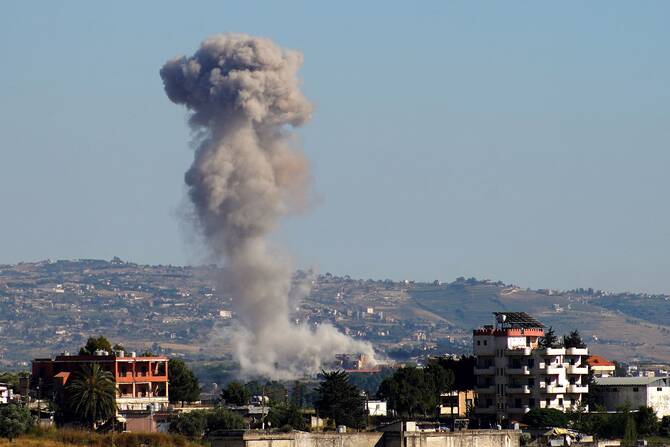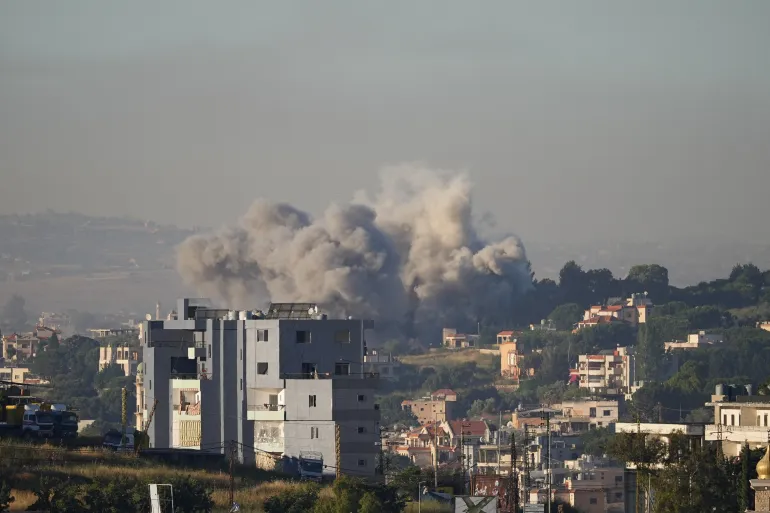
Israel has continued to launch attacks on southern Lebanon despite a new United States-brokered ceasefire agreement that came into effect on April 16, following its announcement by the Trump administration on Thursday. Israeli warplanes and drones struck several towns on Friday, killing at least five people. Two individuals, including a doctor, died in Habboush, while a young man was killed and another injured in Doueir. One person was killed and another wounded in Qalawiya Tower, and a man died in a car in Kfar Reman.
Reports indicated the strikes hit residential areas, buildings, and roads, with a major demolition occurring in Bab al-Thaniya. Israeli warplanes also targeted the Bank Audi area, striking close to Jabel Amel Hospital. The Israeli army issued new forced displacement orders, covering nine towns and villages in two rounds.
Escalating Destruction Post-Ceasefire
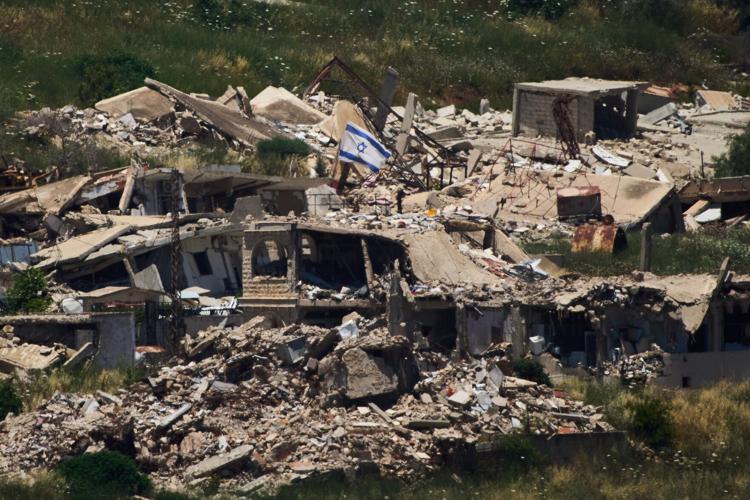
Images captured two days before the truce show significant damage in Bint Jbeil, while images taken 11 days later, on April 25, revealed a much larger proportion of the town in ruins, with buildings seen bursting into clouds of dust in what appeared to be sweeping controlled demolitions. The Israeli military has leveled whole areas of towns and villages in southern Lebanon, according to reports, as it continues operations during a Trump-declared ceasefire. Social media video and photos geolocated to locations in the region depicted trees coated with ash, blazes raging in fire-blackened buildings, and skies filled with dark smoke. Satellite images further showed entire blocks and neighborhoods flattened.
Bilal Saab stated that Israel appeared to be using the terms of the truce to "systematically dismantle towns and villages and other facilities, including mosques, schools, in the south near the border that they assess could be used by Hezbollah for military purposes." Abbas Awada, the mayor of Khiam, said the destruction in parts of southern Lebanon became "systematic" after the truce came into effect on April 16. Mr. Awada also said an objective was to "destroy everything related to life" in the area. Mohammad Bazzi, the mayor of Bint Jbeil, reported that approximately 1,500 residential buildings, along with schools and mosques, have been completely demolished. Mr. Bazzi stated, "Israel wants to erase our identity and heritage so people are unable to come back."
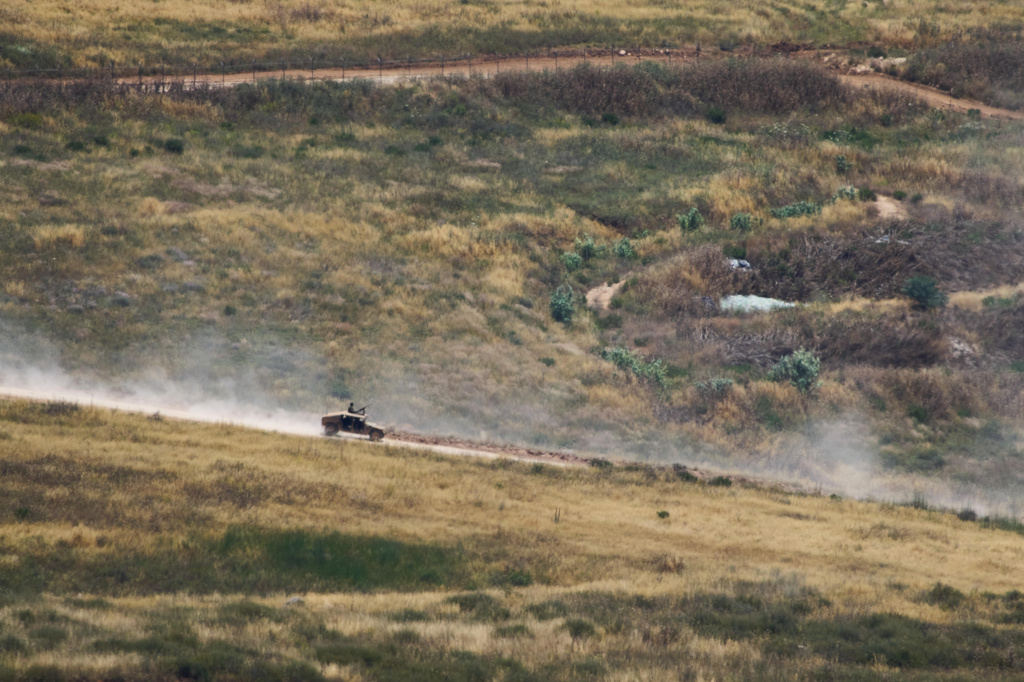
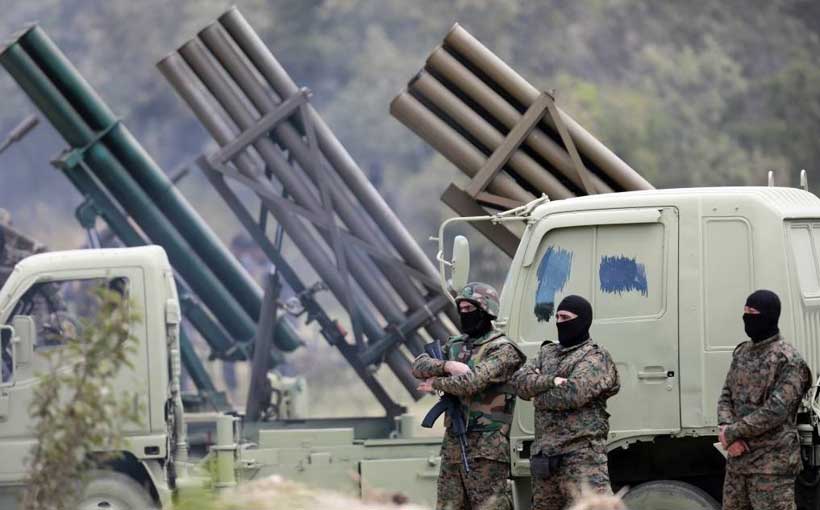
Data published by ACLED indicated that since April 17, at least 120 towns and villages in Lebanon have been hit at least once by Israeli Defense Forces (IDF) drones, missiles, or artillery, as well as remote explosions. Of these locations, 23 had been hit more than five times, with 18 showing some level of damage since the truce was agreed. ACLED information also showed that at least 10 towns and villages exhibited extensive damage to multiple neighborhoods, buildings, and roads. In one video posted to X on April 24 and geolocated by NBC News, two excavators were seen destroying solar panels in the Christian border town of Debel. Hezbollah reported launching at least eight attacks against Israeli military positions in southern Lebanon between early Friday morning and Friday afternoon, stating these actions were "in defense of Lebanon and its people." The IDF said it "identified military threats" and that operations were "directed solely against specific Hezbollah military infrastructure, not against the area as a whole," particularly "in the area close to the border." An IDF statement also indicated these were "operations carried out within the framework of the understandings between Israel and Lebanon" that occurred "in recent weeks."
Context of Conflict and Diplomacy
The latest aerial and ground assault in Lebanon commenced following Tehran-backed Hezbollah's launch of strikes on northern Israel, which occurred after an Israeli-U.S. Attack on Iran in late February. Israeli Prime Minister Benjamin Netanyahu has stated that Israel’s military operations in Lebanon are essential to eliminate the threat Hezbollah poses to Israel. After President Donald Trump announced the ceasefire in Lebanon, Netanyahu affirmed that his country’s forces would remain "in an expanded security zone" stretching approximately six miles into southern Lebanon. The terms of the ceasefire preserved Israel’s right to "take all necessary measures in self-defense, at any time, against planned, imminent, or ongoing attacks," according to the State Department. This ceasefire deal is set to expire on May 17. The United States is expected to mediate a fresh round of talks between Israel and Lebanon on Thursday and Friday.
The Israeli military expanded its presence in the south of the country and now occupies about one-fifth of Lebanese territory. The Lebanese government vowed in 2024 to disarm Hezbollah. More than 2,700 people have been killed in Lebanon since the wider war began in March, according to the Lebanese health ministry. Over one million people were internally displaced, mostly from the south, when the widespread Israeli bombing began. At least 21 individuals have died in Israel since the wider war started. The IDF stated on May 1 that its forces were operating against Hezbollah "in the area close to the border" with Israel. The IDF earlier said it "identified military threats" and that operations were "directed solely against specific Hezbollah military infrastructure, not against the area as a whole," particularly "in the area close to the border." An IDF statement also indicated these were "operations carried out within the framework of the understandings between Israel and Lebanon" that occurred "in recent weeks."
Lebanese and International Reactions
Lebanese Prime Minister Nawaf Salam on Friday urged Iran to cease its use of Lebanon as a "bargaining chip" in negotiations with Washington concerning the Middle East conflict. Salam stated, "If I may address a word to Iran, it is this: have mercy on our south, stop treating it and its people as merely a bargaining chip to improve the terms of your negotiations." Lebanese President Joseph Aoun also called on Iran to refrain from interfering in his country, telling Hezbollah that diplomacy was the sole solution to the ongoing conflict with Israel. President Aoun asserted, "It’s not your country, it’s our country … It’s not your job to interfere into our country." He added, "Hezbollah must understand that [there is] no other way but to sit and talk, no other way to solve this problem and to save what’s left except through negotiation and diplomacy."
Politician Najat Aoun Saliba accused Hezbollah of acting against the Lebanese government and described Tehran’s involvement in the conflict as "a threat to Lebanese sovereignty." Andrea Dessi, however, stated that any agreement which excludes or ignores Hezbollah and Iran is "destined to fail." Dessi added, "There is no military solution to all of these issues, including Lebanon, and therefore talks will continue." Israeli diplomat Alon Pinkas observed that Israel lacks a coherent strategy for Lebanon, deeming its stated goal of destroying Hezbollah unachievable. Pinkas argued, "If the idea is to eliminate, annihilate, eviscerate, all those terms Netanyahu likes to use bombastically, then effectively you need to occupy the entire state of Lebanon. That’s not only not viable and immoral, it’s also just not practical."
Hezbollah has vowed to act "in defense of Lebanon and its people," citing Israel’s ceasefire violations and aggression against civilians as justification. Israeli Defense Minister Israel Katz has described plans to apply a "Gaza model" to southern Lebanon. Katz also warned that residents of southern Lebanon would not be able to return to their homes until the safety of Israelis in northern Israel was guaranteed. Burcu Ozcelik, a senior research fellow at the Royal United Services Institute, expressed her view that the ceasefire exists mainly "in name." A previous agreement to cease hostilities was announced on April 16. In the interval between agreements, more than 600 people were killed in Israeli strikes across Lebanon. In a statement published on Telegram on Tuesday, the IDF said it had struck more than 1,100 Hezbollah targets and killed more than 350 militants in southern Lebanon "in recent weeks."