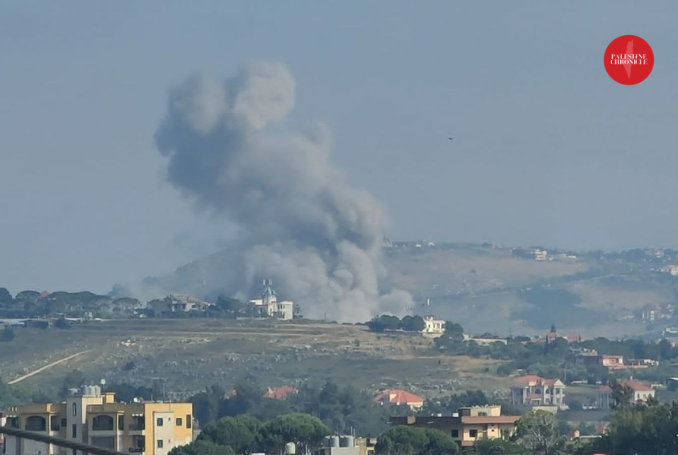
Israel has been accused of using white phosphorus in southern Lebanon, including around the major cities of Tyre and Nabatieh and near three other towns since March, The New York Times reported on Saturday after investigating footage. The New York Times' investigation, which involved analyzing various pieces of footage, concluded that Israel had deployed the controversial munition in these areas. Human Rights Watch also documented the use of white phosphorus in Yohmor in March, verifying its deployment near the Shia-majority towns of Khiam and Yohmor, and the Christian village of Qlayaa. The organization noted Israel had previously used white phosphorus in Lebanese civilian areas during a 2023 conflict with Hezbollah. The latest documentation from Human Rights Watch adds to a growing body of evidence regarding the use of this incendiary substance in civilian-populated regions.
The Israeli military has a history of using white phosphorus, notably during the 2008-09 war in Gaza, where the chemical was dropped on densely-populated neighborhoods, which Human Rights Watch found to be in violation of international law. This particular conflict saw extensive use of the substance in urban settings, raising significant concerns among human rights organizations worldwide. A previous investigation by Human Rights Watch further confirmed Israel’s use of white phosphorus in Gaza in 2009, detailing the impact on civilian populations. The Washington Post reported in December 2023 that some of the munitions deployed in southern Lebanon were supplied to Israel by the United States, indicating the involvement of U.S.-manufactured weaponry in these operations. Israel had pledged in 2013 to stop its use of white phosphorus and significantly reduce its deployment of the substance, a commitment that human rights groups now argue has not been consistently upheld in recent conflicts.
Evidence of Munitions Use
Broadcast footage recorded the use of munitions with a distinctive smoke trail in the town of Arnoun last week, as Israeli forces moved to seize the nearby Beaufort castle. This visual evidence provided a key basis for analysis. Munitions experts who analyzed the imagery concluded that it showed shells releasing burning phosphorus after detonating in mid-air. These experts identified the characteristic ignition and dispersal pattern associated with white phosphorus projectiles, confirming the nature of the munitions used. The consistent appearance of these distinct smoke trails across various incidents has bolstered claims made by human rights organizations and news outlets.
Israel re-started strikes on the Iran-backed militant group Hezbollah in Lebanon shortly after Israel and the U.S. Jointly struck Iran at the end of February. This escalation marked a significant shift in the regional conflict dynamics. Hezbollah had first re-ignited the cross-border conflict with projectiles fired at communities in Northern Israel in early March, prompting a forceful response. Following this, Israeli forces launched a large-scale invasion of southern Lebanon in March after Hezbollah began firing rockets across the border, further intensifying military operations in the region.
Human Rights Watch said it had separately verified the use of incendiary weapons over homes in southern Lebanon on March 3. This verification came amidst the Israeli military's operations in the region, adding specific dates and locations to the allegations. The organization has previously documented Israel's use of white phosphorus in Lebanese civilian areas during a 2023 conflict with Hezbollah, demonstrating a recurring pattern of deployment. The latest findings add to a pattern of documented use by the Israeli military in the area, contributing to concerns about adherence to international humanitarian law.
Nature and Dangers of White Phosphorus
White phosphorus is a solid chemical that is typically fired from artillery shells and bombs, burning upon contact with oxygen. This chemical combusts at temperatures exceeding 800 degrees Celsius, producing dense clouds of smoke that militaries often utilize for tactical screening purposes, such as obscuring troop movements or creating visual barriers. The intense heat generated by white phosphorus causes severe burns upon contact with individuals, which can be deep and excruciatingly painful, often leading to long-term disfigurement or death. It can ignite fires on the ground that persist for days, leading to the destruction of buildings and significant land damage, devastating infrastructure and agricultural areas. The persistence of these fires makes containment difficult and prolongs the danger to affected communities. Inhaling the smoke produced by white phosphorus can result in permanent harm to the eyes and internal organs, causing respiratory distress, blindness, and other severe health complications for those exposed.
An individual white phosphorus artillery projectile, if detonated in the air overhead, can disperse its contents across an area with a diameter ranging from 125 to 250 meters. This wide dispersal area means that a single shell can affect a substantial civilian population or a significant portion of an urban environment, increasing the risk of widespread harm. The Chemical Weapons Convention categorizes white phosphorus as an incendiary agent rather than a chemical weapon, a distinction that has implications for its regulation under international law. Despite this classification, the convention prohibits the deployment of incendiary agents such as white phosphorus in civilian areas, acknowledging the indiscriminate and severe harm they can inflict on non-combatants and civilian infrastructure.
Legal and International Context
While white phosphorus is not explicitly banned under international law as a chemical weapon, its use is prohibited in and near populated areas due to the widespread harm it can inflict. This prohibition stems from the principles of distinction and proportionality in international humanitarian law, which require combatants to differentiate between military objectives and civilian populations and to avoid disproportionate harm to civilians. Human Rights Watch documented extensive use of the chemical in Lebanon in a 2024 report, providing a full overview of its deployment and impact. The organization verified its deployment in at least 17 municipalities between October 2023 and June 2024, urging the Israeli military to immediately cease its use of the substance in any area where civilians are present. This widespread documentation shows the scale of the alleged use across a significant geographical area.
Lebanon and Israel had agreed to a ceasefire on Wednesday, aiming to de-escalate the ongoing conflict, but Hezbollah subsequently rejected that agreement, leading to a continuation of hostilities. Following Hezbollah's rejection, continued Israeli airstrikes have resulted in the deaths of nine people, including three members of the Lebanese military, noting the deadly consequences of the breakdown in ceasefire efforts. NPR has stated it has not independently verified claims regarding white phosphorus use, maintaining journalistic caution in reporting on such sensitive allegations. Israel denies using the chemical in a manner that violates international law, asserting that its deployment of white phosphorus is for legitimate military purposes and in accordance with legal frameworks. The United States has also utilized white phosphorus, with its most recent deployment occurring in Iraq in 2017, indicating that its use is not unique to the Israeli military.
Historical Precedents and Pledges
Human Rights Watch documented the use of approximately 200 white phosphorus munitions during the three-week conflict in 2008-09, which resulted in dozens of civilian casualties. This extensive deployment noted the significant risk posed to non-combatants when such weapons are used in densely populated areas. The Israeli military, however, denied employing white phosphorus in its smoke-screen projectiles, maintaining that its use of such munitions was solely for tactical purposes like creating smoke screens and not as an incendiary weapon against civilians. This denial came amidst allegations and documentation from human rights organizations regarding the substance's deployment, creating a point of contention between military claims and independent investigations. Human Rights Watch's findings indicate a significant number of munitions were used, leading to injuries among non-combatants in the affected areas, with reports detailing severe burns and other health issues. The organization's report noted the humanitarian impact of these munitions, particularly in densely populated regions where the risk of civilian harm is inherently higher. The Israeli military's position maintains that its use of such projectiles is within legal parameters and does not involve white phosphorus in the manner described by the allegations, emphasizing adherence to international law in its operational conduct.