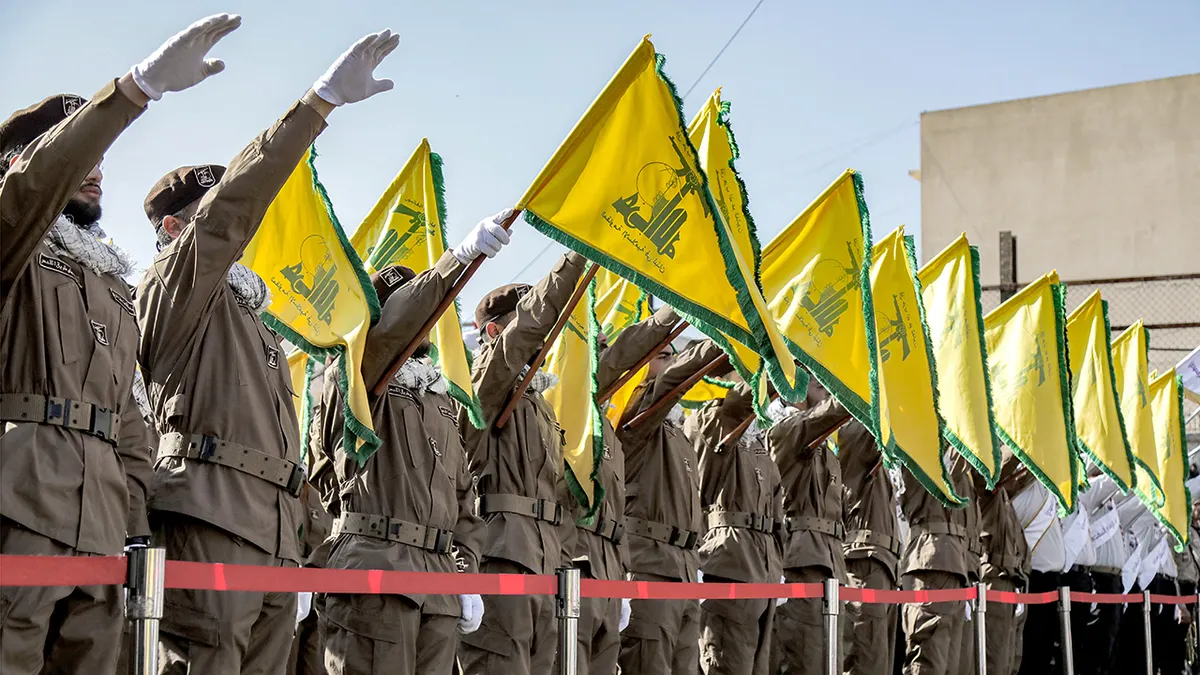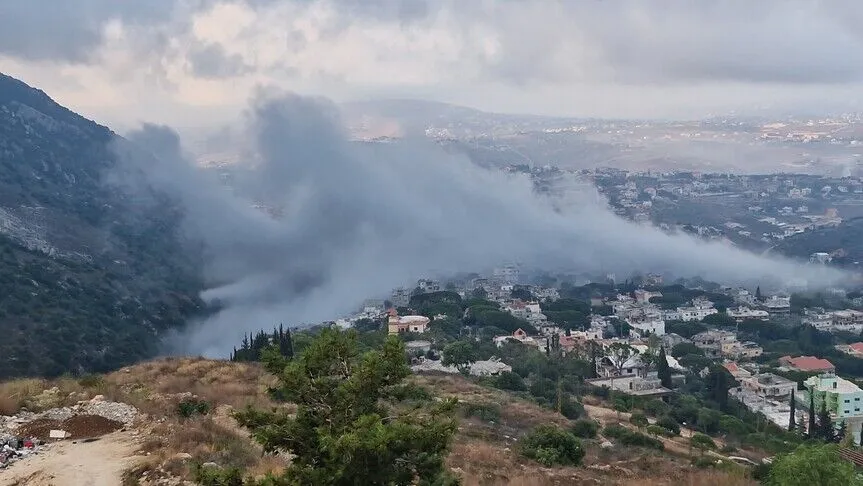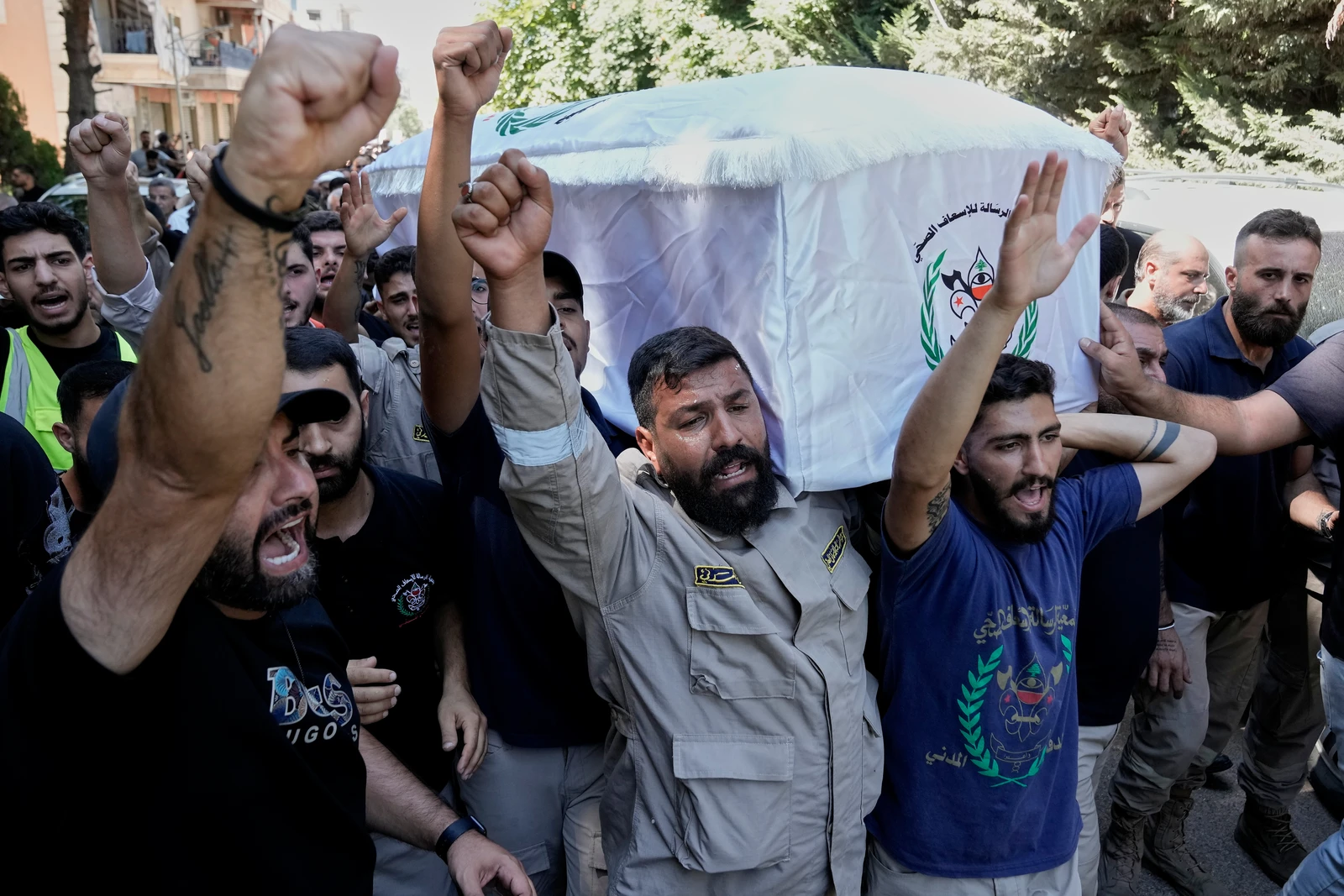
Hundreds gathered in south Lebanon on Tuesday to mourn two Hezbollah members and their family, among them a three-month-old infant, who were killed by an Israeli strike the previous day. The mourners converged as the southern village of Kfar Rumman prepared for the burials. The strike on Monday claimed the lives of the Farhat family members, who were affiliated with Hezbollah. Before the latest escalation, Kfar Rumman had a population of more than 1,400 people. The tragic loss of life has cast a somber mood over the community, with many expressing grief and anger over the ongoing conflict. The presence of such a young victim, a three-month-old infant, has particularly resonated, noting the devastating human cost of the hostilities in the region.
Israeli Strike Details
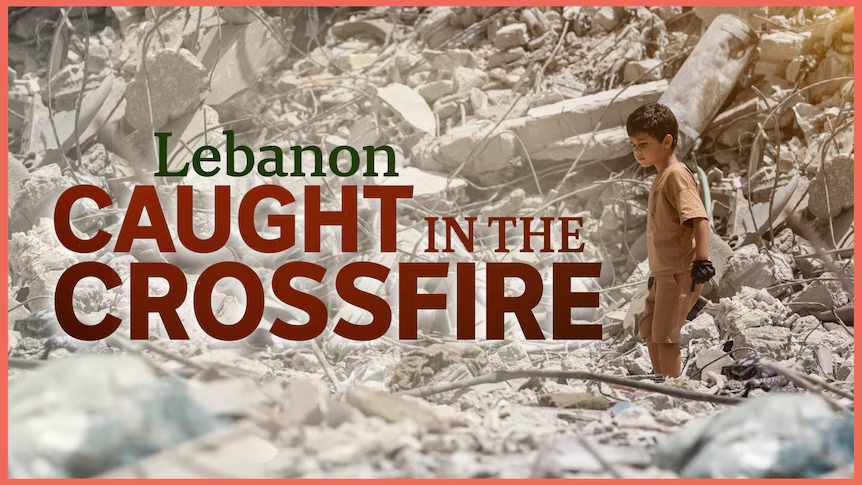
The Israeli strike on Monday levelled the home of the Farhat family in Kfar Rumman. The impact of the strike completely destroyed the residence, reducing it to rubble and leaving a scene of devastation. The attack resulted in the deaths of multiple family members, including a three-month-old infant, who were affiliated with Hezbollah. The destruction of the family home shows the intensity of the military operations being conducted in southern Lebanon. Rescue workers faced significant challenges sifting through the debris in search of survivors or remains following the powerful impact of the strike. The incident has drawn widespread condemnation from local officials and residents alike, who point to the civilian casualties as a grave consequence of the military actions.
Separately, another strike on Kfar Rumman on Monday killed an 18-year-old rescuer. The individual was a member of the Risala Association, an organization linked to the Hezbollah-allied Amal movement. The rescuer's death occurred during operations in the southern village, further contributing to the casualties from the day's events. This incident notes the perils faced by humanitarian and rescue workers operating in conflict zones. The Risala Association, known for its emergency response efforts, has lost a young member who was dedicated to assisting others amidst the ongoing violence. The destruction of the Farhat family home and the death of the Risala Association rescuer show the profound and immediate impact of the ongoing strikes in south Lebanon on both civilians and those attempting to aid them.
Escalation and Context
Lebanon’s health ministry reported that at least 28 people have been killed in Israeli attacks on southern Lebanon since Friday. This recent surge in fatalities marks a significant escalation in the conflict that has gripped the border region. Israel has conducted both airstrikes and a ground invasion in south Lebanon during the ongoing Middle East war. These military operations have led to widespread displacement and destruction across numerous villages and towns. This fighting in Lebanon had seen a period of calm following the agreement of a US-Iran memorandum of understanding and a framework agreement between Israel and Lebanon in June. The agreements had fostered hopes for a more stable period, but the recent events indicate a renewed intensification of hostilities. Despite these agreements, Israeli forces continue to occupy what they refer to as a "security zone" in the south, a point of contention for Beirut. The presence of Israeli forces in this area has been a continuous source of tension and contributes to the volatile security situation.
Reactions and Claims
Ten coffins, draped in Lebanese flags, were prepared for burial, indicating that other members of the Farhat family killed in the strike were civilians. The sight of multiple coffins, particularly those representing non-combatants, served as a poignant reminder of the civilian toll of the conflict. The Israeli military stated on Monday that it had launched strikes against Hezbollah "infrastructure sites" across southern Lebanon. These actions followed the launch of two explosive drones towards its troops, and the military also targeted "several terrorists" it claimed were transferring weapons. The Israeli military's statement frames its actions as responses to perceived threats and operational necessities. Regarding civilian casualties, an Israeli military spokesperson said, "The claim that several uninvolved individuals were harmed as a result of the strikes is being reviewed." This statement acknowledges the reports of civilian deaths while indicating an internal process of investigation.
Beirut has reported recurring Israeli strikes, which it states have killed more than 4,300 people in total since March. These figures, provided by the Lebanese capital, paint a grim picture of the cumulative human cost of the prolonged conflict. The Israeli military affirmed its operational stance, stating, "The military will continue to operate to remove threats while remaining committed to the ceasefire agreement." This declaration suggests a dual commitment: to ongoing security operations and to upholding existing agreements, even as the violence continues. The contrasting casualty figures and statements from both sides highlight the deep divisions and differing narratives surrounding the conflict in south Lebanon. The international community continues to monitor the situation, with calls for de-escalation and protection of civilian lives becoming increasingly urgent. The funerals in Kfar Rumman serve as a stark reminder of the human tragedy unfolding in the region.