Hezbollah leader Naim Qassem declared on Friday that the group would use weapons to confront Israel if attacked, stating, "The project to eliminate Hezbollah and entrench the occupation has failed, and the Israelis will withdraw from every last inch of our land." His remarks followed an Israeli airstrike that occurred shortly after a ceasefire between Lebanon and Israel came into effect at 4 pm local time. The Israeli military announced earlier on Friday the deaths of four Israeli soldiers in southern Lebanon, an event that significantly escalated tensions along the border. In response to the casualties, Israeli Prime Minister Benjamin Netanyahu affirmed that Israel would "exact a very heavy price" from Hezbollah. Qassem's statement showed Hezbollah's readiness to retaliate against any further Israeli military actions, despite the agreed-upon ceasefire, indicating a precarious situation on the ground. The ceasefire, intended to bring a halt to recent hostilities, appeared to be immediately challenged by the subsequent military actions.
Israeli Strikes and Stated Intentions
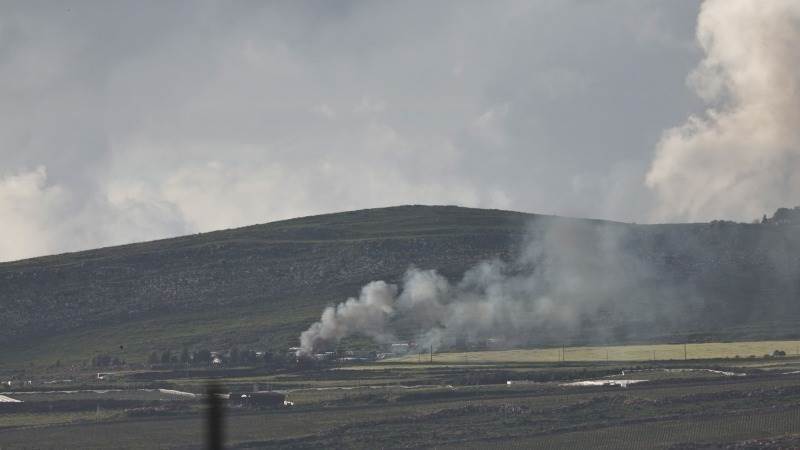
An Israeli airstrike targeted the Jabal al-Rafee area near the southern Lebanese town of Sajd on Friday. This strike, occurring after the ceasefire was meant to be in effect, noted the fragility of the agreement. Earlier the same day, an Israeli drone strike killed two people riding a motorcycle on the road between Zebdine and Nabatieh in southern Lebanon. These incidents contributed to the heightened sense of conflict in the region. Following these events, and specifically after the announcement of Israeli soldier casualties, Israeli Prime Minister Benjamin Netanyahu instructed the Israeli military overnight to strike Hezbollah "with force." This directive signaled a strong retaliatory posture from Israel.
The Israeli military subsequently reported striking more than 80 targets and killing dozens of Hezbollah fighters. These strikes were described as a direct response to the earlier attacks and the deaths of their soldiers. Israel has also stated its intention to remain in what it refers to as a "security zone" in southern Lebanon for as long as necessary to protect communities in northern Israel. This declaration outlines Israel's long-term security objectives and its perceived need for a buffer zone. Hezbollah leader Naim Qassem previously declared that the group would use weapons to confront Israel if attacked, a stance that directly challenges Israel's military presence and actions. Qassem stated, "The project to eliminate Hezbollah and entrench the occupation has failed, and the Israelis will withdraw from every last inch of our land," reiterating Hezbollah's unwavering commitment to resisting what it views as Israeli occupation and aggression. The Israeli military's operations, including the drone strike that killed two individuals on a motorcycle, further fueled the cycle of violence and retaliation. The ongoing presence of Israeli forces in southern Lebanon, justified by Israel as a security measure, remains a central point of contention with Hezbollah and the Lebanese government.
Hezbollah's Response and Stance
Hezbollah leader Naim Qassem reiterated the group's commitment to resistance, stating that the "project to eliminate Hezbollah and entrench the occupation has failed, and the Israelis will withdraw from every last inch of our land." His declaration showed Hezbollah's firm stance following recent escalations, emphasizing that the group would confront Israel with weapons if attacked. This position notes Hezbollah's readiness for continued military engagement. Lebanese President Joseph Aoun emphasized that a full ceasefire is a fundamental prerequisite for advancing future Lebanese-US-Israeli negotiations scheduled to take place in Washington next week. President Aoun's statement shows the critical need for a stable environment to facilitate diplomatic progress. The president's comments highlight the diplomatic efforts underway to de-escalate tensions, even as Hezbollah maintains its readiness to confront Israeli actions. Qassem's statement reflects the group's long-standing position on Israeli presence in the region and its determination to oppose what it views as occupation. This comes amidst ongoing military exchanges and diplomatic maneuvering aiming to stabilize the volatile border region, with the prospect of high-level negotiations hanging in the balance. The insistence on a full ceasefire by President Aoun indicates the Lebanese government's desire to move towards a more peaceful resolution, contrasting with Hezbollah's more confrontational rhetoric.
Broader Regional and International Context
US Secretary of State Marco Rubio reaffirmed United States support for Lebanon and efforts to achieve security and stability amid the ongoing tensions. This diplomatic backing from the US is considered key for Lebanon's sovereignty and for fostering regional stability. Israel's Kan TV News reported that the United States has initiated a pilot plan for a partial Israeli military withdrawal from the 'security zone' in southern Lebanon. This reported plan suggests diplomatic movement behind the scenes concerning Israel's military presence in the area, potentially offering a path towards de-escalation by addressing one of Hezbollah's core grievances. The US initiative, if confirmed and implemented, could represent a significant step towards reducing friction on the border.
Yemen's Houthi group issued a warning to Israel against expanding its military operations in Lebanon. The Houthis accused Israel of violating an Iran-US ceasefire memorandum of understanding, which they claimed covers multiple fronts, including Lebanon. This accusation links the current escalation to broader regional agreements and introduces another actor into the complex geopolitical landscape. The Houthi warning adds an additional layer of international pressure on Israel and notes the interconnectedness of regional conflicts. Earlier, Hezbollah leader Naim Qassem had stated, "The project to eliminate Hezbollah and entrench the occupation has failed, and the Israelis will withdraw from every last inch of our land," indicating the group's firm stance on Israeli presence and aligning with the broader anti-Israeli sentiment expressed by the Houthis. The involvement of the US in potential withdrawal plans, coupled with warnings from groups like the Houthis, illustrates the complex international dimensions of the conflict.
Humanitarian Toll and Ongoing Conflict
Lebanon's Public Health Emergency Operations Center reported that the cumulative toll from Israeli attacks since March 2 had increased to 3,980 people killed and 12,001 injured. The ongoing casualties highlight the severe humanitarian impact of the conflict on the civilian population in southern Lebanon. These grim statistics show the urgent need for a lasting cessation of hostilities and effective humanitarian aid. Amidst these developments, Hezbollah leader Naim Qassem reiterated the group's stance, stating, "The project to eliminate Hezbollah and entrench the occupation has failed, and the Israelis will withdraw from every last inch of our land." His comments show the persistent tensions and the group's commitment to resisting Israeli actions, even as the human cost of the conflict continues to mount in southern Lebanon. The continued violence and the rising number of casualties present a dire situation for the residents of the affected areas, emphasizing the human tragedy behind the political and military statements. The reports from the Public Health Emergency Operations Center serve as a stark reminder of the devastating consequences of the prolonged conflict on civilian lives and infrastructure.