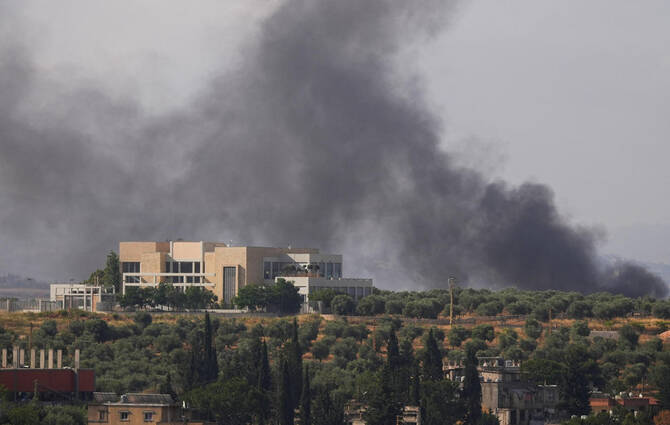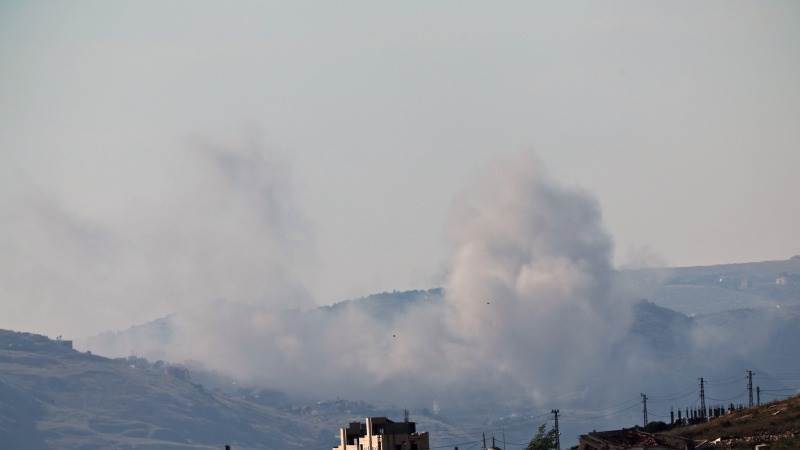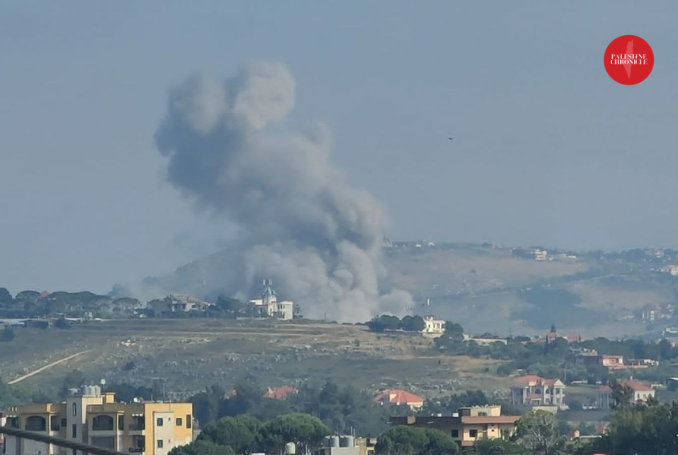
Israeli occupation forces launched a series of airstrikes and artillery attacks across several districts in southern Lebanon on Saturday, including Jezzine, Nabatieh, Tyre, and Marjeyoun. These aggressive actions prompted immediate retaliatory operations from Hezbollah, marking a significant escalation in cross-border hostilities. Hezbollah swiftly confirmed that its fighters targeted an Israeli military vehicle in response to the widespread Israeli assaults. The group specified that its initial response involved the deployment of an Ababil attack drone, which successfully struck a Yaghi military vehicle in a strategically important riverbed area.
Israeli Forces Launch Widespread Attacks Across Southern Lebanon
The day's events began with an Israeli drone strike that specifically targeted a vehicle in the town of Kfarhouna, situated within the Jezzine district. This initial strike was a precursor to further concentrated military activity in the area. Following this incident, three additional airstrikes were reported in quick succession, all occurring in the immediate vicinity of a Lebanese Army checkpoint near Kfarhouna, indicating a sustained and targeted Israeli presence. Beyond these specific strikes, Israeli warplanes extended their operations, launching raids on the town of Al-Rayhan and its surrounding outskirts. The aerial assaults also impacted the outskirts of Sajd, further demonstrating the breadth of the Israeli military's engagement in the Jezzine region.
The aggression was not confined to Jezzine. In the Nabatieh district, Israeli occupation forces carried out an airstrike on the town of Al-Kafour, causing significant concern among residents. Adding to the intensity, Israeli forces also shelled the historic Nuns’ Quarter, a residential area located within the city of Nabatieh itself. This particular shelling noted the proximity of the conflict to civilian populations. Moving westward, Israeli artillery units targeted the town of Srifa in the Tyre district, while warplanes simultaneously struck the town of Ma’raka, showing a multi-pronged attack strategy. Further east, in the Marjeyoun district, Israeli occupation forces launched sustained attacks on the city of Khiam, a locale that has frequently been at the forefront of cross-border tensions. These coordinated and widespread attacks across multiple districts illustrate a significant and concerning intensification of military operations by Israeli forces in southern Lebanon.
Hezbollah Responds with Precision Drone Operations
In direct response to the extensive Israeli military actions, Hezbollah announced a series of retaliatory operations, primarily employing its advanced Ababil attack drones. The group confirmed that its fighters launched an Ababil drone at approximately 7:00 AM. This precision strike successfully targeted a Yaghi military vehicle, strategically positioned in the riverbed area on the outskirts of Zawtar al-Sharqiyah. This initial operation served as a clear message of Hezbollah's intent to counter Israeli aggression.
Approximately 30 minutes after the successful first strike, Hezbollah escalated its response by launching a second Ababil drone attack. This subsequent operation targeted another Israeli military asset, specifically a Nimra military vehicle. The drone successfully struck the vehicle at Al-Sal’a Hill, a key elevated position situated near the town of Al-Qantara. These meticulously planned and executed drone operations were conducted in direct response to the earlier Israeli strikes and artillery attacks that had swept across southern Lebanon throughout the day. Hezbollah's coordinated use of attack drones emphasizes its capability to respond effectively to perceived threats and shows the volatile nature of the current security situation along the border. The group's statements made it clear that these actions were part of a broader strategy of retaliation against Israeli forces.
Context of Regional Tensions Amidst Diplomatic Efforts
The recent escalation of cross-border hostilities between Israeli forces and Hezbollah occurs despite ongoing ceasefire arrangements and persistent diplomatic efforts aimed at de-escalating and ultimately ending broader regional conflicts. The renewed intensity of military exchanges notes the fragility of the current security situation and the significant challenges faced by international mediators. Despite various initiatives to foster stability, the region remains volatile, with localized clashes frequently threatening to ignite wider confrontations.
Iranian officials have repeatedly articulated a firm stance regarding any full resolution to the current regional conflict. They have consistently stated that any such arrangement must explicitly include a ceasefire in Lebanon as one of its core and non-negotiable provisions. This position shows the deeply interconnected nature of various conflict fronts across the wider Middle East, suggesting that peace in one area is intrinsically linked to the cessation of hostilities in others. The insistence on including Lebanon in any overarching ceasefire agreement notes the critical role played by the Lebanese front in the broader geopolitical landscape and the persistent efforts by various actors to shape the terms of any future regional stability.