Itamar Ben-Gvir, Israel's national security minister and leader of the Jewish Power party, declared on Friday that "all of Lebanon must burn," amid ongoing regional tensions. Ben-Gvir, a prominent member of Prime Minister Benjamin Netanyahu's governing coalition, emphasized Israel's independence in his provocative remarks, which quickly drew international attention and criticism. His statement showed a hardline stance within the Israeli government regarding regional security and autonomy.
"With all due respect to the Americans, Israel must make it clear to the entire world that the blood of our sons and the security of our citizens are not forfeit," Ben-Gvir stated, articulating a position that prioritizes Israeli national interests above external diplomatic pressures. He added, with a clear and unwavering tone, "All of Lebanon must burn. Our supreme duty is to protect the citizens of Israel and the soldiers of the IDF, and this commitment takes precedence over every other consideration." Ben-Gvir also asserted, directly challenging previous diplomatic frameworks, "Trump’s agreement does not bind us" and "Israel is not subject to the United States, and we are an independent and sovereign nation!" These remarks highlight a perceived need for Israel to act unilaterally in its defense, irrespective of international agreements or alliances.
Escalation and Ceasefire Efforts
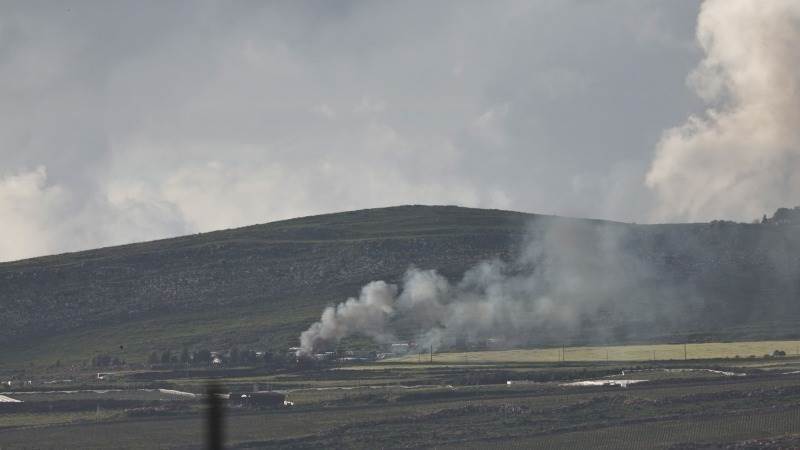
The backdrop to Ben-Gvir's incendiary comments was a period of intense hostilities. Fighting erupted between Israel and the Iranian-backed militia Hezbollah, contributing significantly to heightened regional instability and raising fears of a broader conflict. This outbreak of violence showed the fragility of peace in the region and the complex web of actors involved.
Amidst these clashes, a new ceasefire agreement was reached, according to a source familiar with the situation who spoke to NewsNation. This key ceasefire, involving Israel, Hezbollah, and Lebanon, was scheduled to take effect at 4 p.m. Local time on Friday, offering a glimmer of hope for de-escalation. The agreement was the result of extensive diplomatic efforts behind the scenes. The source further specified that this ceasefire, affecting Lebanon, Israel, and Hezbollah, was mediated by a consortium of international players: Qatar, the U.S. And Iran. This collaborative mediation effort notes the intricate geopolitical dynamics at play in securing regional stability.
The outbreak of fighting between Israel and Hezbollah led to the postponement of a planned diplomatic engagement, illustrating the immediate impact of the hostilities on international relations. A first round of talks, which had been scheduled for Friday in Switzerland, was delayed following the escalation of hostilities in the region, as diplomatic channels were forced to shift focus from long-term negotiations to immediate crisis management.
Ben-Gvir's Provocative Stance
A ceasefire had been imposed by the United States and Iran, according to reports, indicating the significant role these two global powers played in de-escalating the conflict. A source specified that this ceasefire, affecting Lebanon, Israel, and Hezbollah, was mediated by Qatar, the U.S. And Iran, showing the multilateral nature of the diplomatic efforts. Iran reportedly prioritized a ceasefire in Lebanon as a condition for its agreement with the U.S. To halt fighting and enter negotiations regarding its nuclear program, demonstrating the interconnectedness of various regional and international issues. This condition notes Iran's strategic interests in Lebanon and its leverage in broader diplomatic discussions.
Itamar Ben-Gvir, Israel's national security minister, pushed back on the developing ceasefire terms on Monday, signaling his disagreement with the diplomatic resolution. His public opposition showed the internal divisions within the Israeli government regarding how to best handle security challenges and international pressures. Senior administration officials, responding to concerns and questions about the ceasefire's implications, stated unequivocally that the ceasefire did not require Israel’s withdrawal from southern Lebanon, clarifying a key point of contention and reassuring Israeli hardliners that the agreement did not compromise their territorial positions.
Context and International Reactions
Itamar Ben-Gvir posted on the social platform X following the ceasefire agreement, using the platform to express his views and criticisms of the diplomatic process. His frequent use of social media to convey his unfiltered opinions has become a hallmark of his political style. Vice President Vance offered veiled criticism of Ben-Gvir for his remarks on the agreement with Iran, noting the potential strain such rhetoric could place on key alliances. Vance stated, with a tone of admonishment, "If I was in the Cabinet of the Israeli government, I might not be attacking the only powerful ally that I have anywhere left in the entire world." This statement from Vance served as a stark reminder of the strategic importance of the U.S.-Israel relationship. Vance also noted the extent of U.S. Support, adding, "The other thing that I would say is that over the last three months, two-thirds of the defensive weapons that protected your homeland have been built by American hands and paid for by American tax dollars." This detailed accounting of military aid showed the depth of American commitment to Israel's security, implicitly warning against actions that could jeopardize this vital support.
President Trump publicly warned Israeli Prime Minister Benjamin Netanyahu to exercise restraint amid the escalating situation, indicating that even allies were urging caution in the face of rising tensions. Trump's intervention reflected broader international concerns about the potential for regional conflagration. Ben-Gvir has been a central figure in controversial legislative efforts within Israel, including a movement that successfully passed legislation in March imposing the death penalty for Palestinians convicted of murdering Israelis. This legislative achievement, spearheaded by Ben-Gvir, represents a significant shift in Israeli legal policy and reflects his hardline approach to security and justice. The Israeli National Security Minister holds multiple convictions related to support for a terrorist organization, a fact that has consistently fueled controversy surrounding his political career and ministerial position. The Biden administration has previously condemned Ben-Gvir for what it described as “inflammatory and irresponsible” rhetoric against Palestinians, indicating a consistent pattern of concern from the U.S. Regarding his public statements and policies. These condemnations highlight the ongoing diplomatic challenges posed by Ben-Gvir's actions and rhetoric on the international stage.