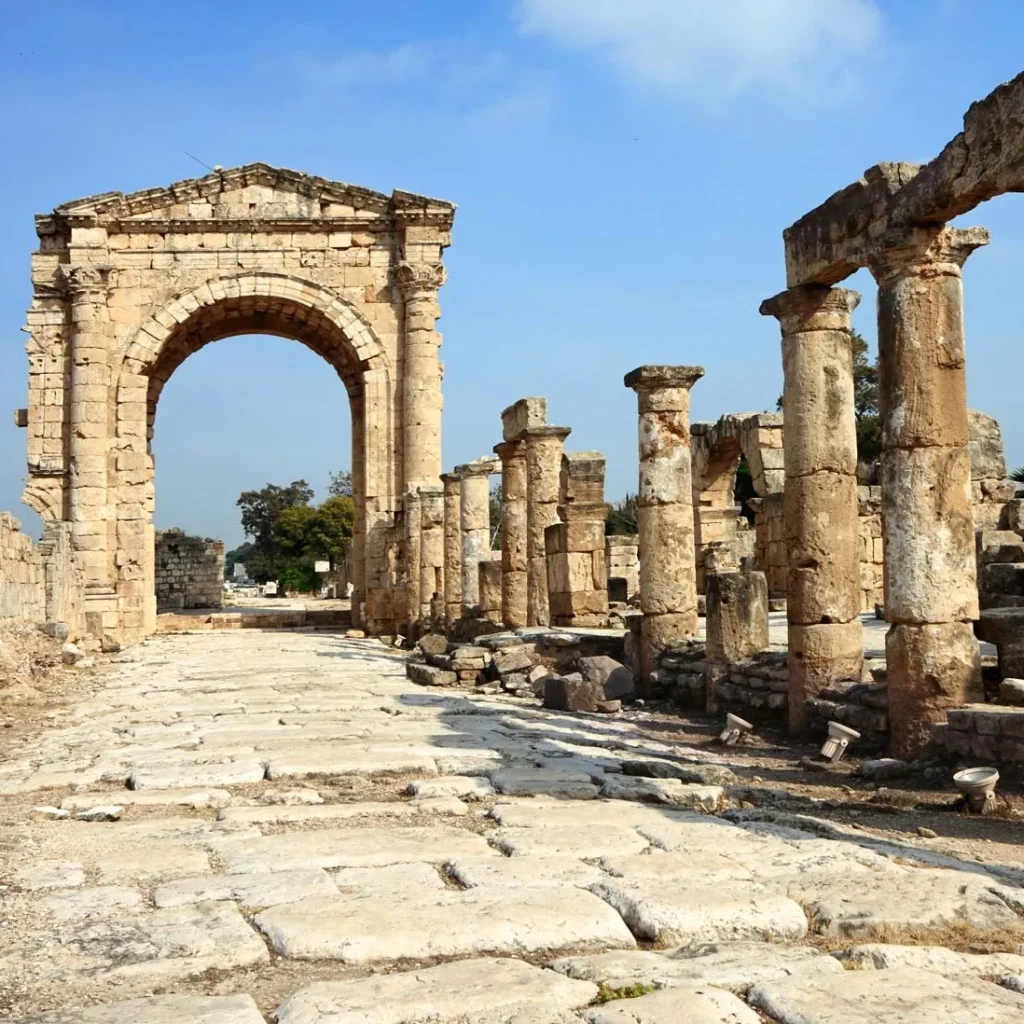
The United Nations Educational, Scientific and Cultural Organization (UNESCO) has officially added the ancient Lebanese city of Tyre to its World Heritage in Danger list. This significant decision by the UN cultural agency comes in response to the direct impact the historic site has suffered from Israeli bombardment, prompting the urgent designation. The Lebanese government had formally requested the site's inclusion on the danger list, citing the ongoing conflict as the primary reason for this critical need for international protection. This move shows the international community's growing concern over the preservation of invaluable cultural heritage amidst armed conflicts.
Conflict's Toll on Heritage
The city of Tyre experienced significant and documented impact during the recent conflict between Israel and Hezbollah, which led to the site's endangered status. One of Tyre's protected archaeological zones was directly struck during an Israeli air raid in June, causing considerable alarm among heritage experts and local authorities. Following the incident, Lebanese cultural authorities reported that the attack specifically damaged an administrative building located within the archaeological area. Debris from nearby explosions affected several invaluable archaeological features, including ancient columns, intricately carved capitals, and delicate mosaics, according to official reports from the authorities. These damages have raised serious questions about the long-term viability of preserving the site's integrity.
Lebanese officials have vehemently accused Israel of violating international agreements that specifically mandate the protection of cultural heritage during armed conflict. They specifically cited obligations under the 1954 Hague Convention for the Protection of Cultural Property in the Event of Armed Conflict as having been demonstrably breached by Israel's actions in the area. This convention is a cornerstone of international humanitarian law, designed to safeguard cultural sites from destruction or damage during hostilities. The alleged breaches highlight the severe challenges faced by heritage sites in conflict zones, where cultural property often becomes an unintended, or sometimes deliberate, casualty. The inclusion on the danger list is a direct consequence of these events and the resulting deterioration of the site's condition.
Tyre's Historical Significance
Tyre holds an unparalleled position in the annals of history and is situated approximately 80 kilometers south of Beirut, placing it relatively close to the Israeli border. The city was originally inscribed as a UNESCO World Heritage Site in 1984, a testament to its profound and enduring historical value. Tyre is home to a breathtaking array of significant Roman-era archaeological remains, which include a majestic triumphal arch that once marked a grand entrance, and one of the world’s largest ancient hippodromes, where chariot races captivated thousands. These monumental structures stand as powerful testaments to its past glory and its central role in ancient civilizations.
The ancient port city was founded nearly 4,700 years ago, establishing its place among the oldest settlements in the region and indeed, the world. This exceptional antiquity contributes significantly to its outstanding universal value. Tyre is widely recognized as one of the oldest continuously inhabited cities in the Mediterranean, a status that powerfully shows its enduring historical and cultural importance through millennia. Its long and complex history encompasses periods as a powerful Phoenician city-state, a thriving center of maritime trade that connected diverse cultures, and a significant Roman provincial capital. The archaeological layers unearthed at the site vividly reflect these diverse eras, offering invaluable insights into the development of human civilization and urban life in the ancient world. The city's rich past makes its current endangerment a matter of global concern.
International Response and Concerns
The ancient city's inclusion on the World Heritage in Danger list stems directly from the damage sustained by the archaeological site during recent conflict and, crucially, from broader concerns regarding its long-term preservation and the ongoing threats it faces. The United Nations Educational, Scientific and Cultural Organization (UNESCO) issued a stark warning that the site's condition had deteriorated to a level where its outstanding cultural value could no longer be adequately protected through existing measures. This critical designation was formally announced by UNESCO during the 48th session of its World Heritage Committee. The committee, comprising representatives from various nations, convened in Busan, South Korea, to address heritage sites facing significant and immediate threats globally.
UNESCO's decision to place Tyre on the danger list notes the international community's profound concern over the devastating impact of armed conflict on cultural heritage, which is often irreplaceable. The listing places increased international scrutiny on the site, drawing global attention to its plight and the urgent need for intervention. This designation is designed to mobilize support for its protection and restoration efforts, potentially unlocking international funding and expertise to safeguard Tyre's invaluable archaeological treasures for future generations. The move serves as a powerful reminder of the imperative to protect cultural property even amidst geopolitical tensions and armed hostilities.