The U.S. Military denied claims by Iran that it had struck an uncrewed American military vessel operating in the Strait of Hormuz. The denial directly contradicted assertions made by state-run media in Tehran, which had reported the alleged strike. This denial came as the U.S. Struck Iranian oil tankers, an action that occurred a day after Iran launched ballistic missiles at Navy warships. The broader conflict between the two nations began with U.S. And Israeli attacks on Iran on February 28. These initial attacks on February 28 marked the formal commencement of hostilities. Separately, Israel's military stated that Hezbollah had utilized an empty hospital as a command center, adding another dimension to the regional tensions. The Israeli military's assertion regarding Hezbollah's activities shows the complex and multifaceted nature of the ongoing conflict in the region.
Escalating Tensions in Key Waterway
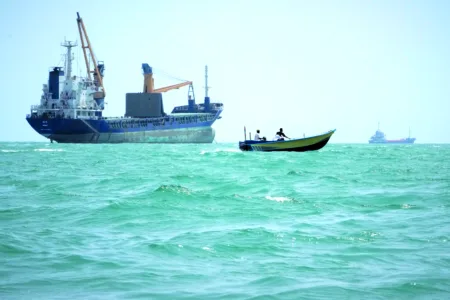
State-run media in Tehran claimed the U.S. Vessel was attempting to enter an area Iran asserts is restricted within the Strait of Hormuz. The Iranian media outlets provided details of the alleged incident, maintaining that the American military vessel was operating in a zone designated by Iran as off-limits. The U.S. Military, however, firmly refuted these claims, emphasizing that no such strike occurred and that its vessels operate in international waters in accordance with established maritime law. The U.S. Military recently struck three Iranian oil tankers, an action taken in response to Tehran launching ballistic missiles at U.S. Warships. These U.S. Strikes against Iranian oil tankers were a direct retaliatory measure following the ballistic missile launches by Tehran. These attacks mark a resumption of hostilities that had seen a period of quiet for approximately a month. The renewed aggression last week followed a significant lull in direct military engagements between the two nations.
Mohsen Rezaei, the new head of Iran's Supreme National Security Council, made comments to Iran's state broadcaster regarding the situation. Rezaei's statements were broadcast widely across state-controlled media channels, providing an official Iranian perspective on the escalating tensions. Rezaei stated that Tehran plans to announce an "exclusion zone" outside the Strait of Hormuz. This proposed "exclusion zone," according to Rezaei, would be established to control maritime activity in the region. He elaborated that the purpose of this zone would be to enhance Iran's security and sovereignty over its strategic maritime interests. The Strait of Hormuz is a critical waterway for global oil shipments. Its strategic importance means that any attempt to establish an exclusion zone would have significant international implications for maritime trade and energy security. The renewed tensions follow a period where attacks had largely subsided, with the recent incidents marking a clear departure from the relative calm of the preceding month.
Broader Regional Conflict Unfolds
The broader conflict began when Hamas-led militants attacked southern Israel on Oct. 7, 2023. This devastating Oct. 7, 2023 attack resulted in the deaths of approximately 1,200 people, with 251 others taken hostage. The scale and brutality of the assault sent shockwaves through the region and internationally, setting off a chain of events that continues to unfold.
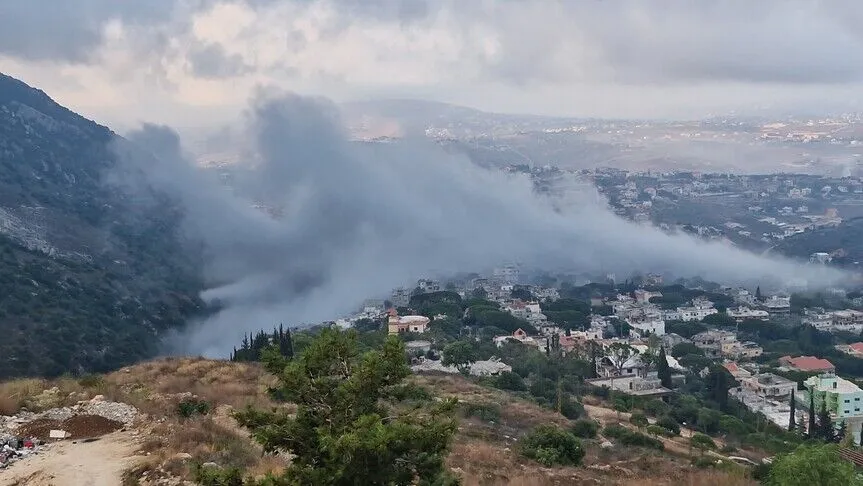
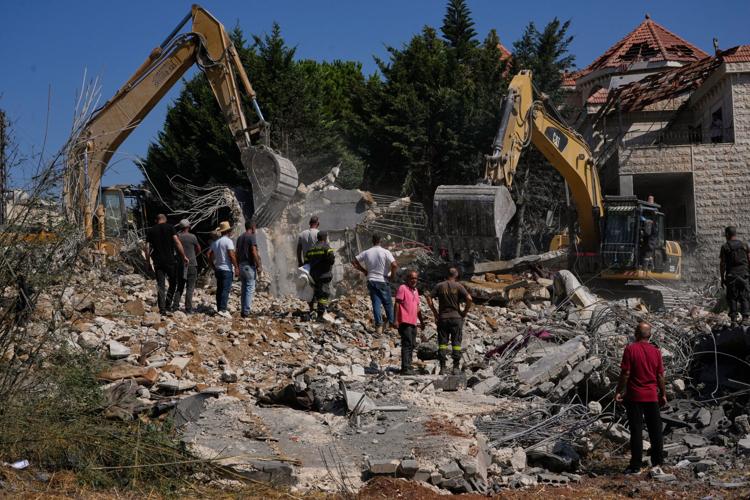
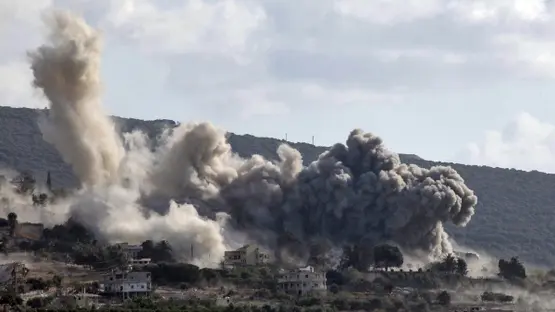
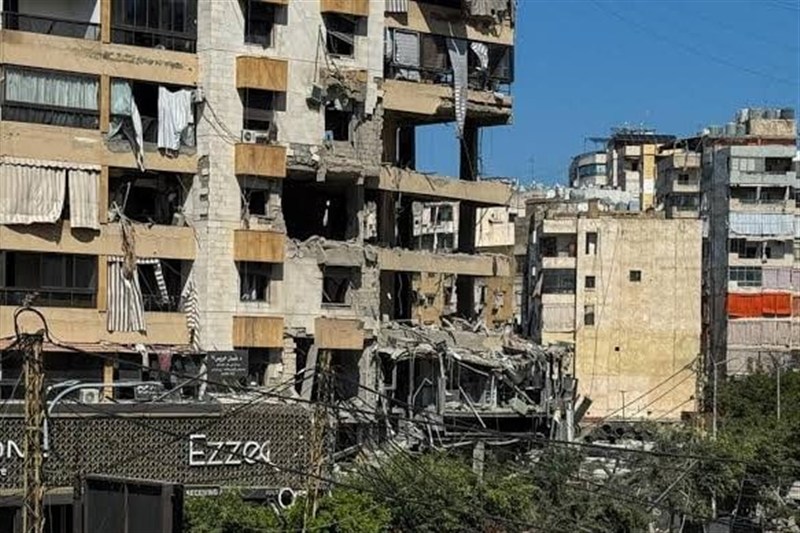
In a related development, Israel's military reported that its latest strikes were a response to a drone attack launched earlier Sunday by Hezbollah targeting troops in southern Lebanon. The Israeli military provided details of the drone attack, stating that it posed a direct threat to its personnel. Israeli strikes subsequently killed at least seven people in southern Lebanon and leveled an empty hospital. The military further claimed that Hezbollah had used the empty hospital as a command center, justifying the strike as targeting a legitimate military objective. This assertion by Israel's military noted the complexities of urban warfare and the challenges of distinguishing between civilian and military infrastructure in conflict zones.
Among the casualties, two people were killed in the village of Arabsalim. The strikes in Arabsalim caused significant damage and loss of life. Separately, two others died in Nabatiyeh al-Fawqa. These fatalities in Nabatiyeh al-Fawqa added to the growing civilian toll from the ongoing military operations. An Israeli drone struck a parking lot in the village of Nabatiyeh al-Tahta, killing three people there. The drone strike in Nabatiyeh al-Tahta resulted in immediate fatalities, further exacerbating the humanitarian crisis. At least 20 other individuals were wounded in the strikes, including three children and five women. The injuries sustained by these civilians, particularly children and women, show the severe impact of the conflict on non-combatants. The total number of wounded individuals included a significant proportion of vulnerable populations, noting the widespread suffering caused by the hostilities.
Stalled Peace Efforts and Civilian Toll
Negotiations between parties have collapsed following the announcement of a ceasefire agreement in June. The failure of these talks to progress beyond the initial agreement has led to a renewed cycle of violence and instability. The lack of progress in talks about next steps in the fragile Gaza ceasefire was defended by Jared Kushner, President Donald Trump's son-in-law. Kushner, a key figure in previous peace efforts, offered his perspective on the stalled negotiations. Kushner also defended his work with Trump's special envoy, Steve Witkoff, acknowledging the immense challenges they faced in the region. Stating that Gaza "it's been a dystopian place for a long time," Kushner articulated the deep-seated issues plaguing the territory. He added that the situation was "beyond our comprehension, so demilitarizing it is not going to be easy." This statement reflected the profound difficulty of achieving lasting peace and stability in an area with such a complex history. Kushner affirmed, "We're very determined, and we're working through these things." He further noted, "We're working through some political issues in Israel. I think we agree with them on the end state. They just have a crazy election, and that makes them a little irrational in certain regards." Kushner's remarks suggested that internal political dynamics in Israel were contributing to the current impasse. Israel's election is scheduled for October 27, a date that looms large over the current political landscape and potential for future negotiations. The upcoming election introduces an element of uncertainty into any diplomatic efforts.
Meanwhile, an Israeli strike on a civilian vehicle in western Gaza City resulted in the deaths of a father and his daughter, and wounded at least six other individuals. The strike, which hit a non-military target, drew immediate condemnation. The Israeli military stated it struck a "terrorist" in Gaza City, offering its justification for the operation. This claim by the Israeli military was met with skepticism by local residents and international observers. Separately, dozens of Palestinians gathered in Gaza City to mourn over 110 people, including at least 70 children, after their remains were recovered. Rescue crews have been diligently digging out the bodies from the Zeitoun neighborhood, a process that has been both arduous and emotionally taxing. The deceased came from three families whose houses were flattened by Israeli strikes earlier in the conflict, illustrating the devastating impact of the bombardment on entire family units. According to Gaza's Health Ministry, over 73,650 Palestinians have been killed since the war in Gaza began. This staggering figure from Gaza's Health Ministry notes the immense human cost of the prolonged conflict. Israeli strikes have killed at least 1,344 Palestinians in Gaza since a ceasefire agreement was reached with the Hamas militant group in October, indicating a continued pattern of violence despite attempts at de-escalation.