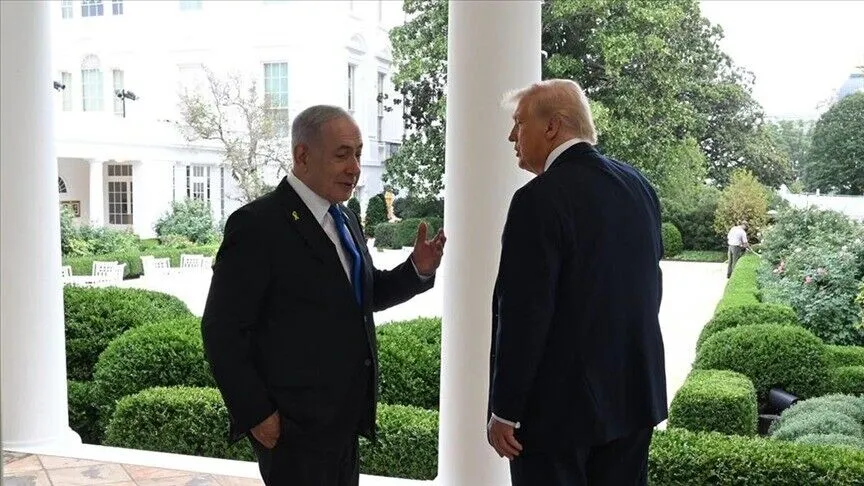
US President Donald Trump urged Israeli Prime Minister Benjamin Netanyahu to withdraw Israeli troops from Syria and Lebanon during a phone call on Thursday. The request came as reported by Axios. Trump specifically pressed Netanyahu to pull forces out of Syria. He also made a similar request concerning Lebanon during the same conversation, emphasizing the need for a full withdrawal from both territories.
Context of the Call
The phone call between President Donald Trump and Prime Minister Benjamin Netanyahu occurred a day after Mr. Trump met Syrian President Ahmad al-Sharaa. This significant meeting took place on the sidelines of the NATO summit in Türkiye, providing a direct diplomatic prelude to the subsequent conversation with Netanyahu. Officials within the Trump administration have reportedly been continuing efforts to advance a security arrangement between Israel and Syria. This diplomatic push aligns with the broader context of the request made to Prime Minister Netanyahu regarding troop withdrawals from both Syria and Lebanon, indicating a concerted effort to reshape regional security dynamics. The ongoing discussions for a security arrangement show the strategic importance of these diplomatic engagements.
Netanyahu's Stance
Prime Minister Benjamin Netanyahu argued that Israel requires security zones along its borders, according to Axios. This stance was presented during his phone conversation with US President Donald Trump, where Trump pressed for the withdrawal of Israeli forces from Syria and Lebanon. Netanyahu's argument for security zones shows a perceived necessity for defensive areas to protect Israel's territorial integrity and ensure its national security. The Israeli leader's position notes a key point of contention or discussion in the diplomatic efforts concerning regional stability and military deployments. His emphasis on these zones suggests a strategic imperative for Israel in maintaining its security posture in the face of regional dynamics, reflecting a long-standing concern for buffer areas against potential threats. This perspective offers insight into Israel's security doctrine and its approach to managing its contested borders.
Trump's Reasoning
Axios reported on Tuesday that former US President Donald Trump informed Israeli Prime Minister Benjamin Netanyahu that the Israeli military's presence in Syrian territory was generating tensions. According to the report, Trump conveyed to Netanyahu his concern that these tensions could lead to further escalation in the region, potentially sparking a wider conflict. This perspective from Trump was part of his broader urging for Israel to withdraw its forces from Syria and Lebanon, aiming to de-escalate regional flashpoints. The US President's reasoning, as detailed by Axios, noted a direct link between the continued military deployment and the potential for increased conflict and instability. His remarks showed a belief that removing Israeli troops could significantly de-escalate the situation and reduce the risk of wider hostilities, promoting a more peaceful regional environment. Trump's concern was rooted in the potential for existing military presences to inadvertently trigger broader confrontations.
Reported Quote
Axios previously reported that Donald Trump told Benjamin Netanyahu that Israel's military presence in Syrian territory was creating "a big problem." Trump communicated his concern that the situation could escalate into a broader conflict, urging the Israeli Prime Minister to withdraw forces from both Syria and Lebanon. This direct quote illustrates the urgency and seriousness with which Trump viewed the situation, emphasizing the potential for regional instability. His insistence on a withdrawal from both nations shows a belief that a full disengagement was necessary to alleviate tensions and prevent further escalation. The phrase "a big problem" succinctly captures the perceived gravity of Israel's military footprint in these neighboring states, from the perspective of the US President.