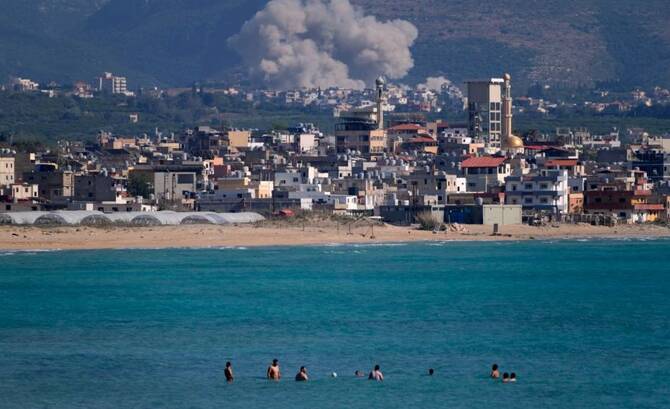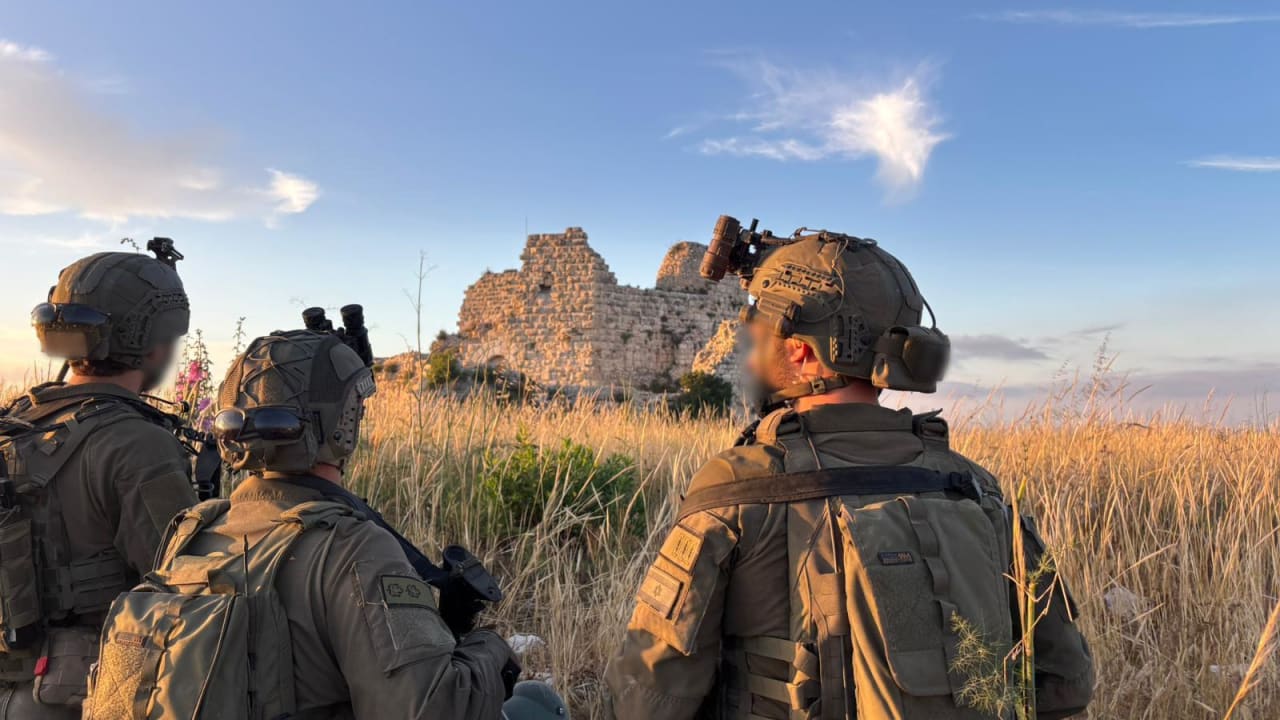
Secretary of State Marco Rubio has expressed his hope that the latest round of high-level political talks between Israel and Lebanon will result in a joint statement on ending hostilities. The U.S. State Department is facilitating these key discussions to de-escalate tensions in the region. Rubio remarked that peace between the two nations is achievable, emphasizing the potential for a diplomatic resolution to the long-standing conflict. This optimistic outlook comes as diplomatic efforts intensify to bring stability to a volatile area.
Rubio showed the administration's stance on negotiations, stating, "Ultimately, any deal we do will be a good deal, or there won’t be a deal, and it’ll be better than JCPOA." This comment reflects a clear position on the terms acceptable to the current administration for international agreements. He also commented on the progress regarding another unnamed issue, noting, "It’s not where it needs to be, but it is a long ways from where it was five months ago and poses not nearly the threat it once posed to America’s national security. We’re not satisfied with where it is, but we’ve come a long way." This suggests ongoing, complex diplomatic engagements beyond the immediate Israel-Lebanon talks, hinting at broader strategic objectives.
US Diplomatic Efforts Unfold
Israeli and Lebanese ambassadors to the U.S. Are currently engaged in a second day of negotiations at the State Department, according to reports. These critical meetings signify a concerted effort to find common ground and address the underlying issues fueling regional instability. Amid these focused diplomatic efforts, US envoys Steve Witkoff and Jared Kushner are continuing to explore a diplomatic solution, actively participating in discussions and seeking pathways for de-escalation. Their involvement notes the high priority the administration places on achieving a lasting peace.
Separately, House Speaker Mike Johnson stated he spent three hours at the White House with President Donald Trump, Senator J.D. Vance, and Senator Marco Rubio. This meeting shows the collaborative approach of key political figures in addressing national and international concerns. During this discussion, Johnson conveyed the administration's message regarding international cooperation, stating, "I am, all of us, are calling on our allied nations and friends — the Arab states in the region, and NATO partners and everyone else. The entire world has an interest in the Strait of Hormuz being reopened for commerce. That’s what he’s working on." This statement emphasizes the global economic implications of regional conflicts and the administration's commitment to ensuring freedom of navigation and trade.
President Trump is scheduled to attend the annual NATO leaders’ summit in Turkey next month, with the event set for July 7-8 in Ankara. This upcoming summit provides a significant platform for the President to engage with international allies and further articulate the administration's foreign policy agenda. Rubio commented on the administration's approach to NATO, asserting that the Trump administration has no intention of abandoning the alliance but will insist on significant reforms. "The president himself will be attending the next NATO, a meeting of heads of state where all of these points will be made clear," Rubio said, adding, "We’re still in NATO, but NATO needs significant changes, and the president has made that clear." This stance indicates a desire to strengthen the alliance through burden-sharing and strategic adjustments rather than disengagement.
The White House is also preparing to host a UFC bout on June 14, with a UFC octagon being constructed on the South Lawn. This unusual event adds a distinct flavor to the White House's public engagements. Trump compared the White House UFC cage to the Eiffel Tower, suggesting it might not be dismantled, a remark that drew attention and speculation regarding its permanence.
Regional Security Concerns
President Donald Trump indicated he was "a little bit perturbed" that Israel's conflict with Hezbollah in Lebanon was impeding peace negotiations with Iran. This sentiment notes the interconnectedness of regional conflicts and the challenges they pose to broader diplomatic objectives. Senator Marco Rubio, addressing lawmakers, maintained that any prospective U.S.-Iran agreement would be "better" than the previous Obama administration deal, specifically referring to the Joint Full Plan of Action (JCPOA). Rubio previously stated, "Ultimately, any deal we do will be a good deal, or there won’t be a deal, and it’ll be better than JCPOA." This consistent message shows the administration's commitment to what it perceives as more favorable terms in any future agreement with Iran. The Senator also confirmed President Trump offered his "complete and total endorsement" for Abelardo de la Espriella, signaling support for the Colombian lawyer.
Regarding Venezuela, Senator Rubio stated that its transition to democracy is progressing, though it requires additional time. This assessment comes five months after former President Nicolas Maduro was removed from power, marking a significant political shift in the South American nation. Reports indicated that Venezuela's oil revenue had significantly increased under U.S. Supervision since January, suggesting that the new political landscape and international oversight have had a tangible economic impact.
President Trump is also reportedly focused on securing "that final piece" to reopen commerce through the Strait of Hormuz. This strategic waterway is key for global energy markets, and ensuring its security and navigability remains a top priority for the administration. In related efforts, Bessent stated that the Treasury Department has confiscated a substantial volume of crypto assets connected to Iran sanctions evasion. Bessent elaborated, "We have seized a substantial amount of crypto assets. We have sanctioned ships, and in fact, the Navy has seized some of these ships, and we are tracking mostly the IRGC funds, and we are freezing those for the day that they can be given back to the Iranian people." The Navy has indeed seized several sanctioned vessels as part of these enforcement actions, demonstrating a multi-faceted approach to enforcing sanctions and disrupting illicit financial activities. These actions are part of a broader strategy to counter Iranian influence and financial operations.
Mullin stated that the initial layer of the border wall, referred to as the "primary wall," is expected to be completed by "this time next year." This ongoing construction project remains a key policy initiative for the administration. On a different front, Operation Epic Fury has concluded, and the United States has transitioned to a defensive posture in enforcing its blockade of Iranian ports. The offensive phase of the conflict with Iran is over, with the U.S. Now only responding if attacked first. Despite this shift, the United States will continue to deploy assets to safeguard freedom of navigation in the Strait of Hormuz, according to reports. This commitment is particularly significant given that ten civilian sailors have died as a result of the ongoing conflict in the strait, noting the human cost and the persistent dangers in the critical maritime passage. The continued presence of U.S. Assets aims to deter further aggression and protect international shipping.
Broader Political Landscape
President Donald Trump criticized Israeli Prime Minister Benjamin Netanyahu as “crazy," according to reports, reflecting a candid and sometimes unconventional approach to international relations. The Trump administration is also maintaining a deal to permanently drop tax claims against Trump. This agreement scraps a $1.8 billion fund previously designated to compensate the Republican president's allies, a decision that has drawn considerable attention and debate. Trump's endorsements have played a significant role in ending the political careers of two senators and a congressman deemed insufficiently loyal; however, Trump was unable to secure a victory for Rep. Randy Feenstra in Iowa’s Republican primary, indicating that even the President's powerful backing has its limits in certain electoral contests.
Meanwhile, Senator Marco Rubio stated that Greenland is part of Denmark ‘for now’. This comment, made in the context of strategic geopolitical discussions, hints at potential future considerations regarding the Arctic region. Rubio also indicated that discussions regarding the use of Greenland for collective defense are "in a good place." He added, "The president’s view is that it’s a lot easier to defend it when you have control and complete control of it. We are obviously having conversations with both Denmark and Greenland. They are ongoing on a monthly basis now. I think we’ll have pretty good news." These ongoing dialogues show the strategic importance of Greenland to U.S. Security interests and collective defense.
Separately, Colombian lawyer Abelardo de la Espriella thanked Trump for endorsing his campaign. De la Espriella stated, "With my head held high and my heart throbbing with patriotic gratitude, I receive your words and your steadfast support. Thank you, Mr. President!" This public acknowledgment notes the influence of presidential endorsements in international political arenas. In the Senate, Thom Tillis asked Bessent about past reported conflicts with Bill Pulte. Senator Tillis inquired, "Did you actually tell Bill Pulte you were going to punch him in the face?" Bessent responded, "I actually said I was gonna kick his ass. That was last summer, the summer of ’25." This exchange provided a glimpse into personal tensions among political figures. Additionally, the Senate officially dropped a $1 billion proposal for White House security and Trump’s ballroom project from an immigration spending bill, signaling a re-evaluation of budgetary priorities within Congress.