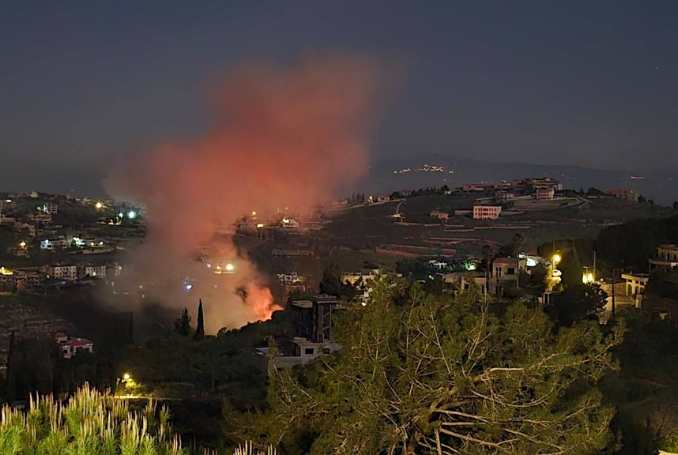
An Israeli combat soldier, Sgt. Liem Ben Hamo, 19, from Herzliya, a combat soldier in the Golani Brigade’s 13th Battalion, was killed in combat in southern Lebanon by an explosive drone, the Israeli army confirmed. This incident, which marked a significant escalation, sparked immediate retaliatory actions from Israel. Reports from the region indicated widespread destruction and a devastating human toll, with dozens of civilians killed and wounded amid the extensive damage in the Tyre, Nabatieh, and Bint Jbeil districts of southern Lebanon. The intensity of the Israeli response was evident in multiple locations, including an Israeli airstrike on the town of Zebdine in the Nabatieh district of southern Lebanon, which resulted in the deaths of six people, according to local reports. These events show the volatile nature of the cross-border conflict and the severe consequences for both military personnel and civilian populations.
Hezbollah, a prominent Lebanese political party and militant group, announced its direct involvement in several operations. The group stated it had targeted Israeli troop gatherings in the towns of Mais al-Jabal, al-Taybeh, and al-Qantara, utilizing a barrage of attack drones. These coordinated drone attacks aimed at military concentrations demonstrated Hezbollah's continued use of advanced aerial capabilities. Further illustrating their operational scope, Hezbollah also stated it targeted a Humvee vehicle with an attack drone in the town of al-Biyada, located in southern Lebanon, noting their focus on specific military assets. Amid these intense exchanges, the Israeli Air Force successfully intercepted a drone launched from Lebanon before it could enter Israeli airspace, officials said, showcasing Israel's defensive measures against incoming threats. The interception prevented potential damage or casualties within Israeli territory, but did not de-escalate the broader conflict.
Hezbollah Drone Barrage Intensifies
The incident that claimed the life of Sgt. Liem Ben Hamo also resulted in injuries to other military personnel. One soldier sustained moderate wounds in the same attack that led to Sgt. Ben Hamo’s death, showing the immediate danger posed by the explosive drone. Separately, in the Moshav Shomera incident, two soldiers were moderately wounded, and other personnel suffered light injuries, further noting the impact of Hezbollah’s drone operations. Reports indicated that the drone involved in the attack targeted an artillery battery, striking an Alpha armored personnel carrier which is specifically designed and used for transporting artillery shells. This precision targeting suggests a sophisticated understanding of Israeli military infrastructure and operations.
Beyond direct attacks, Hezbollah also reportedly achieved a significant tactical victory by bringing down an Israeli Defense Forces (IDF) Zik, or Hermes 450, drone in the Nabatieh area. This downing occurred after Hezbollah fired a surface-to-air missile, demonstrating their anti-aircraft capabilities and posing a direct threat to Israeli aerial reconnaissance and combat drones. Throughout the day, sirens warning of hostile aircraft were heard across the Galilee region in northern Israel, causing widespread alarm among residents and indicating the widespread nature of the aerial threats. The continuous warnings showed the constant state of alert in communities near the border. Israeli media reported at least 15 soldiers were wounded in multiple drone operations carried out by Hezbollah throughout Thursday, reflecting the scale and effectiveness of the group's aerial assaults. The Israeli soldier killed in the recent attack was not an isolated casualty; he was the third Israeli serviceman to die in Hezbollah drone assaults in recent days, a grim statistic that points to an escalating pattern of sophisticated and deadly attacks.
Israeli Retaliation Strikes Unleash Wide-Scale Destruction
In response to the persistent and deadly drone attacks, Israeli warplanes, drones, and artillery launched more than 70 strikes across southern Lebanon on Thursday, according to full reports from the region. These extensive retaliatory actions were a direct consequence of the Hezbollah drone attack that killed an Israeli soldier, marking a significant escalation in the ongoing cross-border hostilities. The widespread strikes impacted various areas, with reports indicating significant destruction to infrastructure and a tragic toll in terms of casualties among the Lebanese population. The intensity and breadth of these operations signaled Israel's firm resolve to respond forcefully to perceived threats.
The human cost of these retaliatory strikes was starkly evident in specific incidents. In one such devastating event, an Israeli airstrike on the town of Harouf in southern Lebanon resulted in the death of one person and left three others wounded. This strike contributed to the broader escalation of hostilities across the border, adding to the growing list of civilian casualties. In another deeply tragic incident, an Israeli airstrike targeted a home in Kfarraman, located in the Nabatieh district, killing a Lebanese soldier and members of his family. This particular incident noted the immediate and profound human cost of the escalating conflict in southern Lebanon, demonstrating how military actions directly impact civilian lives and families. These specific events illustrate the severe consequences of the tit-for-tat exchanges, with innocent lives frequently caught in the crossfire.
Amidst the heightened tensions and military actions, Prime Minister Nawaf Salam stressed that Lebanon's foremost priority is achieving a ceasefire. Salam indicated that a cessation of hostilities is an absolute prerequisite before the country would even consider entering into negotiations addressing the underlying roots of the conflict. This statement shows Lebanon's firm position regarding the ongoing cross-border exchanges, emphasizing the urgent need to halt the violence before any diplomatic progress can be made. The extensive Israeli strikes on Thursday were a direct and forceful response to the earlier drone attack by Hezbollah, which tragically claimed the life of Sgt. Liem Ben Hamo, 19, from Herzliya. The Israeli army confirmed the soldier's death, prompting the widespread retaliatory operations across southern Lebanon, which in turn led to further casualties and destruction.
Broader Context and Concerns Regarding Drone Warfare
Earlier on Thursday, the severity of the drone threat was showed when an explosive drone directly struck a military vehicle near Moshav Shomera in the Western Galilee, wounding 12 Israeli Defense Forces soldiers. This incident further illustrated the operational challenges faced by Israeli forces in countering these aerial threats. An Israeli official claimed that the Israeli army had failed to take meaningful action against explosive drone threats over the past 18 months, despite their growing prevalence. First-person-view explosive drone attacks, a relatively new tactic, began in 2024, yet Israeli forces reportedly still lack an effective response, leading to heavy losses in Lebanon and raising questions about military preparedness. The official further elaborated that the Israeli army was not fully prepared for Hezbollah's evolving explosive drone tactics, despite prior awareness of the potential threat, indicating a gap in defensive capabilities and strategic foresight. This lack of preparedness has contributed to the increasing casualties and operational difficulties experienced by Israeli forces.
The ongoing conflict has taken a significant toll on Israeli military personnel. Since the beginning of Operation Roaring Lion in late February, a total of 16 IDF soldiers have been killed in Lebanon, according to reports. This statistic notes the consistent and severe impact of the hostilities on Israeli forces operating in the region. The cumulative casualties show the high-risk environment and the persistent threats posed by Hezbollah's military capabilities.
In broader regional developments, the US Congress approved a short-term extension of a surveillance program utilized by American intelligence agencies, indicating ongoing geopolitical concerns that extend beyond the immediate conflict zone. Concurrently, the US Senate blocked a resolution introduced by a Democratic senator that sought to halt military operations against Iran, reflecting the complex and often divided political landscape surrounding US foreign policy in the Middle East. These legislative actions illustrate the intricate web of international relations and security concerns that permeate the region. Further adding to the geopolitical discourse, Iranian Supreme Leader Mojtaba Khamenei stated that the future of the region will be "without America," a provocative declaration that signals a desire for reduced US influence. Simultaneously, the Trump administration is actively urging foreign governments to join a new coalition, with the stated aim of supporting freedom of navigation in the Strait of Hormuz, a critical maritime chokepoint. These broader regional developments provide a backdrop of heightened international tensions and strategic maneuvering, influencing the dynamics of conflicts such as the one unfolding along the Israeli-Lebanese border.