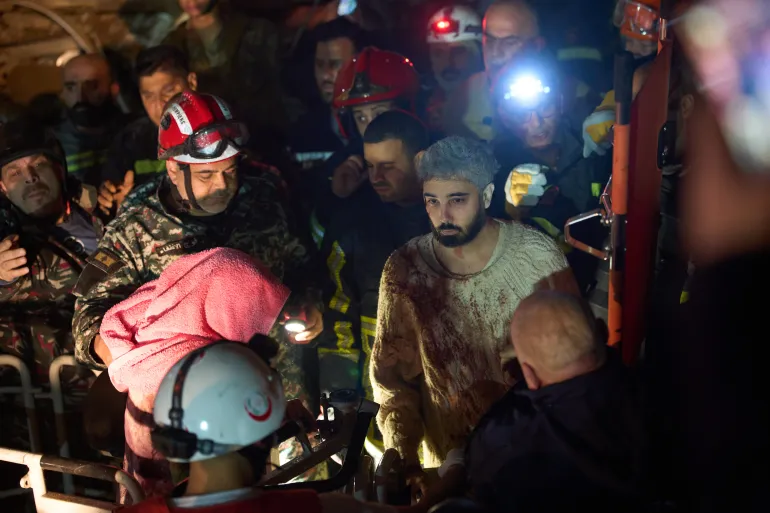
Israel conducted over 100 attacks across Lebanon on April 8, 2026, launching 100 air strikes and dropping more than 160 bombs in under 10 minutes, according to the Armed Conflict Location & Event Data (ACLED) project. The sheer scale and speed of this assault were unprecedented, marking a significant escalation in the ongoing conflict. That day is now recognized in Lebanon as 'Black Wednesday', a designation reflecting the profound impact and widespread devastation experienced by the nation. The rapid assault resulted in at least 357 fatalities across the country, a toll that included 101 women and children. The devastating loss of life and the swift, concentrated nature of the attacks have raised serious questions about their legality and intent. United Nations experts have characterized Israel’s actions on April 8, 2026, as “indiscriminate” in nature, a strong condemnation under international humanitarian law.
Scale and Civilian Impact
Israel claimed it killed 250 Hezbollah operatives during the April 8, 2026, attacks. This claim, however, has been met with skepticism and counter-evidence from various quarters. Numerous sources told Al Jazeera that the attacks appeared to be indiscriminate at best, and in some cases may have amounted to the direct targeting of civilians. This assessment directly contradicts Israel's stated objectives and raises concerns about potential war crimes. Early indications from ACLED analysts showed that only a few victims of the April 8 attacks were known Hezbollah members, further undermining Israel's narrative of targeted strikes against military personnel. The discrepancy between Israel's claims and the on-the-ground reality reported by independent observers and news outlets notes the contentious nature of the conflict.
Reports indicated that Israel's attacks largely concentrated in southern Lebanon and the Bekaa Valley in the east. These regions have historically been flashpoints in the conflict, but the intensity of the April 8 strikes was particularly severe. The widespread nature of the attacks across these areas led to significant civilian casualties and infrastructure damage. Among the casualties, seven members of the Nasreddine family were reportedly killed in Hermel, a tragic loss that showed the human cost of the conflict. Additionally, three generations of the displaced Hawi family, including three children, died in the Jnah neighborhood bordering Beirut, illustrating the devastating impact on families seeking refuge. The attacks on civilian areas, regardless of their proximity to alleged military targets, have drawn sharp criticism.
Ahmad Hamdi's building was hit by rockets, and the building directly facing his was reduced to rubble. His testimony reflects the shock and disbelief among residents in areas previously considered safe. Hamdi stated, "When you think of Tallet el Khayat, you feel it is safe and secure. No one would expect something like that would happen." This sentiment was echoed across various communities that found themselves unexpectedly caught in the crossfire. Lebanese media reported on a number of those killed by Israel on April 8, including employees of local restaurants, teachers, a poet, journalists, Lebanese soldiers, and a member of a Druze-majority political party. The diverse backgrounds of the victims further support the argument that the attacks were not solely targeting Hezbollah operatives but had a broader, indiscriminate impact on the Lebanese population. These reports paint a grim picture of widespread civilian suffering and the destruction of livelihoods.
Context of Escalation and Law
Israel intensified its war on Lebanon on March 2, 2026, marking the second such escalation in under two years. This intensification signaled a significant shift in the conflict dynamics, moving beyond localized skirmishes to a broader, more aggressive campaign. On the same day, Hezbollah responded to the near-daily Israeli attacks on Lebanon, a first since December 2024. Hezbollah's response on March 2 was reportedly in reaction to the United States and Israel's assassination of Iran's Ayatollah Ali Khamenei, an event that significantly raised regional tensions. The assassination of such a high-profile figure was a major catalyst, leading to a direct and forceful retaliation from Hezbollah, thereby further entrenching the cycle of violence. During this period, Israel also invaded southern Lebanon, systematically destroying towns and villages to create an uninhabitable “buffer zone” along its border. This strategy of creating a depopulated zone has been widely condemned as a violation of international law and a form of collective punishment against the civilian population.
The United Nations reported that Israel has violated a November 2024 ceasefire more than 10,000 times since October 2023. These numerous violations show a persistent disregard for agreed-upon cessation of hostilities and a pattern of continued military action. Israel has not ceased attacking Lebanon since October 2023, indicating a continuous state of conflict that predates the formal escalation. The war in Lebanon officially began on March 2, 2026, marking a new, more intense phase of hostilities. Lebanon's health ministry stated that more than 2,100 people have been killed and 7,000 others wounded in the country since the start of the war. These figures highlight the severe human cost of the conflict, with thousands of lives lost and many more suffering injuries. The ongoing violence has placed immense strain on Lebanon's healthcare system and humanitarian organizations.
International humanitarian law requires armed forces to distinguish at all times between civilians and military objectives. This fundamental principle, known as the principle of distinction, is key in minimizing civilian harm during armed conflict. Violations of this principle can constitute war crimes. Hezbollah attacks have killed two civilians in Israel, and 13 Israeli soldiers have been killed in combat in Lebanon. These casualties on the Israeli side represent a fraction of the total lives lost in Lebanon, but nonetheless show the reciprocal nature of the violence. Israel claimed the April 8 attacks targeted Hezbollah headquarters, command-and-control sites, military formations, and assets of its air force unit and elite Radwan Force. While Israel maintains its actions were legitimate military operations, the high civilian death toll and the findings of UN experts and other sources challenge this assertion, suggesting a potential failure to adhere to the principle of distinction.
Targeting of Medical Personnel
The conflict has also seen a disturbing pattern of attacks on medical infrastructure and personnel. Three successive Israeli attacks killed at least three paramedics in southern Lebanon, with two paramedics killed and three others wounded in ambulance attacks. Such targeting of medical professionals and facilities is a grave breach of international humanitarian law, which grants protected status to medical personnel and their vehicles in armed conflict. Reports indicated that two ambulances from the Risala Scout Association and the Nabatieh Ambulance Service were also attacked, further illustrating the direct threat faced by those providing emergency care. Fadel Serhan's team had been operating in a tent outside Nabih Berri Hospital after their station in Mayfadoun was destroyed in an Israeli air strike earlier in the war. This forced relocation and continued targeting demonstrate the extreme challenges faced by medical teams attempting to provide aid in a war zone.
The Lebanese health ministry stated that 91 health professionals have been killed and 208 wounded in the ongoing war. These statistics paint a stark picture of the dangers faced by medical workers, who are often on the front lines of humanitarian response. More than 120 Israeli attacks on ambulances and medical facilities have been recorded, according to reports, indicating a systematic pattern rather than isolated incidents. The Islamic Health Association is an emergency service linked to Hezbollah, and the Risala Scout Association is affiliated with the Amal Movement. Regardless of their affiliations, international law protects medical personnel and facilities. Lebanon's health ministry called the attacks on Wednesday a "flagrant crime," emphasizing the severity of these violations. Kristine Beckerle, deputy Middle East and North Africa director at Amnesty International, stated that "deliberately striking medics performing their humanitarian functions is a serious violation of international humanitarian law and could constitute a war crime." This strong condemnation from an international human rights organization shows the gravity of these actions. Hezbollah discontinued the practice of providing the circumstances of its fighters’ deaths in September 2024, making it more challenging to independently verify the status of some casualties.
Diplomatic Shifts and Future
Attacks on Beirut have temporarily ceased since US President Donald Trump announced a ceasefire in Lebanon on April 16, 2026. This announcement brought a welcome, albeit fragile, pause to the intense hostilities that had gripped the capital. The ceasefire represents a key diplomatic development, offering a glimmer of hope for de-escalation after a period of heightened violence. Following this development, Israel and Lebanon have begun direct negotiations. These direct talks, facilitated by international efforts, are a significant step towards potentially resolving the underlying issues of the conflict. While the path to a lasting peace remains uncertain, the initiation of direct dialogue between the two nations is a positive sign. The international community will be closely watching these negotiations, hoping they lead to a full and durable resolution that addresses the security concerns of both sides and ensures the protection of civilians. The future of the region hinges on the success of these diplomatic efforts and the commitment of all parties to uphold international law and protect human lives.