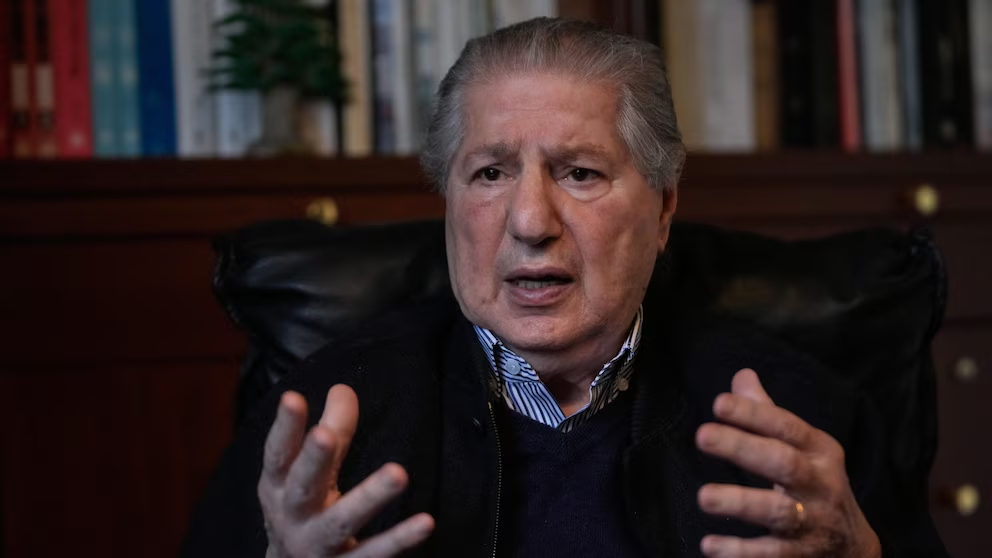
Former Lebanese President Amin Gemayel stated in an interview on Wednesday, April 29, 2026, that he believes the time has arrived for Lebanon to pursue peace talks with Israel. Gemayel, who was sworn in as Lebanon's youngest-ever president at 40 years old in 1982, previously signed a short-lived agreement with Israel in May 1983. That deal aimed to end the state of war and included Israeli troop withdrawal from southern Lebanon and Lebanese troop deployment, but it never fully went into effect. The agreement, formally known as the May 17th Agreement, represented a significant diplomatic effort to stabilize the volatile border region and establish a framework for future relations between the two nations. However, internal and external pressures ultimately prevented its full implementation, leaving the state of war officially unresolved.
Gemayel reflected on the political climate during his presidency, saying, "During my time, discussing a peace agreement with Israel was an unforgivable fatal crime." He explained the failure of the 1983 accord, noting, "Israel, though we had finished the negotiations and reached the stage of signing, tried to impose an article outside of the framework of the agreement, which was the simultaneous withdrawal alongside the Syrian army in Lebanon. So the Israeli military wouldn’t withdraw unless the Syrians would." This additional condition, introduced late in the negotiation process, proved to be a critical stumbling block. Gemayel added that "It gave the Syrian military a veto to the agreement ... And a public atmosphere of doubt that (then-Syrian President Hafez) Assad and his crew created." This deliberate obstruction from Damascus effectively derailed the peace process, despite the initial hopes for a lasting resolution.
He now sees an opportunity for the Lebanese government to engage in negotiations "to reach a solution that achieves peace, security, and stability in Lebanon." Gemayel believes this "would also satisfy the feelings of Lebanese who yearn for the bare minimum of calm, peace, stability, and an end to the war," adding, "We have to see how far we can go." He emphasized that such negotiations could address the long-standing grievances and instability that have plagued the region for decades. Current President Joseph Aoun is reportedly seeking an agreement similar to the 1949 armistice, not full normalization of relations with Israel. This approach suggests a focus on de-escalation and border security rather than establishing full diplomatic ties. Gemayel stated, "We trust General Aoun to enter negotiations as far as they go while maintaining the interests of the country and the unity of Lebanon. And he knows exactly how far he can go in negotiations." His confidence in President Aoun stems from the understanding that any potential agreement must safeguard Lebanon's sovereignty and national interests above all else.
Gemayel's Call for Dialogue
Hezbollah opposes direct talks with Israel, a stance that complicates any potential peace initiative. This opposition comes as Hezbollah's military capabilities have been significantly weakened by Israel’s strikes in Lebanon over the past two years. The sustained military pressure has degraded the group's operational capacity and may alter the internal political calculus regarding negotiations. The altered regional landscape, according to Gemayel, presents a new opportunity for Lebanon to pursue a different path towards stability.
Gemayel pointed to the ousting of Syria's President Bashar Assad as a key development, removing a major obstacle that previously hindered Lebanese-Israeli agreements. He suggested that with Assad no longer in power, a significant source of external pressure influencing Lebanon's foreign policy has been alleviated. This change, he implied, could create a more conducive environment for independent Lebanese decision-making regarding peace negotiations, free from the historical interference of the Syrian regime. The removal of this regional player fundamentally reshapes the geopolitical dynamics that have long impacted Lebanon's autonomy.
Another factor contributing to Gemayel's call is the precedent set by the Abraham Accords. These accords led to several Arab countries establishing diplomatic ties with Israel, demonstrating a shift in regional dynamics and offering a potential model for future engagement. The agreements, which saw the normalization of relations between Israel and the United Arab Emirates, Bahrain, Sudan, and Morocco, signaled a new era of Arab-Israeli diplomacy. The former president indicated that these developments show a changing regional paradigm, making renewed peace efforts more viable and potentially more acceptable within the broader Arab world. These shifts provide a contemporary context that was absent during his earlier attempts at peace.
The article, which was published on April 29, 2026, reflects a current assessment of the geopolitical situation. Gemayel's remarks suggest a belief that the confluence of these internal and external shifts creates a unique window for Lebanon to reconsider its relationship with Israel and pursue avenues for stability. He argues that Lebanon can no longer afford to remain isolated from these regional transformations, especially given its own internal challenges.
Lessons from 1983 Agreement
Amin Gemayel, 84, who served as president from 1982 to 1988, reflected on Lebanon's previous attempts at peace with Israel. He recalled a period when discussing a peace agreement with Israel was considered "an unforgivable fatal crime," noting the intense political and societal pressures of the time. Lebanon and Israel held their first direct talks since the 1980s under his administration, seen at the time as the only viable path to securing Israeli troop withdrawal and long-term stability. The negotiations were complex, involving numerous diplomatic efforts to bridge deep-seated mistrust and conflicting national interests.
Gemayel detailed the challenges faced during the 1983 negotiations, which ultimately prevented the agreement from taking full effect. He stated that despite completing negotiations and reaching the signing stage, "Israel... Tried to impose an article outside of the framework of the agreement, which was the simultaneous withdrawal alongside the Syrian army in Lebanon." This meant the Israeli military would not withdraw unless Syrian forces also did, effectively linking Israeli disengagement to Syrian actions. Gemayel explained that this condition effectively "gave the Syrian military a veto to the agreement," exacerbated by "a public atmosphere of doubt that (then-Syrian President Hafez) Assad and his crew created." This strategic move by Syria aimed to maintain its influence in Lebanon and prevent any independent Lebanese-Israeli accord. Reports indicate that Israeli troops remain in large swaths of southern Lebanon following this period, showing the long-term consequences of the 1983 agreement's failure.
Despite these past difficulties, Gemayel now believes there is an opportunity for the Lebanese government to engage in new negotiations. He sees this as a chance "to reach a solution that achieves peace, security, and stability in Lebanon." Such an outcome, he added, "would also satisfy the feelings of Lebanese who yearn for the bare minimum of calm, peace, stability, and an end to the war." Gemayel emphasized the need to explore the extent of what is possible, stating, "We have to see how far we can go." He expressed confidence in current President Joseph Aoun to navigate these sensitive talks, trusting him "to enter negotiations as far as they go while maintaining the interests of the country and the unity of Lebanon. And he knows exactly how far he can go in negotiations." This trust implies a belief in President Aoun's diplomatic acumen and his commitment to national interests.
Current Conflict and Displacement
Hezbollah launched rockets into Israel on March 2, marking a significant escalation in ongoing hostilities. This act triggered a strong response from Israel, intensifying the conflict along the border. Following this, Israel conducted a bombardment and a ground invasion into Lebanese territory, further destabilizing the region. The recent round of fighting has resulted in a substantial loss of life, with over 2,500 people killed in Lebanon. These fatalities include both combatants and a significant number of civilians caught in the crossfire.
The intensity of the conflict has had devastating humanitarian consequences. Reports indicate that over one million people in Lebanon have been displaced from their homes due to the violence. This internal displacement has placed immense pressure on humanitarian resources and infrastructure across Lebanon, straining the country's already fragile economy and public services. The sustained conflict has severely impacted civilian populations and led to significant damage in affected areas, destroying homes, businesses, and critical infrastructure. The scale of the displacement shows the urgent need for a lasting resolution to the conflict.