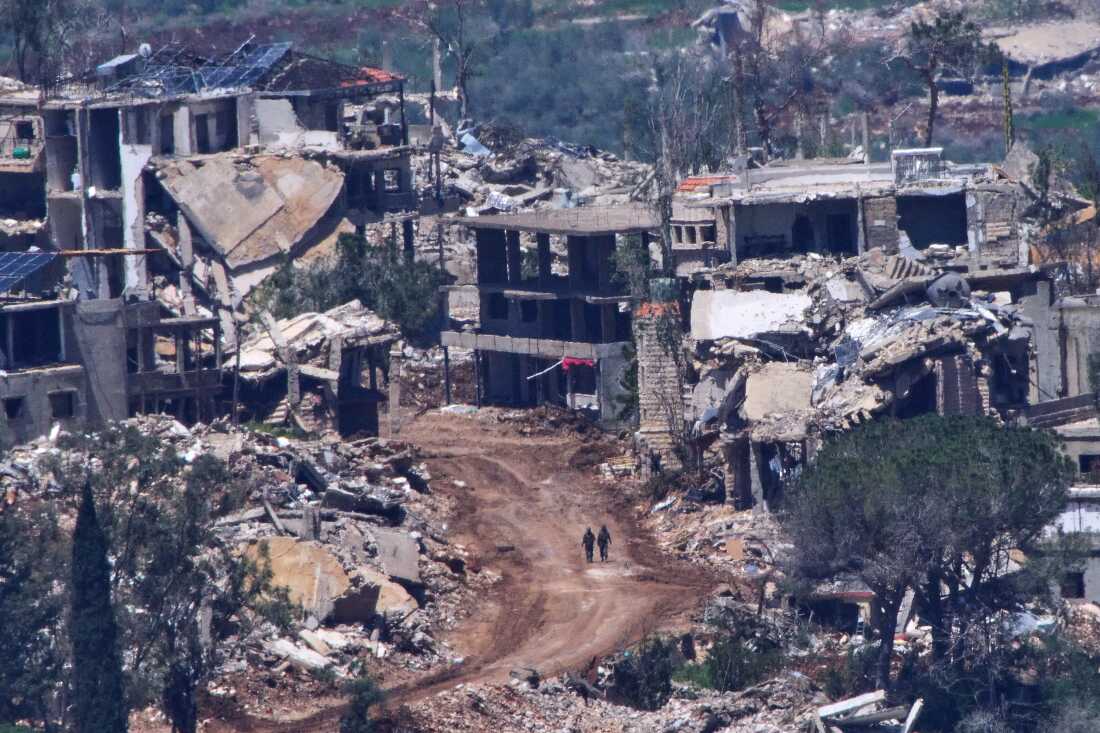
Israel is systematically destroying towns and villages in southern Lebanon, actions that observers claim mirror tactics previously employed in Gaza. This extensive campaign of destruction is reportedly part of a stated Israeli goal to establish a 'buffer zone' along its border with Lebanon. The ongoing military operations and widespread demolitions are fundamentally reshaping the landscape of southern Lebanon, with significant and lasting implications for the region and its inhabitants. The scale of the destruction has drawn comparisons to the devastation observed in other conflict zones, raising serious concerns among international bodies and humanitarian organizations.
Widespread Demolitions and Infrastructure Damage
Towns and villages near the border with Israel have been largely destroyed by Israeli demolitions and strikes, according to numerous reports from the ground. This systematic destruction extends deep into Lebanese territory, impacting communities like the village of Mansouri, which is located approximately six miles from the Israeli border. This distance notes the extensive reach of the Israeli operations, extending beyond immediate border areas. Israel has reportedly been carrying out controlled demolitions in 55 Lebanese towns and villages it currently occupies in the southern region of the country. These demolitions are not isolated incidents but part of a broader, coordinated strategy. The deliberate nature of these actions, involving controlled demolitions rather than solely targeting through airstrikes, indicates a methodical approach to altering the physical landscape of southern Lebanon.
Beyond village infrastructure and residential areas, Israel has also struck critical transportation networks in southern Lebanon. Reports indicate that Israel has struck bridges across the region, effectively taking out every major crossing over the Litani River heading to the south during the past two months of conflict. This systematic targeting of bridges has severely impeded movement and access within southern Lebanon, isolating communities and disrupting essential supply routes. The campaign of infrastructure destruction culminated in an Israeli strike on the coastal Qasmiyeh bridge, which was the last remaining major crossing to the south, in the final hours before the current temporary ceasefire was announced. The destruction of these vital crossings has significantly impacted the ability of civilians to travel, access humanitarian aid, and for emergency services to operate effectively within southern Lebanon. The cumulative effect of these strikes has been to fragment the region's connectivity, exacerbating the humanitarian challenges faced by displaced populations.
Israel's Stated Aims and Legal Concerns
Israel states its military operations in southern Lebanon are primarily targeting Hezbollah infrastructure. This objective is consistently cited as the justification for the extensive military presence and the destructive actions being undertaken. However, the systematic destruction of towns and villages, including the widespread controlled demolitions, is considered by some to be a violation of international law and a potential war crime. Critics argue that the scale and nature of the destruction go beyond what is permissible under the laws of armed conflict, particularly concerning the protection of civilian property and infrastructure. The extensive damage and the resulting displacement of civilian populations raise profound questions about adherence to principles governing armed conflict and the protection of civilian populations in occupied territories. International humanitarian law mandates that military operations must distinguish between combatants and civilians, and between military objectives and civilian objects, and that any damage must be proportionate to the military advantage gained. The systematic leveling of entire communities challenges these fundamental principles.
The current situation bears historical parallels to past Israeli presence in southern Lebanon. Israel previously occupied southern Lebanon for nearly two decades, establishing a security zone that extended deep into Lebanese territory. This prior occupation, which lasted from 1985 to 2000, involved significant military control and operations in the region, leading to prolonged instability and conflict. The memory of this extended occupation remains a sensitive point for many Lebanese, and the current actions by Israel evoke a sense of déjà vu regarding its long-term intentions in the area. The historical context shows the deep-seated tensions and the cyclical nature of conflict in the border region, where the establishment of 'security zones' has often led to prolonged military presence and civilian suffering.
Regarding its current actions, Israel has stated its preparedness to maintain its presence in occupied southern Lebanon for an extended period. Israeli officials have indicated a willingness to remain in the area for months, or even years, depending on security considerations and the perceived threat from Hezbollah. This long-term commitment suggests a sustained military presence and continued control over the affected Lebanese territories, rather than a short-term intervention. The stated aims of creating a 'buffer zone' and ensuring security along its border, coupled with the scale of destruction and the declared intention for a prolonged occupation, are contributing to significant displacement and growing concerns among international legal observers and humanitarian organizations. The implications of such a long-term presence for the sovereignty of Lebanon and the rights of its displaced citizens are substantial.
Humanitarian Impact and International Warnings
Civilian infrastructure in southern Lebanon has also been significantly affected by the ongoing military operations, impacting the daily lives and long-term prospects of thousands of residents. The village of Mansouri now lies less than a mile from Israel's 'yellow line' in the south, a new demarcation of territory that has effectively shifted the border and encroached further into Lebanese land. This proximity shows the direct impact of Israeli military operations on civilian areas. Oxfam, a leading international humanitarian organization, issued a stark warning that Israeli forces were "using the Gaza playbook in Lebanon," drawing a direct comparison between the tactics employed in both regions. The organization noted extensive damage to vital water infrastructure, critical electricity networks, and essential bridges, all of which are key for the functioning of civilian life. An Oxfam spokesperson added that these actions were "cutting off vital supplies and services for entire towns and villages," creating a humanitarian crisis and severely limiting access to basic necessities for the affected populations. The targeting of such infrastructure has a cascading effect, disrupting healthcare, sanitation, and communication, thereby compounding the suffering of civilians.
The human toll of this destruction is profound and deeply personal for those affected. Zainab Mahdi, a resident from Naqoura, shared her devastating experience, stating she heard from U.N. Peacekeepers that her home is completely gone, along with most of the village. Mahdi expressed her profound distress, saying, "I'm angry, and I'm sad," reflecting the emotional trauma inflicted by the loss of her home and community. She added, "But I'm also feeling a lot of fear – fear about how long it will be before we can return? What if that doesn't happen in my lifetime? God, it looks like it's going to be a long time." Her words encapsulate the uncertainty and despair faced by thousands of displaced Lebanese who fear they may never return to their ancestral lands. Despite the overwhelming destruction, Mahdi also reflected on the enduring importance of returning, stating, "Just smelling our own soil is enough," and "Just sitting down on your own land in your own village, it lifts your spirits, despite everything." This sentiment notes the deep connection residents have to their land and the psychological importance of their homes.
The scale of the damage is immense and continues to grow. Lebanese officials estimate that some 62,000 homes have been damaged or destroyed since the beginning of March alone, indicating a rapid and extensive campaign of destruction. This figure represents a significant portion of the housing stock in southern Lebanon, leading to a massive displacement crisis. Corey Scher, a postdoctoral researcher at Oregon State University's Conflict Ecology laboratory, observes that large swaths of towns and villages are being effectively wiped off the map in Lebanon, a phenomenon he notes is strikingly similar to what has been observed in Gaza. Scher elaborated on his findings, stating, "Previously damaged areas in Lebanon are now being completely leveled. And it looks like what Gaza looked like, when we also saw a complete leveling." He further noted, "The striking part for me, and a commonality, is that you just see large swaths of towns, villages being effectively wiped off the map." This expert analysis reinforces the comparison to Gaza, suggesting a deliberate strategy of widespread destruction that aims to render areas uninhabitable and reshape the demographic and physical landscape of southern Lebanon. The long-term consequences of such extensive damage for reconstruction, return of displaced populations, and regional stability are expected to be severe.