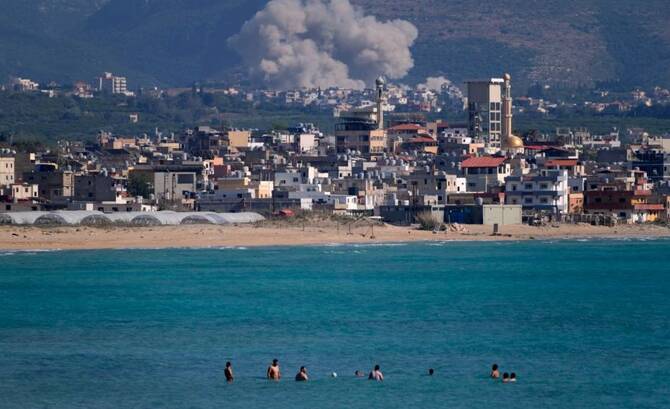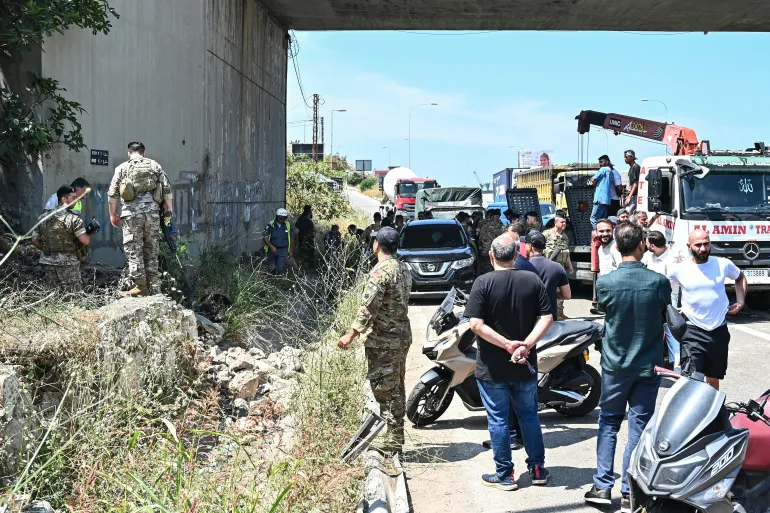
Israeli attacks on Wednesday resulted in the deaths of nine people and injuries to others across Lebanon, including six individuals near Tyre, a soldier in the south, two people in Khaldeh, and six people overnight in southern Lebanon. The incidents occurred several kilometers south of Beirut, according to Lebanon's state media, even as Israeli and Lebanese negotiators were poised to convene in Washington for their fourth round of direct talks, scheduled to begin Tuesday. During the same period, the Israeli military reported downing a "hostile aircraft" and two projectiles launched from Lebanon. The Israeli military further stated that no injuries were reported from the intercepted projectiles or the aerial target. This assertion by the Israeli military specifically noted that no injuries were reported from either the intercepted projectiles or the aerial target, showing their assessment of the defensive measures taken.
United States President Donald Trump said he was "a little bit perturbed at his constantly fighting with Lebanon" regarding Israeli Prime Minister Benjamin Netanyahu. President Trump also stated that Prime Minister Netanyahu had committed to cancel any planned attacks on Beirut. However, the Israeli leader's office clarified that Israel reserved the right to strike Beirut if Hezbollah attacks persisted. This clarification from the Israeli leader's office emphasized that while commitments were made, Israel's right to self-defense remained critical, particularly in the face of ongoing aggression. Prime Minister Netanyahu reiterated calls to "disarm Hezbollah" and "demilitarise Lebanon." The ongoing conflict has led to the displacement of more than one million people from their homes in Lebanon, forcibly displaced from their residences across the country. This significant internal displacement notes the severe humanitarian impact of the sustained hostilities on the Lebanese population, forcing a substantial portion of the populace to seek refuge elsewhere within their own country.
Escalation Reaches Beirut Outskirts
The attacks struck at least 10 vehicles, including one targeting an ambulance, according to reports. Among the victims were two medics in the municipality of Chehour. Israel's government ordered strikes on the southern suburbs of Beirut on Monday, with targets reportedly in Beirut’s southern suburbs, known in Arabic as Dahiyeh. Following the Monday warning, large numbers of people were observed fleeing Dahiyeh, seeking safety from the anticipated strikes. This exodus from Dahiyeh, a densely populated area, demonstrated the immediate and profound fear among residents regarding the potential for further Israeli military action. Beirut has largely been spared from airstrikes since the ceasefire took effect, apart from two targeted attacks on the city’s southern suburbs in May. A nominal ceasefire has been in place since April 17, but recent events highlight its fragility.
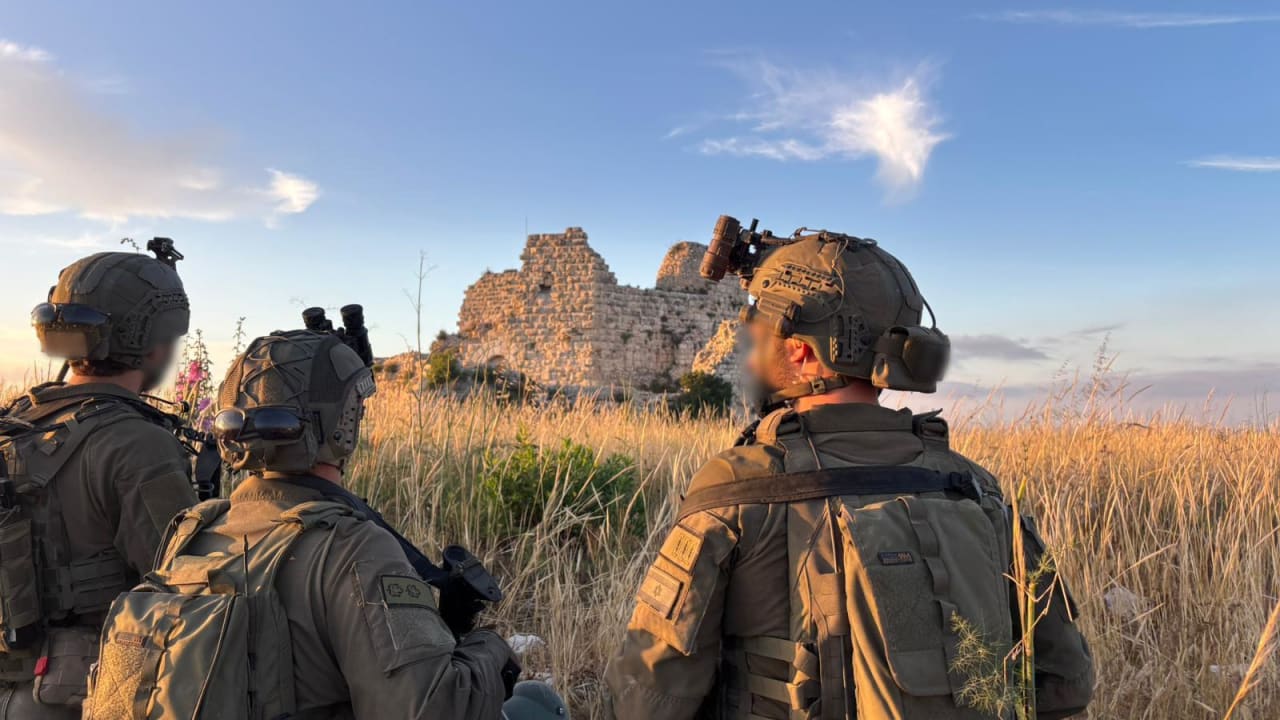
Lebanese President Joseph Aoun stated that "Lebanon is facing a fierce and condemned Israeli aggression." President Aoun added that his government continues its work to end "the suffering of the Lebanese in general and the southerners in particular." This strong condemnation from President Aoun shows the Lebanese government's perspective on the nature of the Israeli military actions and its commitment to alleviating the distress of its citizens. Israeli Prime Minister Benjamin Netanyahu insisted that Israel had to "disarm Hezbollah" and "demilitarise Lebanon" to establish peace. Meanwhile, the Israeli military reported intercepting a suspicious aerial target in the area where Israeli soldiers are operating in southern Lebanon. The Israeli military confirmed that no injuries were reported from the interception. United States President Donald Trump is reportedly weighing a tentative ceasefire extension with Iran, a proposal that could have broader implications for regional stability.
Diplomatic Efforts and Sticking Points
US-mediated talks between Israeli and Lebanese officials are progressing in Washington, aiming to address regional security concerns. United States Secretary of State Marco Rubio expressed hope for a joint statement and an action plan regarding security in Lebanon, emphasizing that such measures should be "independent from Hezbollah." Rubio also stated his desire for the parties to be "on the track for security." His remarks followed recent communications with both sides, as he spoke to Lebanese President Joseph Aoun and Israeli Prime Minister Benjamin Netanyahu late Sunday. The direct engagement by Secretary Rubio with both key leaders late on Sunday shows the high-level diplomatic push to de-escalate tensions and find a pathway forward amidst the escalating violence.
Secretary Rubio proposed a fresh path to continue the ongoing negotiations between the two nations, a suggestion to which Lebanese President Joseph Aoun was reportedly open. The proposal outlined that Hezbollah would halt all attacks on Israel, and in return, Israel would refrain from escalating military operations in Beirut. However, Lebanese parliament chief Nabih Berri responded to the diplomatic overtures by demanding that Israel first cease all military actions. Berri affirmed that he could guarantee Hezbollah’s “full, full and immediate commitment to a ceasefire,” adding a rhetorical question, "but who will force Israel to stop its aggression?" Hezbollah itself has rejected direct talks with Israel, complicating efforts to secure a lasting peace. The Trump administration, for its part, does not expect Israel to give up retaliating for Hezbollah strikes on its territory, acknowledging the complexities of the security situation.
Iran has also engaged in discussions with Washington, demanding an end to the war in Lebanon as a prerequisite for any broader agreement. These current talks represent the first direct engagement between Iran and the United States on this specific issue in more than three decades, showing the significance of the current diplomatic push. The fact that these discussions mark the first direct engagement between Iran and the United States on this specific issue in over three decades notes the extraordinary nature of the current diplomatic efforts and the urgency perceived by all parties involved. Iran's foreign ministry reiterated that a ceasefire in Lebanon remains a key condition for any potential deal with the United States to end the wider conflict in the Middle East. This stance notes the interconnectedness of regional conflicts and the challenges faced by negotiators.
United States President Donald Trump remarked that he was "a little bit perturbed at his constantly fighting with Lebanon." Lebanese President Joseph Aoun stated that "Lebanon is facing a fierce and condemned Israeli aggression," adding that his government continues its work to end "the suffering of the Lebanese in general and the southerners in particular." Israeli Prime Prime Minister Benjamin Netanyahu has consistently insisted that Israel must "disarm Hezbollah" and "demilitarise Lebanon" to establish peace in the region, reflecting a core demand from the Israeli side in any potential resolution. This consistent demand from Prime Minister Netanyahu notes the fundamental security objectives driving Israel's actions and its non-negotiable stance regarding the demilitarization of its northern border.
Broader Context and Human Cost
Since Israel escalated attacks on Lebanon on March 2, reports indicate 3,516 people have been killed and 10,674 wounded in Lebanon. Invading Israeli forces have pushed north of the Litani River in Lebanon, reaching their deepest point in the country in 26 years a day prior, according to reports. This advance marks a significant escalation in the ground operations. Hezbollah fired rockets at soldiers in northern Israel on Wednesday, demonstrating the ongoing exchange of fire. On Sunday, Hezbollah had also fired rockets and missiles at northern Israel, including the outskirts of the coastal city of Haifa, further illustrating the breadth of the conflict. The targeting of Haifa's outskirts on Sunday by Hezbollah's rockets and missiles signifies an expansion of the conflict's geographical scope, threatening more significant urban centers in Israel's north.
Israeli Prime Minister Benjamin Netanyahu and Defense Minister Israel Katz issued a joint statement regarding the strikes, citing repeated violations of the ceasefire by Hezbollah and "attacks against our cities and citizens" as reasons for the actions. Hezbollah had agreed to halt attacks on Israel when the ceasefire was signed in mid-April, according to reports. However, Hezbollah resumed attacks following Israeli strikes in Lebanon that Israel characterized as self-defense, leading to a cycle of retaliation. The latest round of fighting between Israel and Hezbollah has killed 3,412 people in Lebanon, a stark reminder of the human toll of the conflict. These figures do not include the additional deaths and injuries reported on Wednesday, further exacerbating the humanitarian crisis.
An Israeli soldier was killed in southern Lebanon overnight in a drone attack by Hezbollah, showing the persistent threat faced by Israeli forces. At least 26 Israeli soldiers and one defense contractor have been killed in or near southern Lebanon, according to Prime Minister Netanyahu’s office. In addition to military casualties, two civilians have also been killed in northern Israel, noting the impact of the conflict on civilian populations on both sides of the border. Prime Minister Netanyahu has consistently stated Israel must "disarm Hezbollah" and "demilitarise Lebanon" to establish peace, a position that remains central to Israel's security objectives. The ongoing violence and diplomatic efforts show the urgent need for a resolution to the protracted conflict in the region.