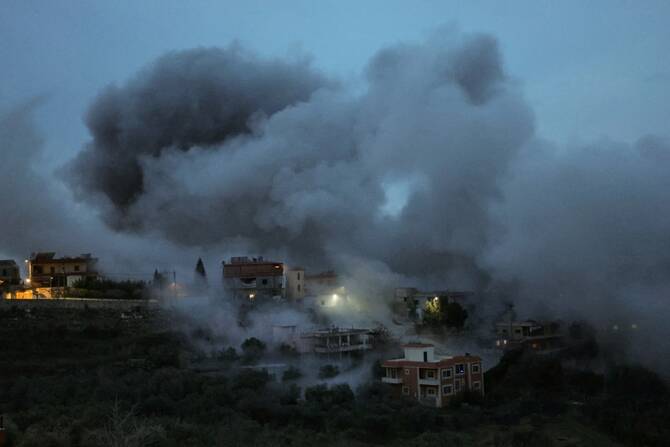
Israel's air force targeted sites across Lebanon, including in the eastern Bekaa Valley, late on Monday, according to reports. These strikes represent a significant escalation in the ongoing cross-border conflict. Lebanon’s state-run National News Agency stated that several airstrikes hit the eastern town of Mashghara in the Bekaa region on Monday night, causing damage and raising concerns among local residents. The Israel military reported striking more than 70 Hezbollah infrastructure sites throughout the day, indicating a broad and sustained campaign against the Lebanese militant group. These infrastructure sites are described by the Israeli military as key to Hezbollah's operational capabilities. The Lebanese Health Ministry has indicated that more than 3,000 people have been killed in Lebanon during the latest fighting, showing the severe human cost of the conflict. Additionally, two civilians have died in northern Israel, noting the reciprocal nature of the violence affecting both sides of the border. The intensity of these recent actions points to a deepening crisis in the region.
Escalating Cross-Border Fire
Hezbollah has been firing fiber optic drones at Israeli forces positioned in southern Lebanon and northern Israel in recent weeks, marking a notable shift in tactics. The group stated it conducted eight attacks earlier in the day, including a specific drone attack targeting Israeli troops stationed in Misgav Am, located in northern Israel. This drone attack was one of several actions claimed by Hezbollah as part of its ongoing operations, demonstrating its continued willingness to engage Israeli targets. The group has increased its use of various munitions, including these specialized drones, in its engagements across the border, signaling an evolution in its military capabilities and strategy. These recent actions contribute to the heightened state of tension and cross-border exchanges between Hezbollah and Israeli forces. The use of fiber optic drones represents an evolving tactic in the conflict, allowing for precise targeting and surveillance. This escalation in drone usage adds another layer of complexity to the already volatile situation along the border, prompting increased defensive measures from Israeli forces. The ongoing exchanges have created a climate of fear and uncertainty for communities on both sides.
Diplomatic Efforts and Stalemate
A U.S.-brokered ceasefire has been in place between the parties since April 17, intended to de-escalate the hostilities. Despite this agreement, a U.S. State Department official stated that Hezbollah has ignored repeated requests from the United States to stop firing at Israel, indicating a persistent challenge to diplomatic efforts. Since the ceasefire went into effect, Hezbollah has launched a significant number of projectiles, including over a thousand drones and more than 700 rockets, according to official reports. These actions highlight ongoing challenges in de-escalating tensions along the border and suggest that the ceasefire has not been fully effective in preventing cross-border attacks. The continued barrage of projectiles from Hezbollah shows the difficulties faced by international mediators in securing a lasting cessation of hostilities. The U.S. Government has consistently urged all parties to adhere to the ceasefire terms and engage in constructive dialogue to prevent further escalation.
In a separate development, Lebanon and Israel began their first direct talks last month, marking the first such engagement between the two nations in more than three decades. These discussions represent a diplomatic effort to address long-standing issues and potentially pave the way for future stability in a region often marked by conflict. Lebanese and Israeli military officials are scheduled to meet again on Friday, with the Pentagon serving as the venue for these continued discussions, emphasizing the involvement of international actors in facilitating dialogue. This upcoming meeting shows ongoing international efforts to mediate and facilitate dialogue between the two countries, despite the persistent violence. The persistent cross-border fire, however, continues to complicate these diplomatic initiatives, maintaining a state of high alert and instability in the region. The commitment to these talks amidst ongoing hostilities reflects a complex interplay of military action and diplomatic maneuvering, with both sides seemingly exploring avenues for de-escalation while simultaneously engaging in conflict. The international community views these talks as a key step, albeit a fragile one, toward potentially reducing tensions and finding a more durable solution.
Netanyahu Vows Intensified Attacks
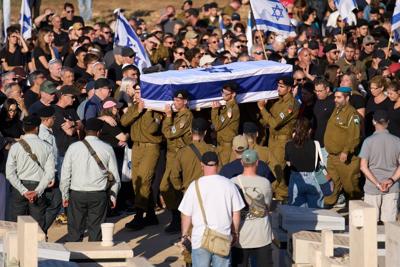
Earlier Monday, an Israeli airstrike on the southern village of Kfar Rumman killed four people and wounded three, according to the Lebanese National News Agency (NNA). This incident adds to the growing casualty count in Lebanon. Israeli drone strikes on other parts of southern Lebanon also resulted in the deaths of three additional people, further compounding the human toll of the conflict. The latest Israel-Hezbollah war began on March 2, marking a distinct phase of heightened aggression and military operations. Since the conflict escalated, 22 Israeli soldiers and a defense contractor have been killed in or near southern Lebanon, indicating the significant risks faced by Israeli personnel. The ongoing clashes have resulted in widespread destruction and displacement in border communities on both sides. The Israeli military has reiterated its commitment to responding to all threats emanating from Lebanese territory, signaling a continued strong posture. The situation remains highly volatile, with both sides demonstrating a readiness to engage militarily despite international calls for restraint.