Israeli forces launched a significant ground operation north of the Litani River over the past week, an offensive that military planners had been developing for approximately one year. This extensive operation signifies a substantial and deliberate expansion of Israeli military actions into areas of Lebanon considered key strongholds for Hezbollah. The strategic importance of this advance was showed when Prime Minister Benjamin Netanyahu officially announced on Saturday that Israeli troops had successfully crossed the Litani River, thereby confirming the deep penetration into Lebanese territory. The operation, which commenced after careful planning, represents a critical juncture in the ongoing regional conflict.
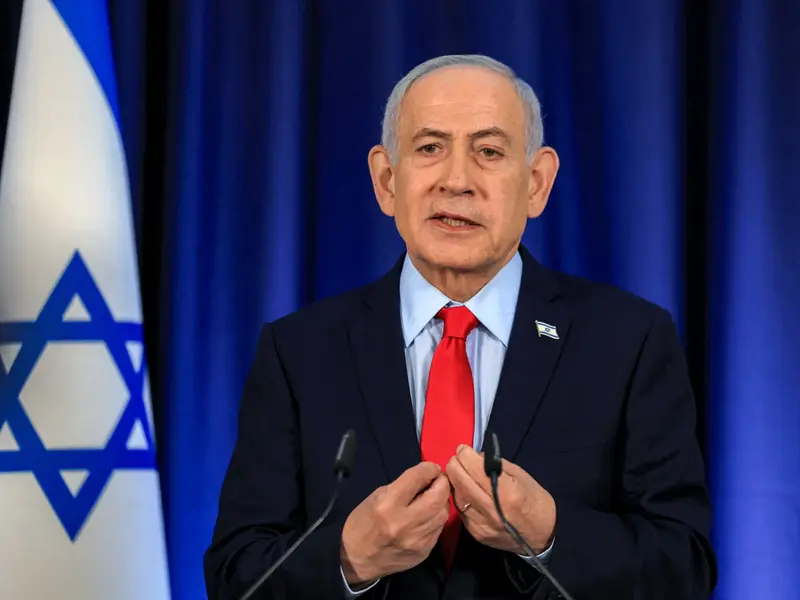
“Our forces crossed the Litani. They have moved onto commanding terrain, establishing a significant presence beyond this strategic waterway,” Prime Minister Netanyahu stated in his announcement. He further elaborated on the breadth of the military’s engagement, adding, “We are operating in Beirut, in the Bekaa Valley and across the entire front, striking Hezbollah hard and systematically dismantling their capabilities.” The offensive marks a profound development in the ongoing conflict, bringing Israeli ground forces into deeper Lebanese territory than seen in recent periods. This aggressive move follows sustained cross-border exchanges and further escalates the already heightened regional tensions, indicating a shift towards more direct and expansive military confrontation.
Ground Forces Advance North
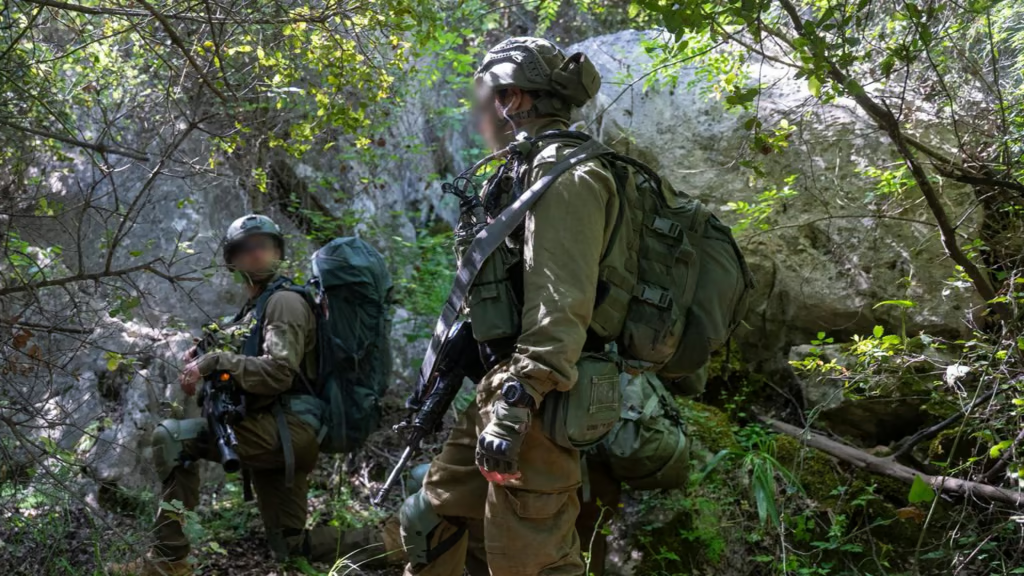
The ground operation north of the Litani River is spearheaded by the Israeli Defense Forces' (IDF) 36th Division, a unit known for its substantial combat capabilities and experience. Under the command of the 36th Division, IDF units participating in this ground advance have successfully captured the village of A-Taybeh, securing an important strategic point within the operational zone. In a related development, Israeli forces also systematically destroyed critical infrastructure in the village of Qantara, aiming to degrade Hezbollah's operational capacity and logistical networks in the area. These actions highlight the methodical approach being taken by the IDF in establishing control and disrupting enemy operations.
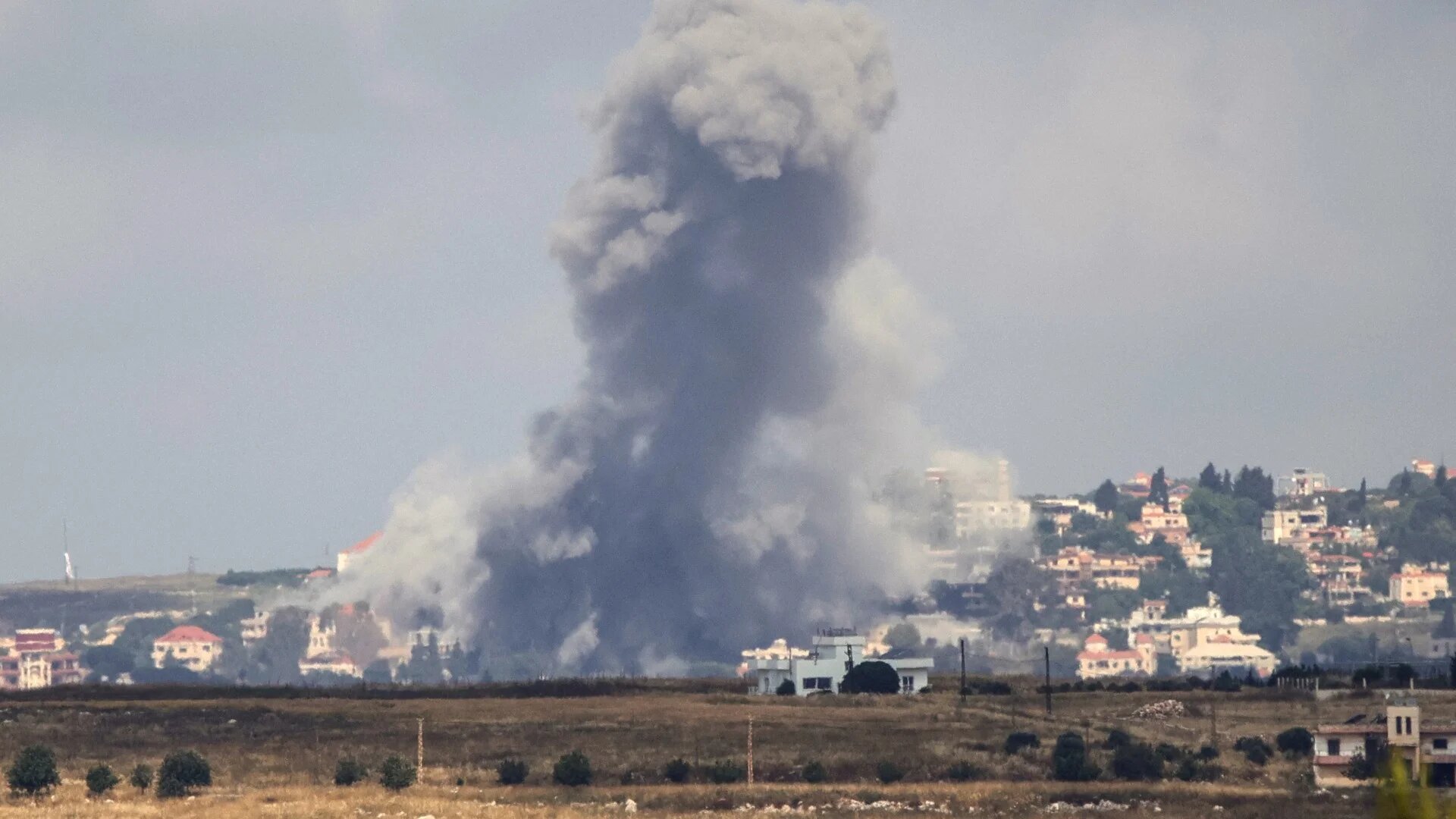
Lebanese media outlets have extensively reported ongoing and intense clashes on the ground in several locations within the operational zone, indicating fierce resistance from Hezbollah fighters. The Israeli military has demonstrably intensified its actions in support of the ground advance, carrying out dozens of precision airstrikes and concentrating heavy artillery fire in the area north of the Litani River since Friday. These sustained bombardments precede and actively support the ground forces' movements, providing cover and clearing pathways for their progression. The combined air and ground assault is designed to overwhelm Hezbollah defenses and facilitate the deeper penetration of Israeli troops.
The military also conducted a series of targeted attacks in Beirut over the past week. These attacks mark a notable resumption of operations in the Lebanese capital after a period of approximately three weeks during which the city was not directly targeted by Israeli forces. The broader offensive includes coordinated actions by air and ground units, demonstrating a full military strategy as Israeli forces push deeper into Lebanese territory, affecting both rural strongholds and urban centers. This multi-front approach aims to exert maximum pressure on Hezbollah across its operational domains.
Hezbollah Stronghold Under Fire
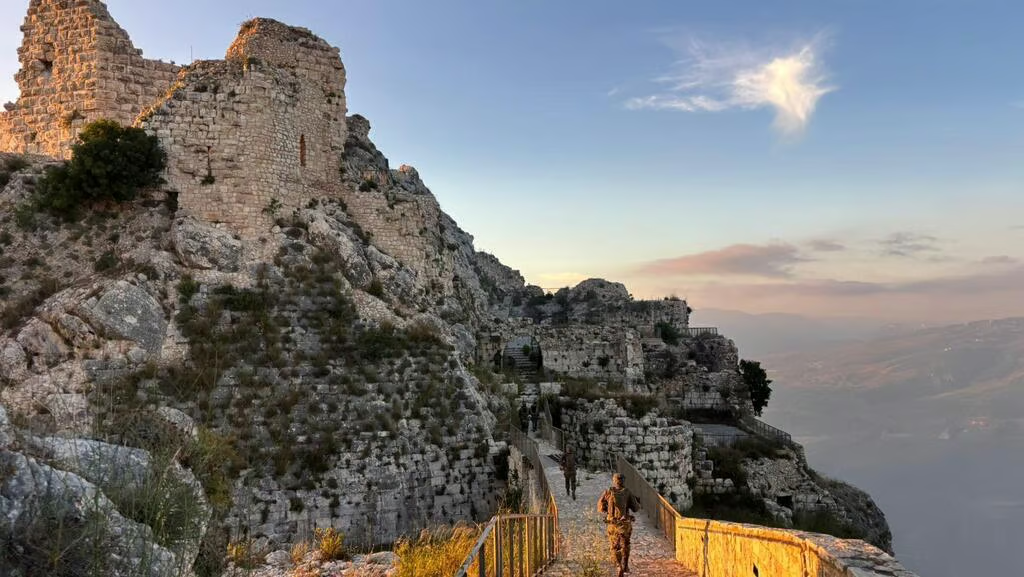
Israeli Defense Forces (IDF) have not only crossed the Litani River but are now operating extensively in areas well north of it, challenging Hezbollah’s long-established control. A senior Lebanese military source, speaking to Turkey's Anadolu Agency on Sunday, confirmed the depth of the Israeli advance, stating that Israeli forces have reached the villages of Zawtar al-Sharqiya and Shaqif Arnoun. Both of these villages are strategically located within the Beaufort area, a region historically significant for its terrain and proximity to key routes. According to the same source, clashes between Israeli forces and Hezbollah fighters are continuing with intensity in communities situated near the historic Beaufort Castle, indicating a persistent and direct confrontation over territorial control.
The territory spanning from the area directly north of the Litani River up to the city of Sidon is reportedly controlled by a specific and highly organized Hezbollah unit known as Badr. This unit is understood to be a critical component of Hezbollah’s military structure in southern Lebanon. Hezbollah has meticulously organized this territory into two distinct operational areas to optimize its defensive and logistical capabilities: a "security zone," designed for forward defense and direct engagement, and a "maintenance zone," intended for logistical support, training, and equipment storage. The ongoing military operations extend deeply into these designated areas, which are considered profoundly significant for Hezbollah's presence and activities in southern Lebanon. The ground advance into these villages marks a further and more determined penetration into what is understood to be a key operational region for the militant group, directly challenging its territorial authority and operational freedom.
Hezbollah Responds with Rockets
The significant escalation represented by the ground operation prompted an immediate and strong response from Hezbollah, which expanded the range of its rocket fire considerably. This extended reach now includes Israeli cities such as Safed, Nahariya, and Karmiel, demonstrating Hezbollah's capacity to strike deeper into Israeli territory in retaliation. Lebanese Prime Minister Nawaf Salam issued a strong condemnation of the Israeli actions, stating that the country faces a "dangerous and unprecedented Israeli escalation." Prime Minister Salam elaborated on the nature of the Israeli offensive, asserting, "Israel is not only attacking specific areas but is also implementing a policy of widespread destruction and mass displacement, causing immense suffering to the Lebanese population." He further accused Israel of "attacking archaeological sites, some of them internationally recognized, while flagrantly violating Lebanon's sovereignty and territorial integrity, showing a disregard for international law and cultural heritage."
Prime Minister Salam affirmed Lebanon's unwavering resolve in the face of this aggression, stating emphatically, "We are determined to defend our country and prevent Lebanon from becoming a mailbox for regional messages, a pawn in broader geopolitical conflicts." He emphasized a core principle of national sovereignty, asserting that "decisions on war and peace must rest with the state alone, reflecting the will of the Lebanese people and not external interests." Salam concluded his remarks with a clear statement of national intent, declaring, "Lebanon will spare no effort in seeking a full ceasefire, an unconditional Israeli withdrawal from our lands, and the necessary reconstruction efforts to rebuild what has been destroyed." He added a poignant reflection on the conflict's origins, stating, "This war was imposed on us, and its cost today is enormous, both in terms of human lives and material devastation."
Lebanese Officials Condemn Escalation
The 36th Division, which is leading the current ground maneuver, spent the past month meticulously creating the necessary conditions for the advance. This preparatory phase involved extensive engineering work, including opening new routes, clearing potential obstacles, and securing the area around the Litani River to ensure the smooth passage of ground forces. Lebanese Prime Minister Nawaf Salam reiterated his strong condemnation, stating the country is facing "a dangerous and unprecedented Israeli escalation that threatens regional stability." Prime Minister Salam added that "Israel is not only attacking specific areas but is also implementing a policy of widespread destruction and mass displacement, deliberately targeting civilian infrastructure and communities." He further accused Israel of "attacking archaeological sites, some of them internationally recognized, while violating Lebanon's sovereignty and territorial integrity, demonstrating a blatant disregard for international norms and conventions."
Prime Minister Salam affirmed that "this war was imposed on us, and its cost today is enormous, placing an unbearable burden on our nation and its people." He emphasized Lebanon's commitment to achieving a just and lasting peace, stating that "Lebanon will spare no effort in seeking a full ceasefire, an immediate Israeli withdrawal from all Lebanese territories, and strong reconstruction initiatives to restore our devastated communities." Salam also stated, with unwavering conviction, "There can be no compromise on a complete withdrawal of Israeli forces, the return of all Lebanese prisoners held by Israel, full reconstruction efforts, and the safe return of all displaced people to their homes and livelihoods." The Prime Minister concluded his remarks by asserting a fundamental truth, "Israel will not achieve security through destruction and the subjugation of another nation. True security can only come through peace and respect for sovereignty." He added a resolute declaration of national policy, "We are determined to defend our country and prevent Lebanon from becoming a mailbox for regional messages, a battleground for others' agendas. We have decided to pursue negotiations as the most appropriate option and the one with the lowest cost, prioritizing diplomacy over continued conflict. Decisions on war and peace must rest with the state, as the sole legitimate authority representing the will and interests of the Lebanese people."