Israel announced on Thursday night that its forces had secured "operational control" of the Ali Al-Taher highlands in southern Lebanon. The declaration from Israel claimed several Hezbollah fighters were killed during operations in the area, with others reportedly fleeing. The strategic highlands are located near the Litani River, a significant geographical feature in the region, which has long been a focal point in regional security discussions. The Israeli announcement on Thursday night explicitly stated that this "operational control" had been achieved, marking a significant development in the ongoing military activities in the border region.
Defense Minister Israel Katz stated on Friday that Israeli forces were still preparing to establish "full control" of the heights. This ongoing military action follows previous engagements in the area, showing the persistent nature of the conflict. The Ali Al-Taher highlands are considered a key vantage point overlooking parts of South Lebanon and Northern Israel, making their control strategically important for both sides. The area's elevation provides a commanding view, which is tactically valuable for surveillance and offensive operations. The declaration of "operational control" suggests a phase of military dominance, while "full control" implies a more permanent and full establishment of authority over the territory.
Israeli Account of Operation
The Israeli military announced that forces from its 36th Division had established control "above and below ground" in the Ali Al-Taher highlands. This assertion followed operations aimed at clearing Hezbollah’s underground military infrastructure in the area. The military specified that this control was achieved after a concerted effort to dismantle the extensive network of subterranean facilities. Israeli Prime Minister Benjamin Netanyahu characterized the operation as the "clearing" of the Ali Al-Taher heights, indicating a full effort to remove Hezbollah presence and infrastructure from the strategic area. This terminology notes the Israeli objective of not just occupying, but thoroughly neutralizing the adversary's capabilities in the region.
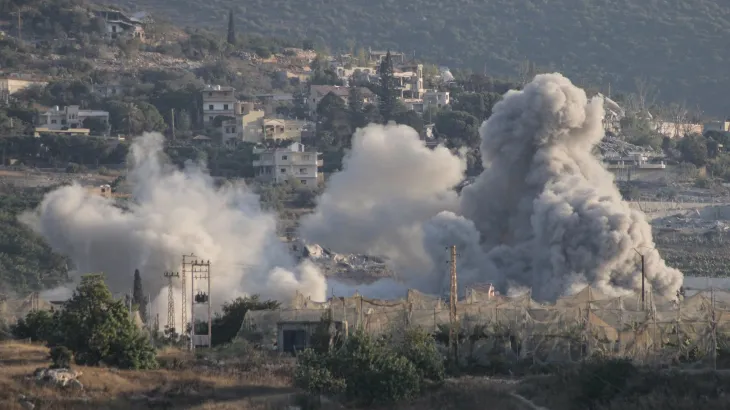
In recent weeks, Israeli forces conducted extensive air and ground operations in and around the strategic highlands. These operations were part of a broader campaign to degrade Hezbollah’s capabilities in southern Lebanon. An Israeli military source, quoted by the newspaper Maariv on Friday, reported that 15 bodies were discovered inside tunnels within the Ali Al-Taher area. This discovery further supported the Israeli claim of engaging and neutralizing Hezbollah fighters within their underground fortifications. Defense Minister Israel Katz stated that the area had functioned as a command center for launching attacks against both Israeli forces and the Galilee region, showing its perceived significance as an operational hub for Hezbollah. This designation as a command center implies that the highlands were not merely a defensive position but a launchpad for offensive actions. Israel further stated that specific details concerning the operation had been withheld to safeguard the soldiers involved in the mission, a common practice in military operations to protect personnel and operational methods. The intensity and scope of these operations indicate a determined effort by Israel to secure this critical territory.
Strategic Importance and Geography
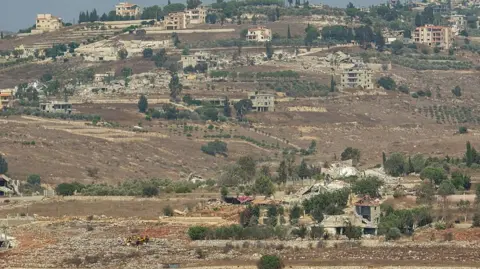
The Ali Al-Taher highlands are situated within Lebanon's Nabatieh governorate, positioned between the towns of Kfar Tibnit and Nabatieh Al-Fawqa, and located north of the Litani River. These geographical markers place the highlands in a highly contested and sensitive zone near the border. These hills reach an elevation of approximately 600 meters above sea level and are located 12 to 15 kilometers from the Israeli border. This elevation provides a natural advantage, offering panoramic views across the landscape, which is invaluable for military observation and strategic positioning. The proximity to the Israeli border, while not immediate, is close enough to be a significant factor in cross-border security concerns.
The area has long been regarded as a significant logistical and operational position for Hezbollah, serving as a critical node in their defensive and offensive strategies. Israeli assessments have characterized the hills as a critical entry point to some of Hezbollah’s more extensive defensive infrastructure, which reportedly includes tunnels and underground installations. This network of subterranean facilities is believed to be a key component of Hezbollah’s ability to withstand military pressure and launch operations. The strategic importance of the Ali Al-Taher highlands is thus multi-faceted, encompassing its elevated position, its role as a logistical hub, and its connection to a broader network of defensive structures. During fighting that commenced on March 2, Israeli forces advanced to Beaufort Castle, a location approximately 3 to 4 kilometers from the Ali Al-Taher heights. This earlier advance demonstrates the progressive nature of Israeli military operations in the region, gradually moving closer to key Hezbollah strongholds. The capture of the Ali Al-Taher highlands, if confirmed, would represent a substantial gain for Israel in its efforts to push back Hezbollah from the border.
Lebanese Uncertainty and Verification Challenges
Lebanese officials and military experts were unable to independently confirm whether the strategically important Ali Al-Taher highlands had fallen to Israeli forces. This lack of independent verification notes the complex and often opaque nature of military operations in contested territories. Ihab Hamadeh, a Hezbollah representative in the Lebanese Parliament, stated there remained "ambiguity" over the reality of Israel’s claimed control in the area. This parliamentary statement reflects the official uncertainty on the Lebanese side regarding the exact situation on the ground. The lack of independent verification was further elaborated by retired Lebanese army Maj. Gen. Abdulrahman Shehaitli. He stated that Israel had imposed a broad "ring of fire" around the hills, which made any independent assessment impossible. This "ring of fire" effectively isolates the area, preventing access and thus making it extremely difficult for external parties to verify claims.
Maj. Gen. Shehaitli explained, "No Lebanese party can confirm that the hills have fallen. The Israeli fire cordon is preventing anyone from advancing to verify what has happened. The Lebanese army cannot move forward, nor can anyone else." His comments showed the difficulty in ascertaining the ground situation from the Lebanese side, emphasizing the complete blockade of information and access. This situation creates a vacuum where claims from one side cannot be independently corroborated, leading to widespread skepticism and uncertainty. Adding to the complexity, a Lebanese official indicated that ongoing Israeli demolition and bulldozing operations in southern Lebanon had altered the physical landscape, erasing or obscuring parts of the physical border itself, which further complicates assessments of territorial control. These operations, by physically changing the terrain, make it harder to rely on pre-existing geographical markers to determine precise control and boundaries, exacerbating the challenges of verification. The deliberate alteration of the landscape contributes to the overall ambiguity surrounding territorial claims and military advances in the border region.
Broader Context and Mediation Efforts
A temporary ceasefire between the parties was reached on April 14, following mediation efforts by the United States. This ceasefire provided a brief respite from the intense military activities and opened a window for diplomatic engagement. The US Embassy in Lebanon announced that American mediation had resulted in initial steps, including the release of detainees and assistance to Lebanon in recovering missing remains. These humanitarian outcomes demonstrate a tangible, if limited, success of the diplomatic efforts. US Ambassador to Lebanon Michel Issa and US Ambassador to Israel Mike Huckabee finalized the latest prisoner release during Ambassador Issa’s visit to Israel earlier this week. The direct involvement of high-level US diplomatic representatives shows the importance the United States places on de-escalation and humanitarian resolutions in the region. On Friday morning, the International Committee of the Red Cross received four Lebanese prisoners from the Israeli military. The transfer occurred through the Naqoura border crossing, marking a concrete outcome of the recent mediation and providing a clear example of the practical results achieved through these diplomatic channels. These mediation efforts, while addressing specific humanitarian issues, also aim to create a foundation for broader stability, even as military operations continue to unfold in strategic areas like the Ali Al-Taher highlands. The intricate interplay between military actions and diplomatic initiatives continues to shape the volatile situation in southern Lebanon and along the Israeli border.