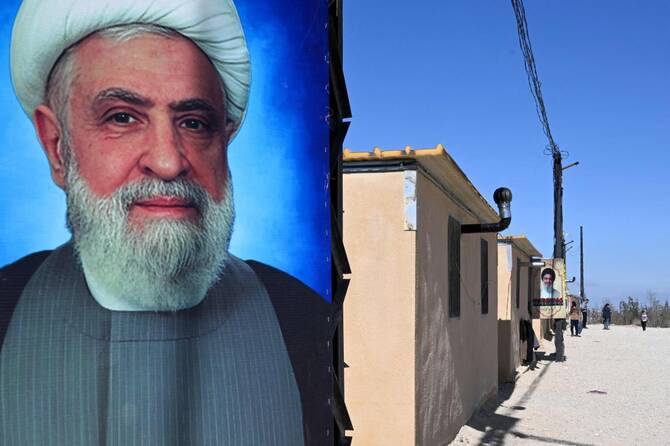
Hezbollah's leader, Naim Qassem, on Sunday condemned the Lebanese government for its participation in direct negotiations with Israel. Qassem's remarks came as he addressed the ongoing regional situation, asserting the group's stance on potential agreements. He expressed hope for a broader resolution to the conflict. "We hope that a full agreement to cease hostilities will be reached and that this agreement will include us," Qassem stated. His comments were delivered on Sunday, providing a clear indication of Hezbollah's current position regarding diplomatic efforts between Lebanon and Israel.
Rejection of Direct Talks
Naim Qassem, the leader of Hezbollah, rejected direct talks between Israel and Lebanon. He asserted that such direct negotiations would exclusively benefit Israel. Qassem emphasized that Hezbollah would not be part of any direct discussions with Israel, a stance that aligns with the group's long-standing policy. He stated that any direct engagement would only serve to strengthen Israel's position without yielding genuine concessions for Lebanon. This condemnation of the Lebanese government's involvement in these talks notes a significant divergence in approach between the militant group and the official state. Qassem has previously expressed hope for a broader resolution to regional hostilities. "We hope that a full agreement to cease hostilities will be reached and that this agreement will include us," he said. His comments show Hezbollah's position on the ongoing diplomatic efforts concerning the two nations, specifically rejecting the format of direct engagement. He reiterated his firm belief that direct talks between Israel and Lebanon benefit only Israel, thus undermining any potential for a fair resolution for Lebanon.
Call for Public Action
Naim Qassem called upon the Lebanese populace to engage in public demonstrations. The Hezbollah leader urged citizens to take to the streets, stating that such actions are essential for expressing the nation's collective will. Qassem's call for public action comes amidst his rejection of direct talks between Lebanon and Israel, which he argues would exclusively benefit Israel. He reiterated Hezbollah's position on a broader cessation of hostilities. "We hope that a full agreement to cease hostilities will be reached and that this agreement will include us," Qassem stated, referring to Hezbollah's potential inclusion in any full resolution. This appeal to the public signals a desire to mobilize popular sentiment against the current diplomatic trajectory and to exert pressure on the Lebanese government. His remarks show the group's stance on both diplomatic efforts and the role of public sentiment in the ongoing regional dynamics, advocating for a more assertive national posture.
Iran-US Deal Welcomed
Naim Qassem welcomed a potential deal between Iran and the United States aimed at ending their conflict. The Hezbollah leader expressed hope that such an agreement could contribute to broader stability. Qassem stated, "We hope that a full agreement to cease hostilities will be reached and that this agreement will include us," indicating Hezbollah's desire to be part of any full resolution. This welcoming of a possible deal between Iran and the United States to end their war suggests a broader strategic outlook for Hezbollah, linking regional de-escalation to its own interests. His remarks show the group's perspective on regional de-escalation efforts beyond the immediate Lebanon-Israel context, viewing a resolution between Iran and the United States as a positive development for the wider region.
Context of Negotiations
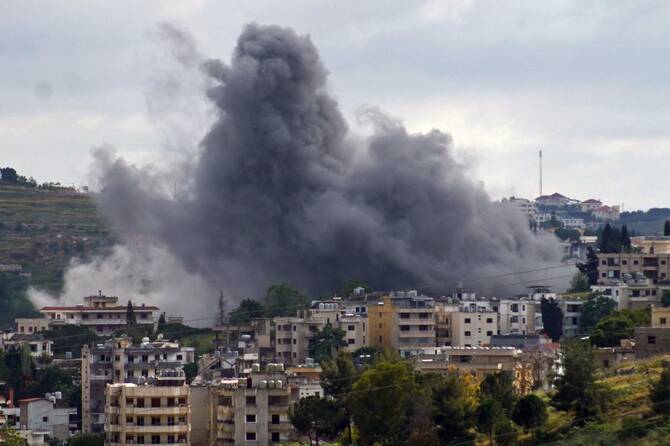
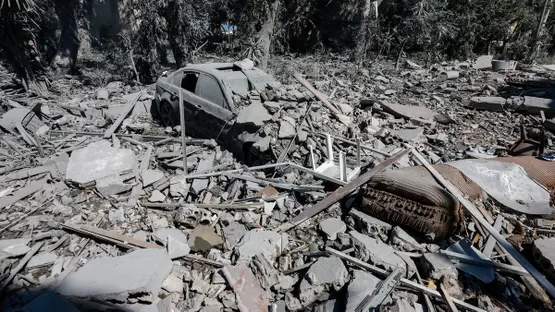
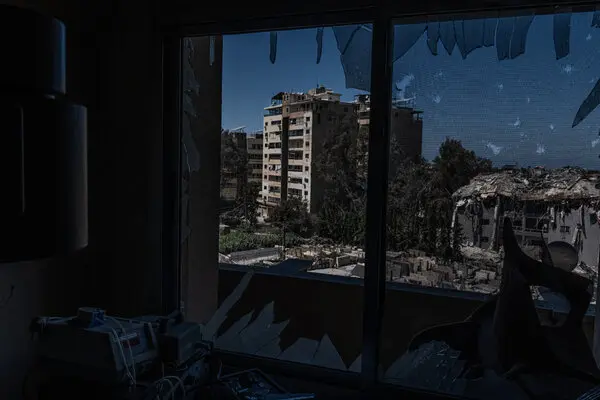
The United States brokered the negotiations between Israel and Lebanon. These negotiations primarily aim to end the fighting in Lebanon. The discussions occur as a building in Tyre, Lebanon, was hit by an Israeli strike on Saturday. These US-brokered talks are part of ongoing efforts to de-escalate tensions and establish a more stable environment along the border. The incident in Tyre, Lebanon, shows the volatile nature of the current situation and the urgent need for a resolution to the hostilities. The negotiations are specifically focused on achieving an end to the fighting in Lebanon, addressing the immediate security concerns in the region.