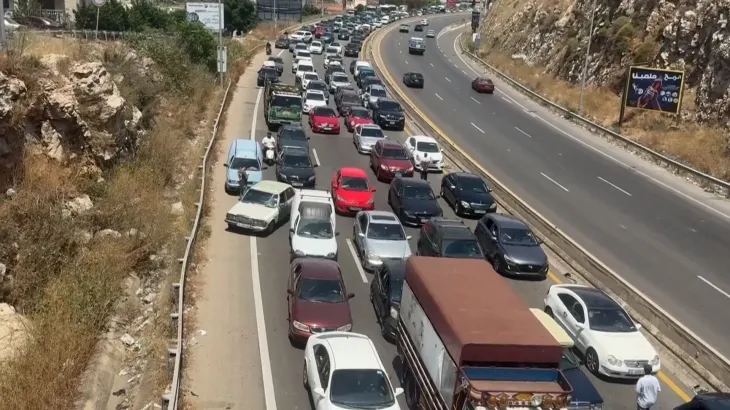
Displaced Lebanese residents are returning to their destroyed homes following an initial agreement announcement to extend a shaky U.S.-Iran ceasefire. On Monday, June 15, 2026, people began journeys back to their villages in southern Lebanon, including areas near the port city of Sidon and in Rmayleh. A displaced man was seen packing his family belongings in Sidon, preparing to return to his village. Meanwhile, a Shiite sheikh collected religious books from his destroyed library in Deir Qanoun, south Lebanon, after returning to his village. The sheikh also stood before a destroyed house in Maaroub village, south Lebanon, observing the damage. In Maaroub, a woman handled a Hezbollah flag amidst the wreckage of her destroyed house, having returned to her village. Displaced residents were also observed driving back to their villages in Rmayleh, a location near the southern port city of Sidon, Lebanon, on Monday, June 15, 2026, following the ceasefire announcement.
Scenes of Return
People returning to their villages gathered with journalists on a destroyed street in Beer al-Salassel, south Lebanon, on Monday, June 15, 2026. This gathering followed the announcement of an initial ceasefire agreement between the United States and Iran, prompting many to make the journey home.
In Deir Qanoun village, also in southern Lebanon, residents returning to their homes on the same day were observed checking their destroyed properties. These individuals meticulously inspected the damage to their houses, assessing the impact of the conflict. Other displaced individuals passed in front of people inspecting their damaged houses within Deir Qanoun, witnessing the widespread destruction. A woman and her children, returning to their village, walked past their own destroyed home in Deir Qanoun, a poignant scene reflecting the personal toll of the displacement. Meanwhile, in the southern port city of Sidon, a displaced woman was seen checking her mobile phone as she awaited her return to her village, reflecting the anticipation and uncertainty of the journey. These movements occurred following the ceasefire announcement, signaling a cautious hope for stability.
Security and Ceasefire Context
Lebanese soldiers have deployed to Beer al-Salassel village in south Lebanon. Their presence follows the initial announcement of a ceasefire agreement between the United States and Iran, which prompted residents to begin returning to their villages on Monday, June 15, 2026. This deployment comes as displaced individuals start making their way back to areas including Beer al-Salassel, a village located in the south of the country, indicating efforts to re-establish a secure environment. The soldiers' presence coincides with these returns, as people assess the damage to their homes and communities after the period of displacement, noting the immediate need for security measures.
Broader Implications
The initial ceasefire agreement between the United States and Iran has prompted the return of displaced Lebanese residents to their homes, particularly in southern Lebanon. This movement of people back to villages like Beer al-Salassel, Deir Qanoun, Maaroub, and Rmayleh shows the immediate impact of diplomatic efforts on civilian populations. The presence of Lebanese soldiers in areas such as Beer al-Salassel indicates an effort to re-establish security and order as residents assess the damage to their properties and begin the long process of recovery. The situation reflects the broader challenges of recovery and stability in the aftermath of conflict, with communities facing extensive reconstruction needs for their destroyed houses and infrastructure. The returns also highlight the urgent need for sustained peace to allow for the full restoration of daily life and infrastructure in affected regions, enabling residents to rebuild their lives and communities.