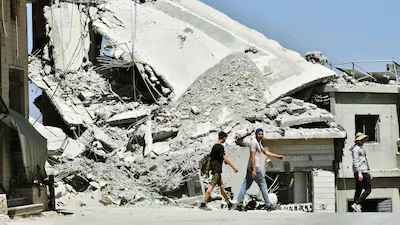
US-mediated negotiations between Lebanon and Israel have been extended this week, as the two nations remain deadlocked over proposed withdrawal zones in southern Lebanon. This deadlock continues to be a central point of contention in the ongoing discussions. US Secretary of State Marco Rubio directly intervened, pressing both parties to formulate a "declaration of intent" before concluding the current round of talks. Secretary Rubio indicated on Thursday that an initial agreement between Israel and Lebanon was anticipated in the near future, signaling a potential breakthrough despite the persistent challenges. The ongoing discussions aim to address the persistent disagreements regarding border demarcation and troop withdrawals, which have historically been sources of instability in the region. The complexity of these issues has necessitated prolonged diplomatic engagement, with the United States playing a key mediating role.
Sticking Points in Withdrawal Zones
Israel and Lebanon have been engaged in discussions regarding a US-backed proposal that outlines the transfer of certain Lebanese territories from Israeli forces to the Lebanese military. This initiative is part of a ‘pilot zone’ plan designed to alleviate tensions along the border. The idea of establishing these pilot zones emerged during earlier rounds of Israeli-Lebanese negotiations, which preceded the signing of the US-Iran deal last week. This plan seeks to create a framework for a more stable security environment in the border region. Lebanon, for its part, has consistently insisted on the complete withdrawal of Israeli troops from several specific areas situated close to the shared border, viewing this as a prerequisite for any lasting resolution.
However, the implementation of such a plan faces significant obstacles. Hezbollah, a powerful political party and militant group in Lebanon, has already rejected the concept of redeployment for its fighters to a handful of villages located further away from the border. This stance complicates any efforts to reconfigure military presence in the area. Hezbollah has also told Iranian officials that Israeli forces must fully withdraw from Lebanese border towns, reinforcing its unwavering position on the matter.
Further complicating the withdrawal process, an Israeli security cabinet member recently stated that Israeli forces would not vacate border areas. This position directly contradicts Lebanon’s demands for a full Israeli pullout from these sensitive zones and shows the deep divide between the two sides. The Israeli military, conversely, has suggested a 'redeployment' further back from the border rather than a complete pullout, indicating a willingness to adjust its posture but not to fully withdraw as demanded by Lebanon. The broader regional context has also shifted with the recent US-Iran deal, which led to the creation of a new ceasefire mechanism that also includes Iran. This mechanism introduces an additional layer of complexity to the ongoing border negotiations between Israel and Lebanon, as it involves a key regional player and potentially alters the strategic calculus for all parties involved. The persistent disagreements over these withdrawal zones show the challenges in reaching a full agreement, despite US mediation efforts, noting the deeply entrenched positions of both nations.
US Diplomatic Push and Talks
US-mediated talks between Israel and Lebanon in Washington have been extended beyond their initial deadline, continuing discussions aimed at resolving ongoing disputes. The negotiations, initially scheduled to conclude on Thursday, were prolonged until Friday morning, reflecting the intense and complex nature of the deliberations. This extension reflects intensified efforts to bridge the gaps between the two nations regarding withdrawal zones in southern Lebanon, indicating a strong commitment from the US to facilitate progress.
Discussions held at the State Department in Washington on Thursday lasted for more than 10 hours, indicating the complexity and depth of the issues being addressed. The prolonged session shows the diplomatic push by the United States to secure a "declaration of intent" from both parties, as previously emphasized by US Secretary of State Marco Rubio. Secretary Rubio's direct intervention notes the high stakes involved and the US's determination to achieve a tangible outcome. The extension of these critical talks suggests that while progress may be underway, significant points of contention remain that require further negotiation, demanding sustained diplomatic efforts. Both Israel and Lebanon are under pressure to formulate an agreement that could pave the way for a more stable border region, offering a potential path to de-escalation. The protracted nature of Thursday's discussions notes the challenges involved in mediating a resolution between the two long-standing adversaries, particularly concerning border demarcation and troop withdrawals, which touch upon core security interests for both nations. The United States continues to emphasize the importance of these negotiations for regional stability.
UN Peacekeeping Mission Future
Hezbollah has rejected any partial Israeli redeployment, insisting that Israeli forces must fully withdraw from all Lebanese border towns. The Israeli military, conversely, has suggested a "redeployment" further back from the border rather than a complete pullout, presenting a different vision for security arrangements. Hezbollah reiterated its stance to Iranian officials, stressing that Israeli forces must fully withdraw from Lebanese border towns, reinforcing its non-negotiable position on the matter. Hezbollah's leader, Naim Qassem, stated on Friday that Israel must withdraw from all of southern Lebanon, clearly articulating the group's maximalist demands.
Amid these discussions, France and Italy announced a joint initiative to replace the United Nations peacekeeping mission in Lebanon, which is scheduled for withdrawal at the end of the year. This upcoming withdrawal adds another layer of urgency to the ongoing security discussions. French President Emmanuel Macron and Italian Prime Minister Giorgia Meloni unveiled this joint initiative, signalling a significant shift in the international presence in the region and a proactive approach to maintaining stability. An international conference may soon be organized for an official launch of the new joint mission, providing a formal platform for its establishment and garnering international support. Lebanese President Joseph Aoun welcomed the French-Italian initiative, indicating support from Beirut for the proposed change in international peacekeeping efforts, suggesting a broad acceptance of this new approach among Lebanese leadership. This proposed replacement shows the international community's recognition of the continued need for a peacekeeping presence in southern Lebanon, even as the UN mission prepares to depart. The joint initiative aims to ensure a smooth transition and sustained international commitment to regional security.
Escalating Border Tensions
US President Donald Trump has expressed growing frustration with Israel's actions in Lebanon in recent weeks, according to sources familiar with the discussions. This growing frustration from a key ally adds another dimension to the already complex geopolitical landscape. This comes as military operations continue to impact southern Lebanon, noting the volatile security situation on the ground.
On Thursday, an Israeli strike in Mayfadoun, located in southern Lebanon's Nabatieh district, resulted in the deaths of two individuals and left one person injured. The incident marks a continued escalation of hostilities in the region, contributing to the overall instability. Such events show the urgent need for a diplomatic resolution to prevent further loss of life and damage.
Further illustrating the ongoing tensions, an Israeli strike also hit the town of Nabatieh Al Fawqa on Friday. These events highlight the volatile security situation along the border as US-mediated talks continue, demonstrating that diplomatic efforts are proceeding against a backdrop of active military engagement. The persistence of these strikes complicates the atmosphere for negotiations, making the quest for a "declaration of intent" even more challenging. The continued military activity serves as a stark reminder of the fragile peace and the constant threat of wider conflict in the border areas. The international community remains watchful, hoping that the extended negotiations will ultimately yield a pathway to de-escalation and long-term stability.