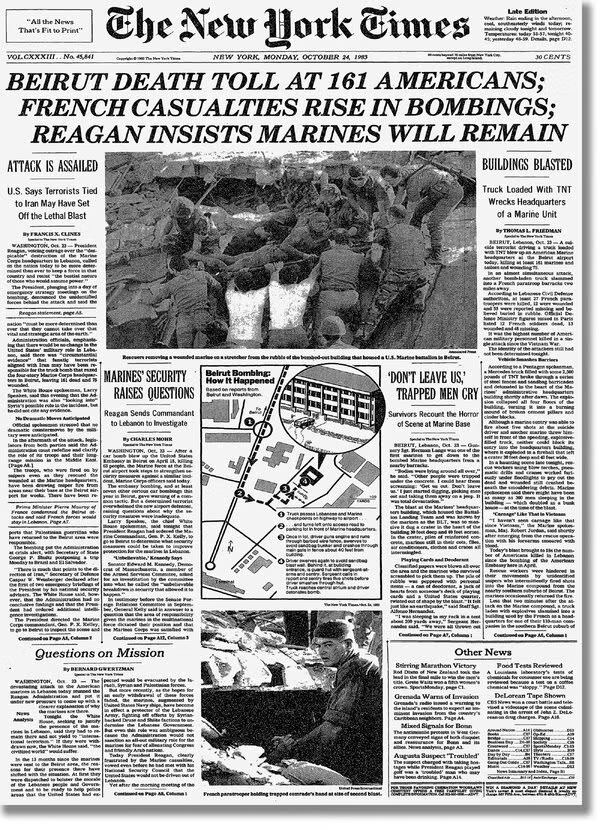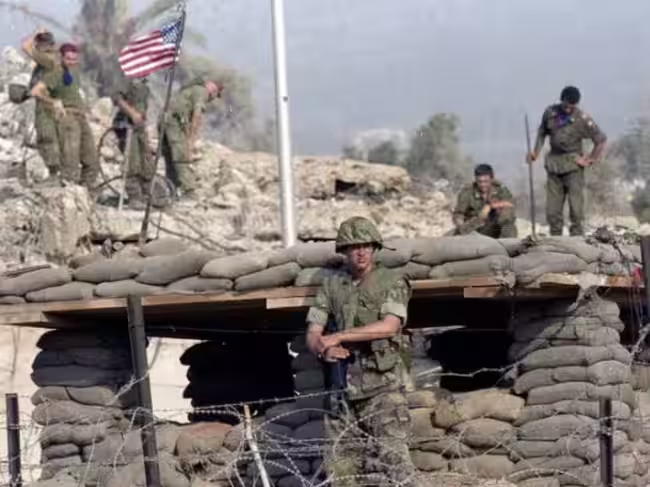
On October 23, 1983, a truck bomb detonated at the United States Marine barracks located at Beirut International Airport in Beirut, Lebanon. The explosion destroyed the building where troops were stationed as part of a multinational peacekeeping force. This attack resulted in significant casualties among the personnel deployed to the region. The incident remains a defining moment in the history of the United States military presence in the Middle East during the early 1980s. Authorities later attributed the operation to members of Islamic Jihad, an organization linked to Hezbollah. The event prompted urgent discussions within the administration of President Ronald Reagan regarding the safety and future deployment of forces in Lebanon.
Peacekeeping Mission Amid Civil War
United States forces operated within Lebanon as part of a multinational peacekeeping mission that began in 1982. This deployment occurred during the ongoing Lebanese civil war, a conflict that started in 1975. The mission aimed to provide stability amid the factional fighting that defined the period. Following the October 1983 attack, the United States Marine Corps (USMC) issued a statement reflecting on the loss of personnel. A spokesperson for the USMC stated, "They came in peace. They will never be forgotten." The presence of international troops from the United States, France, Italy, and other nations had been intended to support the government during the internal unrest. These efforts faced increasing pressure as regional tensions involving Israel and other actors intensified throughout the early 1980s.
Escalating Violence and Prior Attacks
Tensions in Lebanon preceded the October 1983 tragedy, marked notably by an earlier assault on the diplomatic mission in the capital. On 18 April 1983, a suicide truck bombing struck the US Embassy in Beirut, killing 63 people, including 17 Americans. Islamic Jihad, a group associated with Iran and linked to the network that became Hezbollah, claimed responsibility for that attack.
The subsequent October bombing of the barracks resulted in the deaths of 241 American servicemen. This total included 220 Marines, 18 Navy personnel, and three Army soldiers.
Reflecting on the mission and the subsequent impact on the military, the United States Marine Corps (USMC) shared statements regarding the service members lost in the conflict. In a post on X, the USMC stated, "The Marines in Beirut were deployed to help restore peace and stability amid escalating violence in Lebanon. Despite the dangers they faced, they carried out their mission with courage, professionalism, and an unwavering commitment to one another."
Another post from the organization further addressed the enduring legacy of the incident. The USMC noted, "The Beirut bombing left a lasting mark on the Marine Corps and the nation. We remember the lost lives, honor the wounded and survivors, and recognize the families and loved ones who continue to carry the weight of that day. Their sacrifice remains woven into the legacy of every Marine who has answered the call to serve. Today, we pause to remember the 241 American service members who never made it home and honor their courage, sacrifice, and devotion to duty."
Following the persistent instability and the casualties sustained during the deployment, the United States government reassessed its military involvement in the country. American troops ultimately withdrew from Lebanon in February 1984. This withdrawal concluded the participation of United States forces in the multinational peacekeeping mission that had operated in the region since 1982.