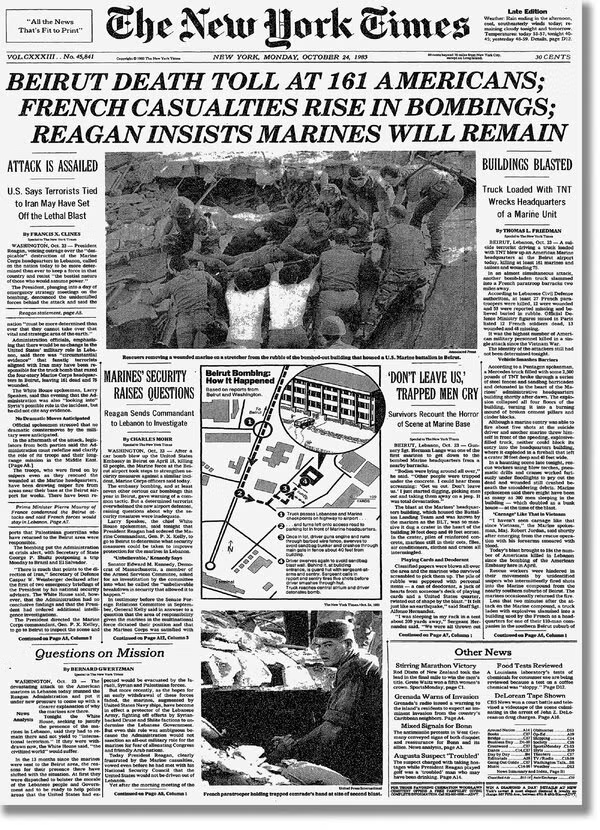
A suicide truck bombing struck the United States Marine barracks at the Beirut International Airport in Lebanon on 23 October 1983. The attack targeted the military compound during the multinational peacekeeping mission in the country. The explosive-laden vehicle detonated inside the facility, resulting in significant casualties among the personnel stationed at the site. This specific event, a suicide truck bombing, occurred at the Beirut International Airport in Lebanon on October 23, 1983.
Casualties of the Beirut Attack
Casualties resulting from the explosion at the American Marine headquarters reached 241 U.S. Service members. Investigations confirmed that these personnel died when the explosive-laden vehicle detonated within the compound. The attack on the American Marine headquarters killed 241 U.S. Service members.
French forces stationed in Beirut experienced a separate, near-simultaneous attack on their own facility. This strike killed 58 paratroopers. An almost simultaneous attack on French forces in Beirut killed 58 paratroopers.
Military records indicate that the bombing of the U.S. Marine headquarters resulted in the highest number of American military personnel killed in a single attack since the Vietnam War. Officials noted the scale of this loss in the context of the multinational peacekeeping mission active in Lebanon at the time. The bombing of the U.S. Marine headquarters was the highest number of American military personnel killed in a single attack since the Vietnam War.
The operational environment at the Beirut International Airport was part of a larger multinational peacekeeping effort intended to stabilize the area. The presence of the United States Marine barracks was central to this mission. When the suicide truck bombing occurred, the facility was functioning as a primary base for the American contingent. The impact of the explosive-laden vehicle was immediate, causing the structural collapse of the building where the personnel were located.
Following the detonation at the American Marine headquarters, the focus of the mission shifted toward recovery operations. The scale of the casualties—241 U.S. Service members—required extensive coordination. Simultaneously, the French forces in Beirut were managing the aftermath of the attack on their own paratroopers. The loss of 58 paratroopers in that separate, near-simultaneous strike compounded the severity of the day's events for the multinational coalition.
The military records documenting the 241 deaths of U.S. Service members emphasize the gravity of the incident. Within the scope of the multinational peacekeeping mission, the loss of life was unprecedented for the forces involved. By confirming that the bombing of the U.S. Marine headquarters was the highest number of American military personnel killed in a single attack since the Vietnam War, the records show the historical significance of the tragedy at the Beirut International Airport. This event remains a defining moment for the military personnel who were stationed in Lebanon during that period, as well as for the command structure overseeing the peacekeeping mission. The devastation caused by the vehicle at the American compound left a lasting impact on the multinational peacekeeping mission's trajectory in the country.