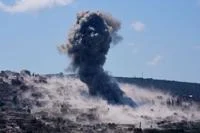
A massive explosion tore through the strategic Ali Al-Taher ridge overlooking Nabatiyeh on Thursday night. Following the incident, Israel stated it had achieved “operational control” of the ridge, asserting command both above and below ground. This event, coupled with the emergence of an appeal known as “Nabatiyeh 2,” indicates that some residents of southern Lebanon are beginning to question which entities they trust to provide protection against Israel.
The Ridge Operation and Its Aftermath
The Israeli military detonated what it described as a Hezbollah underground complex extending for more than 2 kilometers beneath the heights of the Ali Al-Taher ridge. Israel stated that the operation resulted in the destruction of command centers, weapons stores, living quarters, rockets, missiles, drones, and other military infrastructure. This action was part of what Israeli officials presented as a broader strategic objective.
Prime Minister Benjamin Netanyahu and Defense Minister Israel Katz affirmed that the operation completed the consolidation of Israel’s self-declared security zone inside southern Lebanon. The Israeli military further stated that the network contained a central command complex belonging to Hezbollah’s Badr unit. This unit is considered a significant part of Hezbollah's operational structure. The blast on the Ali Al-Taher ridge was powerful enough to trigger a magnitude-4.1 seismic event, indicating the scale of the underground infrastructure that was targeted. The seismic activity was registered by monitoring stations in the region, reflecting the significant force unleashed during the detonation.
Voices of Discontent Emerge
Residents of Nabatiyeh welcomed Lebanese Army vehicles with flowers and handfuls of rice, a gesture observed by local media. More than 400 people signed an appeal demanding that the Lebanese state assume responsibility for Nabatiyeh’s security and deploy the army. Political writer Sateh Noureddine stated that the Ali Al-Taher hills fell some time ago, and Hezbollah members had evacuated them weeks before Israel’s announcement. "The Ali Al-Taher hills fell some time ago. The information indicated that Hezbollah’s members had evacuated them weeks ago, not now," Noureddine said. He added, "What I find strange, and what raises more than one question, is why Israel announced the fall of Ali Al-Taher now. I believe this indicates that Israel will undertake a military operation more significant than Ali Al-Taher, through which Benjamin Netanyahu will seek to make electoral gains in the Oct. 27 election."
In 2019, protesters in Nabatiyeh challenged Hezbollah and the Amal Movement over issues such as corruption, patronage, economic mismanagement, and Lebanon’s sectarian political system. Ali Al-Amin, editor-in-chief of Janoubia, stated that Hezbollah has no options other than to continue attacking authorities as protest against the party expands in the south. "Hezbollah has no options other than to continue attacking the authorities in general, while the circle of protest against the party is expanding in the south amid fears of further Israeli incursions and of the entire south falling under occupation," Al-Amin said. He further noted that "Even Hezbollah’s supporters have begun to voice their unease over what the wars in support of Gaza and Iran have produced. Voices are rising even from within Hezbollah’s own constituency because the equation on the ground has become exposed. All the evidence has shown that the party says one thing and does another. It has become clear that it possesses nothing but words and threats."
Al-Amin also claimed that "Hezbollah did not resist the Israelis when they advanced toward Ali Al-Taher, even though it had described it as the ‘mother of all battles.’" He warned, "The danger today is that Hezbollah’s defiance could change the function of its weapons, turning them from weapons intended to resist Israel into weapons used to confront the Lebanese state. Hezbollah is trying to find pretexts for not handing over its weapons. But if we observe the trajectory, we find that the party’s argument is weakening and being depleted over time. This is what Israel has done through the escalation of its military operations. Today, the testing ground has shifted north of the Litani River, rather than remaining south of it." Noureddine suggested a potential decline for the group, stating, "Hezbollah is on its way to disappearing — its leadership and political bureau alike. It is living through its final phase. The party’s political body has begun to disintegrate, and nothing will remain except scattered cells that carry on its path and may disappear underground." He concluded, "The number of people signing the Nabatiyeh appeal is doubling every day. This is an indication of growing opposition to a party that is fading away."
Shifting Loyalties and Future Implications
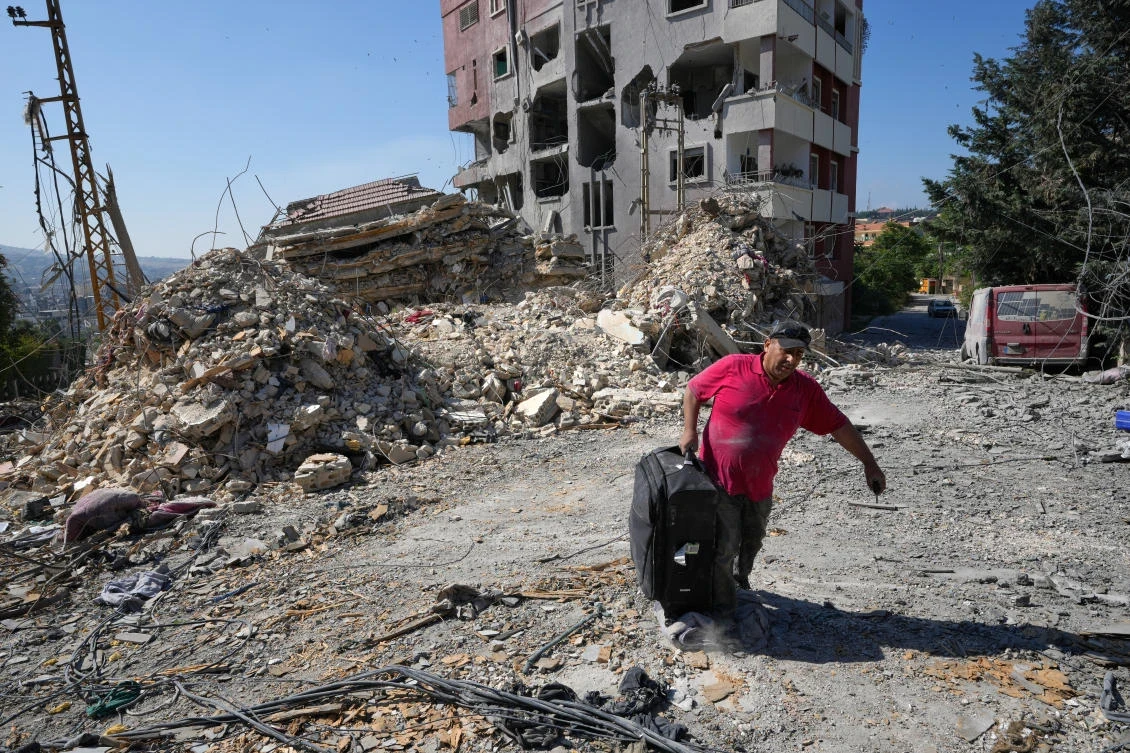
Lebanon’s National News Agency reported that the blast on the Ali Al-Taher ridge was felt across Nabatiyeh and its surrounding areas. The “Nabatiyeh 2” appeal, which followed the incident, explicitly demands that the state become the sole authority responsible for security and that no armed party outside its institutions determine when Lebanon goes to war. The appeal further questions Hezbollah's assertion that its independent arsenal is necessary for the defense of the south, suggesting the Lebanese state could be more effective. Dr. Ali Hassan Wehbe, whose dental clinic in Nabatiyeh was destroyed three times—in 2006, 2024, and 2026—stated that the appeal seeks to remove Israel’s pretext for attacks. "The appeal is, first and foremost, about removing Israel’s pretext and saving Nabatiyeh. Israel bears the primary responsibility for this destruction and this barbarity," Wehbe said.
Wehbe questioned the reluctance to involve state forces, asking, "Has bringing the Lebanese Army and the Lebanese state into Nabatiyeh suddenly become forbidden? Has this become an act of treason against the country? Which is preferable — for the Lebanese Army to enter, or, God forbid, for the Israeli army to enter? Of course, the Lebanese Army should enter. They are our sons." He emphasized Nabatiyeh's strategic importance and its reliance on the state, stating, "We are not a bargaining chip and we are not a negotiating card. Nabatiyeh is the artery of the south. It is the heart of Jabal Amel. We have no alternative to the state." Wehbe also reflected on the repeated displacement, noting, "Since I was 10 years old, I have lived through displacement and wars. We do not want to keep mourning our children. We do not want to keep living on memories. We want to live in the present and build the future." He directly addressed Hezbollah's leadership, saying, "My message to Hezbollah’s leadership is this: Deal with this opposition rationally and calmly, because this opposition was itself a stronghold of the resistance." Wehbe also posed a question about the right to express grievances: "Are we no longer allowed to express our pain? Are we no longer allowed to say: Enough displacement?"
Political writer Sateh Noureddine suggested that Israel's announcement of the fall of Ali Al-Taher was timed to make electoral gains in the Oct. 27 election. "The Ali Al-Taher hills fell some time ago. The information indicated that Hezbollah’s members had evacuated them weeks ago, not now," Noureddine stated. He added, "What I find strange, and what raises more than one question, is why Israel announced the fall of Ali Al-Taher now. I believe this indicates that Israel will undertake a military operation more significant than Ali Al-Taher, through which Benjamin Netanyahu will seek to make electoral gains in the Oct. 27 election." Ali Al-Amin warned that Hezbollah’s defiance could alter the function of its weapons, transforming them from tools against Israel into instruments used to confront the Lebanese state. Noureddine argued that the growing public opposition indicates Hezbollah’s political structure is beginning to disintegrate. "Hezbollah is on its way to disappearing — its leadership and political bureau alike. It is living through its final phase. The party’s political body has begun to disintegrate, and nothing will remain except scattered cells that carry on its path and may disappear underground," Noureddine said. He concluded that "The number of people signing the Nabatiyeh appeal is doubling every day. This is an indication of growing opposition to a party that is fading away."