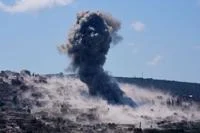
Smoke billowed from an Israeli-controlled detonation in Mansouri village on Friday, September 11, 2026, marking an escalation in border hostilities. The incident occurred as observers in Hanniyeh village, located in southern Lebanon, witnessed the plumes rising from the Israeli side of the border. This latest event contributes significantly to the already heightened tensions between Lebanon and Israel, showing the volatile nature of their shared frontier. Residents on both sides of the border continue to live under the shadow of potential conflict, with each incident increasing anxiety and calls for de-escalation.
Details of the Incident
The detonation occurred at approximately 10:30 AM local time, according to initial reports from residents of Mansouri. Eyewitnesses in Hanniyeh village, situated across the border in southern Lebanon, described seeing a large explosion followed by a significant cloud of smoke rising from the Israeli side, visible for several kilometers. The size and intensity of the smoke plume suggested a substantial event, immediately drawing attention from local populations and security forces. The immediate aftermath involved Israeli military vehicles being observed near the blast site, suggesting a coordinated military operation. However, no official statements from the Israel Defense Forces (IDF) have yet clarified the precise nature or purpose of the detonation, leaving room for speculation among observers and local media.
Sources within Mansouri indicated that the explosion took place in an uninhabited, open area, leading to no reported casualties or damage to civilian property. This detail, if confirmed, would alleviate immediate concerns about civilian safety, though the psychological impact of such events remains. The specific cause of the detonation remains unconfirmed by either Lebanese or Israeli authorities, adding to the ambiguity surrounding the incident. Local observers suggested that the incident might relate to military engineering operations, a common activity in the heavily militarized border region, often involving the clearing of unexploded ordnance or the creation of defensive structures. The area around Mansouri has been a frequent site of military movements and security incidents in recent months, making such occurrences a regular, albeit alarming, part of daily life for residents. The swift presence of Israeli military personnel following the blast further showed the operational nature of the event, indicating it was likely a planned action rather than an accidental occurrence.
Broader Conflict Context
The recent detonation near Mansouri shows a persistent pattern of heightened military activity along the Lebanon-Israel border, where skirmishes and security incidents have become increasingly frequent. These events are not isolated but rather form part of a continuous cycle of tension and response in a region long characterized by instability. The broader context of these events involves ongoing tensions that have sporadically escalated into cross-border exchanges, including rocket fire and retaliatory strikes. Both Lebanon and Israel maintain significant military presences in the frontier regions, leading to regular confrontations and security alerts that keep local populations on edge.
These incidents are often viewed within the framework of a long-standing, volatile relationship between the two nations, which have technically been in a state of war for decades. The United Nations Interim Force in Lebanon (UNIFIL) is deployed in the area to monitor the cessation of hostilities and assist the Lebanese Armed Forces in maintaining security and stability. Despite UNIFIL's dedicated efforts and visible presence, the border remains a flashpoint for military actions, including patrols, reconnaissance operations, and occasional live-fire incidents that threaten to ignite a larger conflict. The current situation reflects an elevated state of readiness and caution on both sides, as each event risks further destabilizing the fragile regional security architecture. The lack of official communication following such incidents often fuels speculation and contributes to the overall atmosphere of uncertainty.
Regional Implications
The recent detonation near Mansouri village adds to the escalating regional tensions between Lebanon and Israel, serving as a stark reminder of the precarious peace. The incident, observed from Hanniyeh village in southern Lebanon, notes the fragile security situation along their shared border, where even routine military activities can be perceived as provocative. Both nations have maintained a state of heightened alert, with military activities frequently occurring in the frontier zones, leading to a constant state of vigilance among residents and security forces. Continued incidents risk further destabilizing the already volatile relationship between Lebanon and Israel, potentially impacting the broader regional security landscape by drawing in other actors. The absence of immediate, clear explanations from either side leaves the implications of such events open to interpretation, fueling concerns about potential wider repercussions and the possibility of miscalculation. The international community continues to monitor the situation closely, urging restraint from all parties involved to prevent a further deterioration of stability.