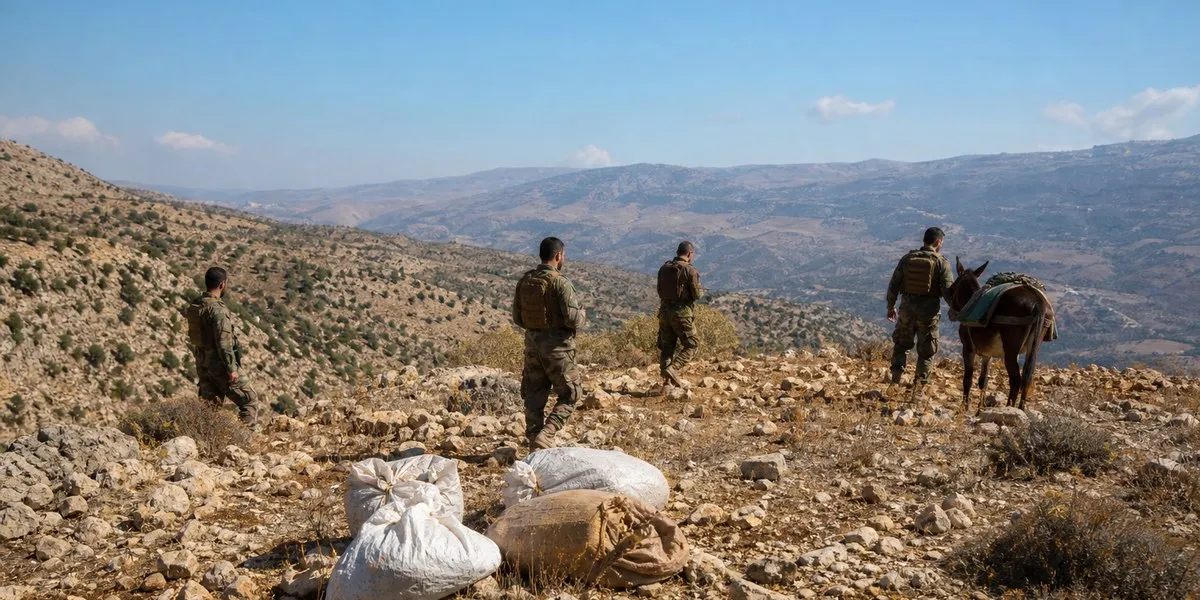
The Lebanese army seized approximately 200 kg of explosives in the northeastern Hermel area. Military personnel discovered the material during operations conducted near the border with Syria. A judicial official identified the seized substance as C4. The army has maintained a presence in the region to monitor transport routes and prevent illicit movement across the frontier. Investigation into the origin and intended destination of the explosives remains ongoing under military supervision.
Details of Smuggling Operation
Mule transport facilitated the movement of the explosives through an illegal border crossing located in the town of Qasr. Military units identified this route as a primary path for illicit traffic between Lebanon and Syria. Intelligence officers continue to examine the logistics of this specific transit operation as part of the broader investigation into border security. The use of pack animals like mules has been noted by military planners as a tactic to bypass conventional road checkpoints that are frequently monitored by soldiers. By utilizing rugged terrain near Qasr, those involved in the smuggling attempt sought to avoid detection by the Lebanese army patrols that operate along the border fence.
Operations conducted earlier in October resulted in the military seizing 245 kg of TNT. Soldiers also recovered four explosive devices, eight detonators, and electrical wires during these interventions. These materials were discovered during routine patrols aimed at curbing the unauthorized flow of hazardous goods across the frontier. The seizure of these components represents a significant effort by the military to disrupt the supply chain of improvised explosive materials before they can be assembled or deployed. The discovery of detonators and electrical wiring alongside the TNT suggests that the shipment was intended for the construction of sophisticated explosive devices.
Security forces stationed at the Dahr al-Baydar checkpoint detained two suspected Hezbollah members during a separate operation. These individuals were intercepted while transporting a total of 500 kg of explosives. The haul included 250 kg of TNT and 250 kg of C4. Military authorities moved the suspects to a secure facility in Beirut for further interrogation regarding their activities and the intended use of the materials. The Dahr al-Baydar checkpoint serves as a critical junction for traffic moving between the eastern regions and the capital, making it a focal point for security screenings. The interception of these two suspects at this specific location notes the ongoing vigilance of security forces in monitoring transit corridors throughout the country. The investigation into the 500 kg shipment is currently being handled by military intelligence, which is working to determine if the detained individuals were acting on behalf of a larger network. The recovered materials have been transferred to secure storage sites under the control of the Lebanese army, where they are being processed as evidence for the forthcoming legal proceedings against the suspects currently held in Beirut.