A war began on March 2 after Hezbollah fired rockets at Israel, leading to significant Israeli military action in Lebanon. On April 8, Israel struck a hundred targets in rapid succession, killing more than 350 people. Lebanese government officials reported that Israel has struck many areas in the east, south, and the capital, Beirut, killing over 1,200 people and displacing more than a million others. This escalation has drawn international attention to the humanitarian crisis unfolding in the region.
Israeli military spokesperson Lt. Col. Avichay Adraee has shared maps urging relocation north of the Litani River, some 30 kilometers (20 miles) from the border. These warnings to flee have come suddenly via texts, automated calls, and social media maps shared by the Israeli military spokesperson, often providing little time for residents to prepare or safely evacuate. Reports indicated that Israel plans to occupy Lebanese territory from the border up to the Litani River, a strategic move that could reshape the geopolitical landscape of southern Lebanon. Israel issued blanket evacuation guidance for a vast stretch of southern Lebanon, extending 25 miles from the Israeli border, according to reports, intensifying the pressure on civilian populations to relocate.
Life Under Threatening Alerts
Residents of southern Lebanon have experienced sudden and urgent evacuation warnings. Ward Zein al-Din, 56, recounted fleeing her southern village after hearing glass shatter from shrapnel, which occurred minutes after her father received a warning call. "I didn’t think we would survive," Zein al-Din stated, noting the terror and immediacy of these alerts. These alerts often come from Israeli military sources, such as Lieutenant Colonel Avichay Adraee, who posted on X instructing residents of Kafr Tebnit to move to 'no less than 1,000 meters (yards) outside the village.' Adraee also called on residents to leave Kfar Hatta at 11:29 p.m. On April 4, demonstrating the precision and urgency of some of these directives, even late at night.
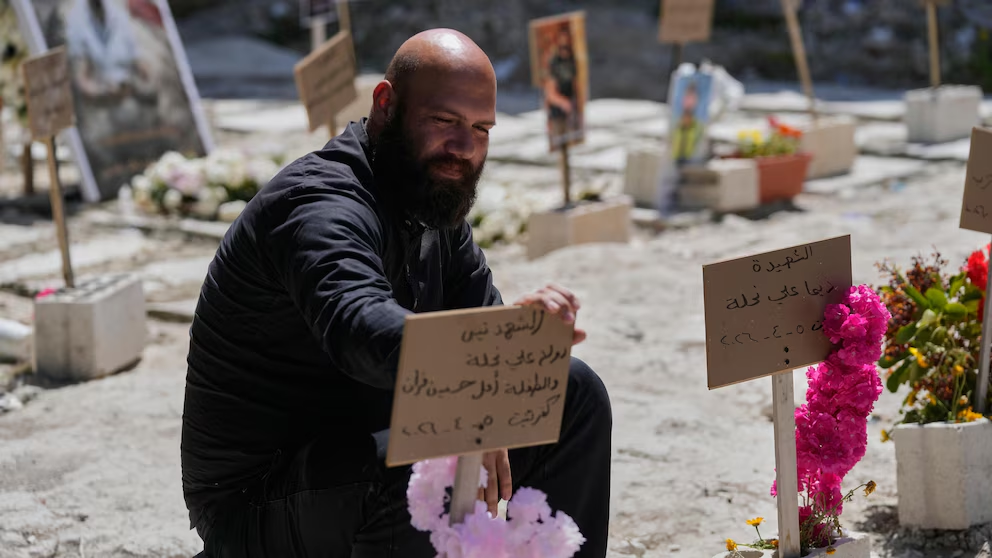
Despite warnings, casualties have occurred. Hussein Farran's wife, Rola Nahleh, and their 4-year-old daughter, Amal, were killed in an Israeli missile strike on their apartment around 3 a.m. Along with Nahleh's parents, brother, and sister. Farran questioned the efficacy of such warnings, stating, "Even if they gave us a warning, how does it justify killing a civilian family?" He added, "They weren't given a real chance," showing the tragic reality faced by many civilians. On April 8, an Israeli missile hit a neighboring Shiite mosque where displaced people had sought refuge, leaving Ali al-Salim's 14-year-old son unconscious and with a shredded leg. These strikes have shattered areas where many people had taken refuge after being displaced by earlier Israeli bombardments, raising serious concerns about the safety of those attempting to follow evacuation orders. The Israeli military has posted a total of 132 online alerts since March 2, indicating the sustained and widespread nature of these warnings.
The ongoing alerts have led to repeated displacement for some, like Mohammad Shahadat, who returned to his hometown of Shaqra after a week into a ceasefire, only to flee again days later following another Israeli warning. "We didn't know where to go," Shahadat said, articulating the confusion and desperation experienced by many. Israel Defense Forces officials have broadcast messages on Telegram and X, listing neighborhoods in greater Beirut where military operations against Hezbollah were reportedly imminent. An official shared a message stating, "The IDF does not intend to harm you, and therefore, to ensure your safety, you must evacuate immediately." The Corniche al-Mazraa neighborhood of Beirut was among those mentioned, indicating the broad reach of these warnings into the capital. Earlier this month, Israel warned it would attack the main border crossing between Lebanon and Syria, forcing its closure for several days. Israel also struck five neighborhoods in Beirut without warning, further noting the unpredictable nature of the conflict for civilians.
Displacement and Humanitarian Impact
Over 115,000 people remain displaced across Lebanon, with more than 115,000 currently residing in collective shelters, according to the United Nations. The humanitarian toll of the conflict is significant; more than 100 of those killed on April 8 were women and children, a statistic that shows the devastating impact on vulnerable populations. The continuous displacement and the lack of safe zones exacerbate the humanitarian crisis, placing immense strain on already stretched resources.
Amidst this displacement, Israeli military officials have reportedly pressed Christian and Druze leaders in private calls to expel Lebanese individuals from neighboring Shiite Muslim communities who have sought refuge. Ali Naser, a Shiite from Aitaroun, and his relatives, for instance, fled their village and found temporary refuge in Rmeish, a predominantly Christian town. However, they were later informed they needed to leave. Naser stated, "The town received and hosted us, we are grateful for that. But, local leaders told him the pressure from Israel to make them leave was too great. I’m at a loss," revealing the difficult position local leaders are placed in and the added layer of hardship for those seeking safety.
Over the past two weeks, Israeli military officials have contacted leaders in at least eight villages, instructing them to expel Shiite individuals who had sought asylum within their communities. These actions occur in a region where Shiites constitute the majority of southern Lebanon's population, raising concerns about potential sectarian divisions being exacerbated by the conflict. Lebanon has been engaged in its second major conflict in less than two years since Hezbollah launched rockets at Israel last month, contributing to a cycle of instability and displacement.
Beyond immediate displacement, Israel reportedly plans to occupy a 10-kilometer (6-mile) wide buffer zone along the border, a strategy that could lead to long-term territorial changes and further displacement. The ongoing conflict has intensified, with the article noting a publication date of April 20, 2026, indicating a protracted situation that has already spanned a considerable period and continues to evolve.
Legality and Effectiveness Debated
Israeli maps issued to residents of Lebanon sometimes cover broad swaths of territory and at other times focus on specific buildings, creating a varied and often confusing picture for those attempting to discern safe areas. However, some strikes have occurred without any warning at all, directly contradicting the stated purpose of these alerts. Israel states it issues warnings to keep civilians out of harm's way, asserting that Hezbollah positions fighters, tunnels, and weapons in civilian areas, thereby necessitating these preemptive communications. International law experts, however, describe Israel's warnings as inconsistent, often overly broad and open-ended, making them difficult for civilians to act upon effectively. This inconsistency raises questions about their true humanitarian efficacy.
Lebanon lacks air raid sirens, missile defenses, or designated bomb shelters, unlike Israel, leaving its population far more vulnerable to aerial attacks and with fewer means to respond to warnings. Roland Abi Najem, a Lebanese cybersecurity expert, noted the difficulty in verifying these alerts. "There is no way to know if a call is real or fake," Abi Najem stated, adding, "The Israeli military benefits from the chaos that helps create a mass exodus." This perspective suggests a strategic element to the warnings, aiming not just to save lives but also to create demographic shifts. Since the ceasefire took effect on April 17, seven Israeli alerts have covered over 50 towns in southern Lebanon, demonstrating the continued use of this tactic even during periods of supposed calm. The Israeli military did not respond to a request for comment on whether they had directed local leaders to expel Shiites, leaving these allegations unanswered. The article has an indicated reading time of 11 minutes, suggesting the depth of information provided on this complex issue.
Broader Implications and Future
Israeli ground forces have invaded deeper into southern Lebanon, clashing with Hezbollah militants. This marks a significant development since the last war between Israel and Hezbollah two years ago, and the Israeli invasion of southern Lebanon during the civil war which ended in 2000. Israeli Defense Minister Israel Katz stated that Lebanese who fled their homes in the south "will be completely prohibited" from returning "until the safety and security of northern Israeli residents is ensured." Katz previously specified that Shiites would not be allowed to return, likening Israel’s strategy in Lebanon to that in Gaza, indicating a potentially long-term and restrictive policy for displaced populations. The Lebanese civil war itself ended in 1990, noting the region's long history of conflict and its enduring impacts. The article has generated 983 comments, reflecting the strong public interest and debate surrounding these events.