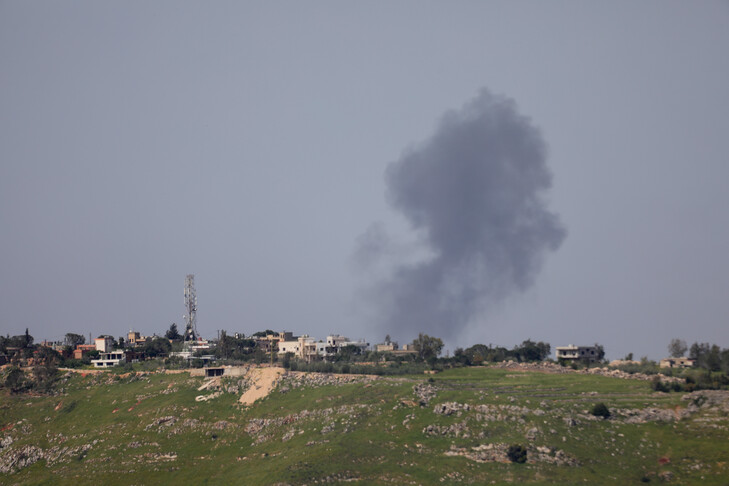
Israeli airstrikes killed at least nine people and injured 13 others across southern Lebanon on Thursday. In the town of Toul, four individuals were killed and six wounded, with a residential building also destroyed. Israeli warplanes additionally conducted a strike on Sultaniyeh. The attacks occurred despite a 10-day ceasefire, which began on April 17 and was subsequently extended until May 17. The incident marks a significant violation of the ongoing truce.
Deadly Strikes on Medics
Three deadly Israeli strikes occurred on medics in southern Lebanon on Wednesday, killing four rescue workers and wounding six others. Two ambulances were destroyed outside the village of Mayfadoun, near Nabatiyeh. The first group of medics was hit while responding to a distress call, with a second group assisting wounded colleagues, and a third rushing to aid the first two. The attack on the third team happened less than six minutes after their arrival. An Israeli drone smashed the vehicles’ windows and struck 30-year-old Mahdi Abu Zaid, who was later proclaimed dead on arrival at al-Najda Hospital.
Six of the eight crew members from the first two ambulances were injured, with most wounded medics in moderate condition, though one sustained a serious chest injury from shrapnel. A fourth team of rescuers subsequently reached the stranded medics and evacuated the wounded without being targeted. The Lebanese Health Ministry condemned the attacks as a "blatant violation" of international law. Abou Haidar Hayya, an official with the Islamic Health Committee, stated that "there are no more red lines in this war." Reports indicated that since the Israel-Hezbollah conflict began on March 2, at least 100 Lebanese medical workers have been killed by Israel. The United Nations’ human rights office warned that intentionally targeting medics constituted a war crime.
Broader Conflict Escalation
Israel continues to violate the ceasefire daily through airstrikes and the demolition of homes in southern Lebanon. Since March 2, Israel has reportedly waged a deadly offensive in Lebanon that has killed at least 2,534 people, though the overall death toll from the war in Lebanon stood at 2,167 on Wednesday. Israeli forces stated they had struck more than 200 Hezbollah targets over the past 24 hours. Hezbollah claimed rocket attacks on military targets in northern Israel.
Israeli Prime Minister Benjamin Netanyahu ordered the military to expand its 'buffer zone' in southern Lebanon toward the east. Al Akhbar, a Lebanese newspaper allied with Hezbollah, called the government a "regime of shame" regarding ongoing talks in Washington. Hezbollah lawmaker Hassan Fadlallah criticized direct negotiations with Israel. Mohamed Saad, a Beirut resident, stated, "The negotiations are more in our interest than in Israel’s interest because we are the ones whose country is being destroyed, we are the ones suffering losses." The World Health Organization reported that 59 primary health care centers have been shuttered due to Israeli attacks.
History of Attacks on Healthcare
Three people died and seven were injured in a strike on Jibchit, which destroyed a residential building. In Harouf, an Israeli aircraft hit a house, killing two more individuals. Artillery shelling also targeted the outskirts of Zawtar al-Sharqiya and Mifadoun. The Islamic Health Committee recorded its first casualties since its 2002 founding on March 24, when 16-year-old Joud and a fellow paramedic were killed in an Israeli strike on their motorcycle. Last month, an Israeli airstrike destroyed the main Islamic Health Committee clinic in Jibsheet. Israeli strikes also hit Lebanon’s Tebnine Government Hospital twice within three days, wounding 11 medical workers. Medics in Nabatiyeh later hauled one of the damaged ambulances to a public square in Nabatiyeh, intending it to serve as a reminder.