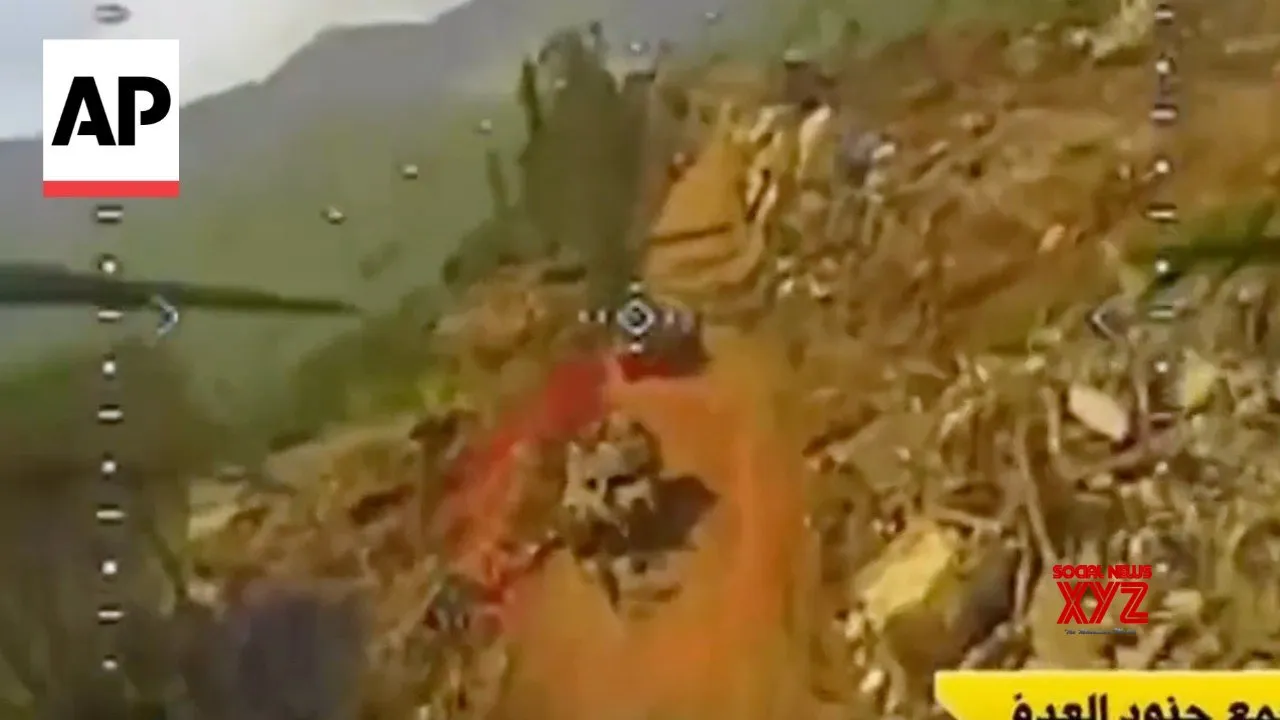
Hezbollah released videos on April 30, 2026, claiming to show drone attacks targeting Israeli troops in Southern Lebanon, amid ongoing drone launches at northern Israel. The incidents included an initial drone strike that killed Sgt. Idan Fooks. Following this, reports indicated a second explosive drone struck near the helicopter evacuating Sgt. Fooks' body and six other injured soldiers. During the evacuation operation, one drone was intercepted, while another exploded. These videos, released by Hezbollah, specifically claimed to depict these drone attacks against Israeli troops operating in Southern Lebanon.
Hezbollah continues to launch drones at Israeli troops positioned in southern Lebanon and also towards northern Israel. The militant group's publication of these videos coincided with these continued drone activities in the border region. This ongoing aerial activity by Hezbollah is a significant aspect of the persistent cross-border tensions.
Fatal Strike and Evacuation Chaos
Nineteen-year-old tank soldier Sgt. Idan Fooks was killed by a drone attack near the village of Taybeh in southern Lebanon on Sunday. The militant group Hezbollah claimed one of its released videos showed an attack in Taybeh village specifically targeting a group of soldiers. Six other individuals were wounded in the same attack, according to reports, including an officer and three soldiers who sustained serious injuries. Reports further indicated that Sgt. Fooks' girlfriend, who serves as a surveillance soldier, witnessed the entire incident unfold on her screens, providing a harrowing perspective on the immediate aftermath of the strike. This personal account shows the direct and often intimate impact of the conflict on those involved.
The incident shows the ongoing tensions in the region, where the Israel Defense Forces (IDF) have been engaged in operations against militant groups. So far, the IDF has reported killing approximately 50 terrorists without conducting deep strikes inside Lebanese territory or carrying out targeted assassinations of senior Hezbollah figures. This approach suggests a contained response to the cross-border engagements, focusing on neutralizing immediate threats rather than escalating the conflict geographically or through high-profile targeting. The drone attack that killed Sgt. Fooks falls within a broader pattern of exchanges along the border, even as the IDF has refrained from escalating its operations beyond immediate threats. The nature of the attack, witnessed by a surveillance soldier, notes the close monitoring of the conflict zone by both sides. The severe injuries sustained by multiple personnel in the same incident reflect the potency of the drone strikes. The deliberate targeting of a group of soldiers, as claimed by the militant group, points to a clear intent behind the operation. This particular strike adds to the casualty count for the IDF, even as the military continues to focus on defensive and responsive actions without broadening the scope of the conflict significantly. The IDF is also continuing to clear a security zone up to the yellow line, blowing up buildings and terror infrastructure, indicating a sustained effort to establish a buffer against incursions and attacks.
Hezbollah's Evolving Drone Arsenal
Hezbollah reportedly launches explosive drones from long distances, often from areas where Israeli Defense Forces (IDF) are not present, making pre-emptive strikes more challenging. According to reports, these drones can carry fiber-optic cables, a feature that prevents electronic jamming and makes both detection and interception extremely difficult for defense systems. The use of fiber-optic technology represents a significant advancement in their capabilities, enhancing their resilience against modern electronic warfare countermeasures. Hezbollah's arsenal is said to incorporate a wide array of unmanned aerial vehicles (UAVs), including reconnaissance quadcopters, various fixed-wing platforms, and explosive-laden loitering munitions, demonstrating a diverse and adaptable aerial threat.
The militant group has also adopted first-person-view (FPV) and fiber optic drones, which can be piloted with precision toward specific targets. These drones are described as inexpensive, easily replaceable, and capable of inflicting damage disproportionate to their cost, presenting a significant tactical advantage for Hezbollah. The low cost and high impact nature of these drones mean that even successful interceptions by advanced defense systems can be economically unsustainable in the long run. Hezbollah’s drone capabilities have expanded rapidly, a development attributed to technological transfers from Iran and lessons drawn from various conflicts, including those in Ukraine, the Caucasus, and the Middle East, indicating a continuous learning and adaptation process. The group is also reported to maintain a resilient supply chain for its drone operations, ensuring a steady flow of components and complete systems despite ongoing military and political pressures.
Unmanned systems utilized by Hezbollah present several challenges to traditional defense mechanisms, such as minimal radar signatures, erratic flight paths, and their ability to operate at low altitudes, all of which complicate detection. These characteristics make them particularly difficult for conventional air defense systems to track and engage effectively. The group's ability to leverage these features has been demonstrated in incidents such as one in October 2024, when four 19-year-old soldiers were killed at a Golani training base near Binyamina by a drone attack, noting the lethal potential of these evolving threats and their capacity to penetrate established security perimeters.
Israel's Defense Challenges and Response
Israel fields what is described as one of the world's most sophisticated air-defense networks, yet these systems were primarily designed to intercept rockets, missiles, and larger aircraft, according to reports. This design focus means they are not always optimally configured to counter the unique challenges posed by small, low-flying, and often slow-moving drones. The Iron Beam is reportedly operational along the northern border and has successfully intercepted multiple drones, showcasing the ongoing adaptation of Israeli defense technology. While the Iron Dome can engage drones, it represents an expensive solution against what is considered a low-cost threat, raising questions about the economic viability of using high-value interceptors against inexpensive enemy assets.
Israel's defense technology sector is actively responding to these challenges, with dozens of companies currently developing counter-unmanned aircraft systems (C-UAS) solutions. This concerted effort reflects the urgency and complexity of the threat. The Israel Defense Forces (IDF) continues to clear a security zone up to the yellow line, demolishing buildings and terror infrastructure, an ongoing operational measure aimed at enhancing border security and denying cover to militant groups. The IDF has also previously conducted strikes against explosives laboratories where terrorists assembled drone components, demonstrating a proactive approach to disrupting Hezbollah's drone manufacturing capabilities at their source.
Integrating new defense systems into military operations, scaling them across wide areas, and adapting them to evolving adversary tactics is a process that requires time, reports indicate. This involves not just technological development but also extensive training, strategic deployment, and continuous refinement based on operational experience. The direct threat posed by Hezbollah's drone activities has also prompted a unique response from within Israel's military. Reservists serving under Hezbollah fire in southern Lebanon, who understand the immediate danger, are reportedly switching from their uniforms to lab cloaks to contribute to the development of C-UAS technology, bringing invaluable frontline experience to the innovation process. This initiative notes the critical importance of rapid technological adaptation in the face of an evolving threat landscape.
Broader Context and Ceasefire Dynamics
A ceasefire was declared on April 16, but the death of Sgt. Idan Fooks marked the first soldier killed in combat since that agreement. This fatality shows the fragility of the ceasefire and the persistent nature of the conflict despite formal agreements. Ceasefire periods have not halted Hezbollah’s drone activity, which has continued despite efforts to de-escalate, indicating that the militant group views drone operations as distinct from or outside the scope of certain ceasefire provisions. In response to the ongoing tensions, new restrictions were imposed, limiting gatherings to 1,500 people in communities along the confrontation line, including Meron, Bar Yochai, Or HaGanuz, and Safsufa, until Monday evening, reflecting the authorities' concern for civilian safety. The border between Israel and Lebanon is characterized by varied terrain, encompassing mountains, valleys, and dense vegetation, which complicates monitoring and defense efforts against incursions. This complex geographical landscape provides numerous natural hiding spots and launch sites for militant activities, making it challenging for Israeli forces to secure the entire length of the border effectively. The continued drone launches by Hezbollah, even during ceasefire periods, pose a significant challenge to regional stability and the effectiveness of de-escalation efforts.