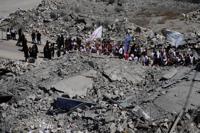
Participants in the annual Ashoura procession marched through Nabatiyeh in southern Lebanon on Friday, June 26, 2026, passing buildings destroyed by Israeli strikes. The event commemorates the martyrdom of Imam Hussein, a grandson of the Prophet Muhammad, and traditionally draws large crowds in the region. The procession, a significant religious observance for Shiite Muslims, proceeded along routes that brought attendees past widespread structural damage, showing the impact of recent military actions in the area. The solemnity of the religious observance was starkly juxtaposed with the visible destruction, creating a poignant backdrop for the mourners.
Context of Commemoration
Shiites commemorate the martyrdom of Imam Hussein, the grandson of the Prophet Muhammad, during Ashoura. The observance recalls the Battle of Karbala in the year 680 CE, where Imam Hussein and his companions were killed. For Shiite Muslims, Ashoura is a day of deep mourning and remembrance, symbolizing sacrifice, justice, and resistance against oppression. Processions and passion plays are common elements of the commemoration, during which participants often engage in self-flagellation and other acts of grief to express their sorrow and solidarity with Imam Hussein's suffering. The rituals serve to reinforce religious identity and community bonds among Shiite populations globally, including in southern Lebanon. The event is one of the most significant dates in the Islamic calendar for Shiites, reflecting their historical and spiritual heritage. The participation of large crowds in Nabatiyeh, despite the visible signs of conflict, noted the enduring importance of this commemoration.
Scene of Destruction
The Ashoura procession unfolded in Nabatiyeh, a city located in southern Lebanon. Participants traversed streets that exhibited extensive damage, including numerous buildings reduced to rubble. Residential structures and commercial properties along the procession route showed visible signs of destruction, with facades blown out and debris scattered across thoroughfares. The procession moved past these devastated areas, noting the impact of recent military actions on the urban landscape. The path taken by the mourners showed the widespread structural damage evident throughout parts of the city. Attendees walked through areas where entire sections of buildings were missing, leaving interiors exposed. The scene in Nabatiyeh presented a stark backdrop to the religious commemoration. The presence of these damaged structures served as a constant reminder of the ongoing regional tensions for those observing the procession.
Weather Watch Issued
Separately, a Flood Watch was in effect from Friday at 2:00 PM EDT until Saturday at 11:00 AM EDT. The watch encompassed counties in southeast Indiana, Kentucky, and Ohio, including Butler County, Ohio. Authorities stated that excessive runoff from rainfall could result in the flooding of rivers, creeks, streams, and other low-lying and flood-prone locations. Rounds of showers and embedded thunderstorms were anticipated, with the potential to produce locally heavy rainfall that might lead to flash flooding across the affected areas. Residents in these regions were advised to monitor weather conditions and be prepared for potential flooding impacts. The forecast indicated that the ground was already saturated in many areas, increasing the risk of rapid runoff.
Broader Implications
The procession in Nabatiyeh, as reported by the Journal-News, occurred amidst ongoing tensions in the region. The presence of buildings destroyed by Israeli strikes along the route showed the broader impact of military actions on civilian infrastructure in southern Lebanon. This convergence of a significant religious commemoration with visible destruction noted the challenges faced by communities in areas affected by conflict. The event offered a stark visual representation of the situation for participants and observers alike. The resilience of the community in holding such a significant event amidst these conditions was notable, drawing attention to both their steadfast faith and the ongoing humanitarian challenges faced by the residents of southern Lebanon.