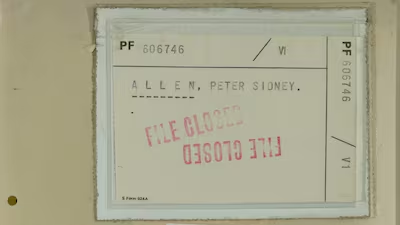
British Army desk sergeant Peter Allen sold Top Secret UK and US military plans to Iraqi and Egyptian embassy agents during 1965. MI5 and Special Branch identified and arrested Allen within one month and one day of the operation, which carried the codename Gospel.
Courtenay Young, a senior MI5 officer, noted: "Thanks to efficient co-operation and mutual goodwill we managed to clobber Gospel from the start to finish within a month and a day."
Peter Allen explained his motives: "I was desperate for money and the only way I could see of obtaining any was by use of the Top Secret documents." He added: "I would never have handed any information to any Soviet bloc countries and I only did what I did because I was in serious financial trouble."
Access and Financial Desperation
Peter Allen maintained sole access to two cabinets containing Top Secret documents while working at the Ministry of Defence. He utilized this position to facilitate the transfer of sensitive material to foreign agents. Investigators confirmed that Allen held a dozen meetings with these contacts, typically receiving £15 per meeting. Financial records indicate that Allen sought these funds to cover outstanding household bills while his wife remained hospitalized. He relied on the illicit payments to manage the family’s mounting expenses during her period of medical care. These transactions continued until his activities were identified by security services.
The Sting at Charing Cross
Chief Inspector Jock Wilson of Special Branch arrested Peter Allen on 16 March 1965. The apprehension occurred near Charing Cross Underground station in London. Authorities detained Maj Abdul Hafidh Khazal Al Abbassi, an assistant military attaché of the Iraqi embassy, alongside the sergeant during the operation. Officers subsequently released Maj Abdul Hafidh Khazal Al Abbassi due to his diplomatic immunity. The arrest concluded the security service investigation into the unauthorized transfer of classified materials. Peter Allen had been under surveillance by MI5 and Special Branch throughout the preceding weeks. Following the encounter at Charing Cross, officials processed the sergeant at New Scotland Yard for his role in the security breach.
Scope of the Stolen Secrets
The stolen documents compromised by Peter Allen included detailed strategic plans for providing military assistance to Lebanon and Kuwait. These files also contained sensitive technical information regarding specific weapons systems held by the UK and US. Security officials confirmed that the transfer of these materials constituted a significant breach of national security protocols during the sergeant’s tenure at the Ministry of Defence.
Legal proceedings against Peter Allen concluded with a sentence of 10 years in prison. The court delivered this verdict following his conviction for the unauthorized sale of classified information to foreign agents. His actions, which occurred over the course of his employment, involved the systematic removal and distribution of files that the government classified as Top Secret. Following the sentencing, the sergeant began his term of incarceration for his role in the security operation.