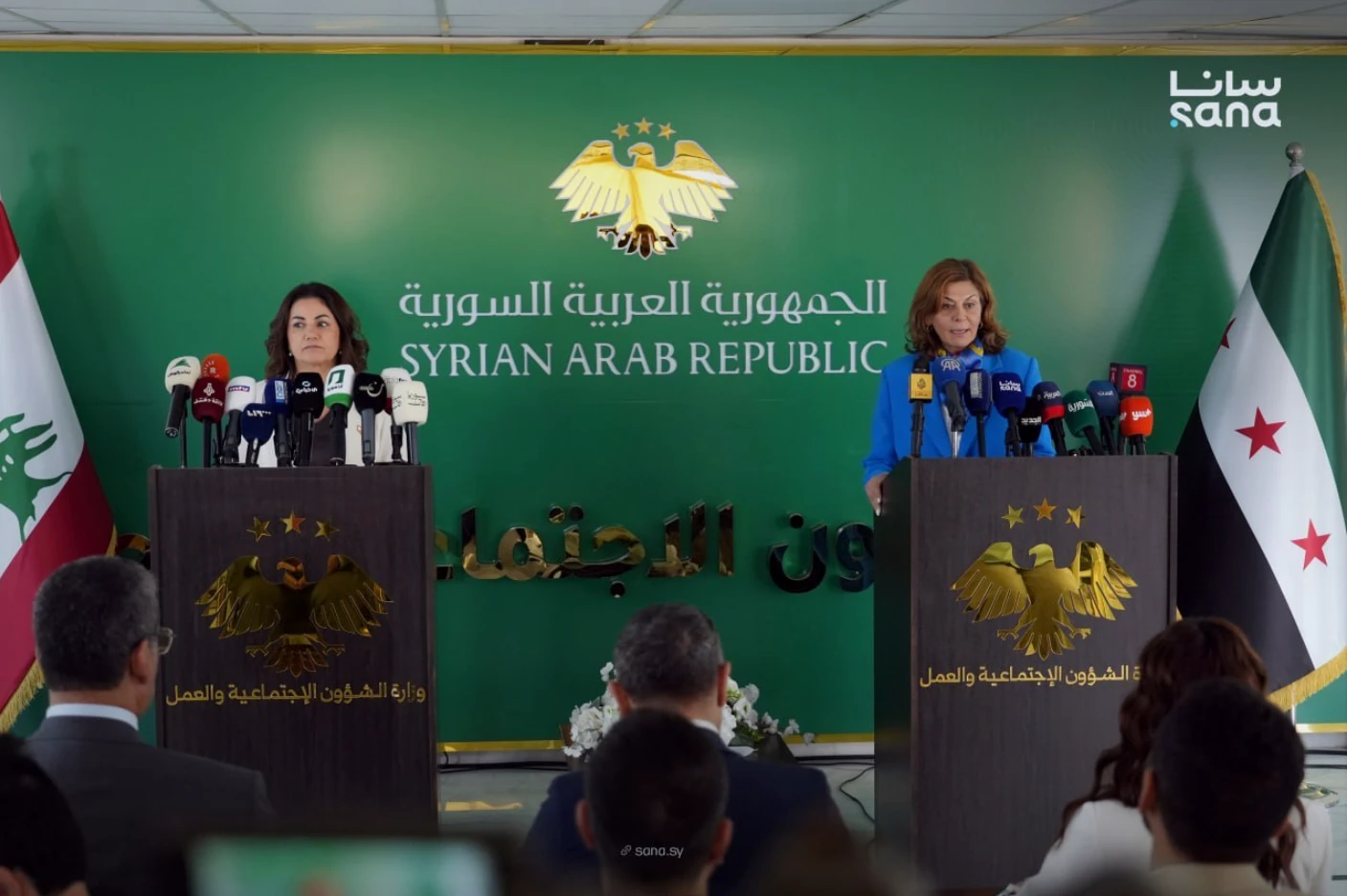
Syrian Minister of Social Affairs and Labor Hind Kabawat and Lebanese Minister of Social Affairs Haneen Sayed held a joint press conference in Damascus on 19 October 2026. The two officials met to discuss the coordination of refugee returns and shared social welfare initiatives between their respective nations. During the briefing, Hind Kabawat emphasized the government's focus on "the return of Syrians to their hometowns, child protection and the exchange of expertise in social protection." The dialogue between the ministers marks a move toward formalizing cooperation on humanitarian issues affecting displaced populations. Both ministers outlined plans to align their administrative efforts to support these social programs moving forward.
Refugee Repatriation and Social Cooperation
Lebanese Minister of Social Affairs Haneen Sayed stated during the joint press conference that 700,000 refugees have returned from Lebanon to Syria. These figures reflect the movement of displaced populations across the border as both nations look to stabilize social conditions following the end of the conflict. The process of tracking these returns involves close communication between the Syrian Ministry of Social Affairs and Labor and the Lebanese Ministry of Social Affairs. By sharing data on the movement of individuals, the two ministries aim to ensure that returning populations are accounted for within the national social welfare systems of Syria.
Syria and Lebanon are working to prepare a memorandum of understanding and a joint executive program regarding social protection systems. Officials from both ministries intend for these documents to provide a structured framework for managing welfare resources and humanitarian aid. The development of these administrative tools aims to harmonize how each state handles the needs of its citizens and returning populations. This collaboration specifically targets the logistical challenges inherent in cross-border population shifts, ensuring that social services are accessible to those transitioning back into their communities.
The Syrian civil war ended in December 2024 with the fall of the Assad regime. This transition serves as the foundational change in the political environment that enabled the current discussions between Hind Kabawat and Haneen Sayed. Representatives from both governments are now utilizing this period to establish new protocols for regional stability and civilian support.
The specific focus of the upcoming memorandum of understanding includes the integration of social protection databases. By aligning these systems, Hind Kabawat and Haneen Sayed hope to streamline the delivery of aid and social services. The joint executive program is expected to detail the technical aspects of this cooperation, including the sharing of best practices regarding child protection and the management of social welfare resources.
As the administrative teams from Damascus and Beirut continue their work, the emphasis remains on establishing a sustainable model for humanitarian support. The dialogue between the two ministers represents an ongoing commitment to addressing the long-term needs of populations affected by the conflict. Future meetings are planned to review the progress of these initiatives and to ensure that the memorandum of understanding remains responsive to the evolving requirements of the citizens and the returning refugees. Both governments have expressed a shared goal of fostering stable conditions that facilitate the reintegration of displaced individuals into the social and economic fabric of Syria.
