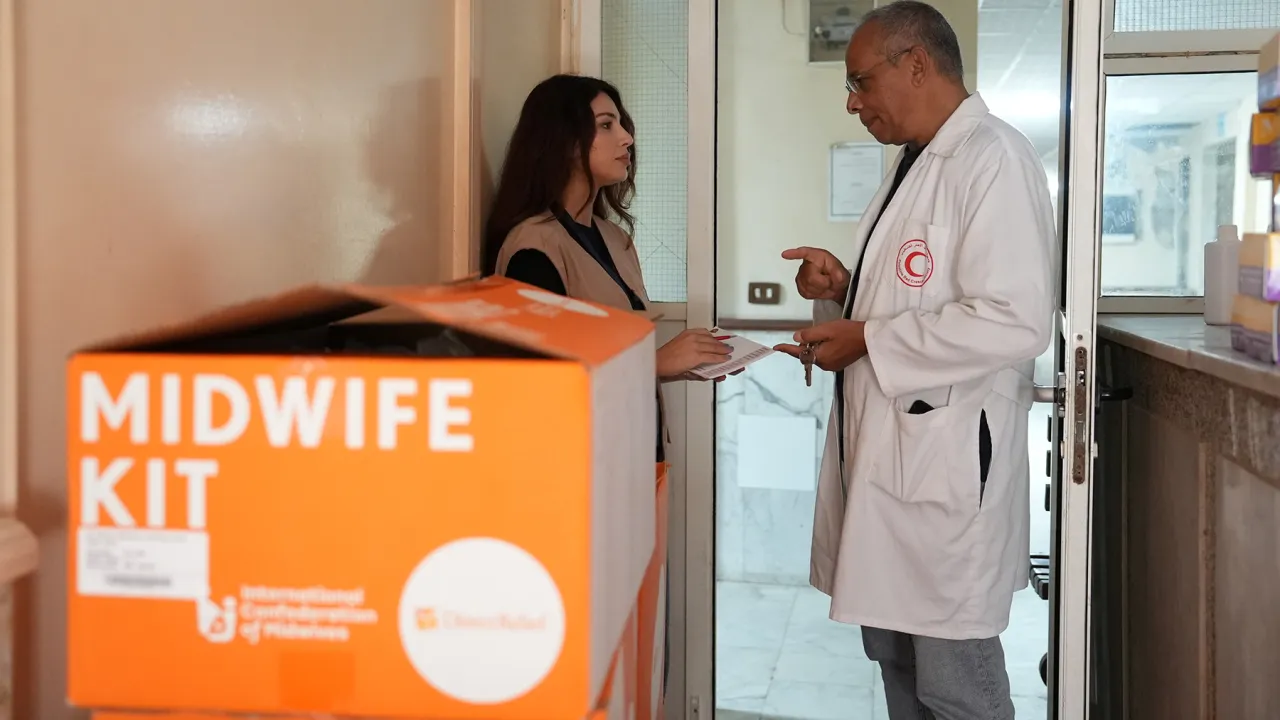
Anera recently distributed 31 reusable instrument kits and 56 consumable supply kits to eight hospitals across Lebanon to enhance maternity care. These Midwife Kits each support at least 50 standard deliveries, a donation that expands service capacity to approximately 1,550 safe births throughout the hospital network. The provision of these specialized kits ensures that medical facilities are better prepared to manage the complexities of childbirth. By supplying both reusable instruments and essential consumable materials, Anera aims to bridge the gap in resources that many healthcare providers currently face. This initiative specifically targets maternity wards where the demand for sterile and reliable equipment is constant.
Khalil Mhawesh, physician and director of Haifa Hospital, stated: "The donations that came to us from Anera and Direct Relief are very good. They contain several medications, medical supplies and medical equipment that we need in the maternity department." Regarding the impact of the aid, Khalil Mhawesh added: "Every resource provided to the hospital goes straight to the patient. The more support we receive, the better care we can deliver." The collaboration between Anera and Direct Relief has been instrumental in ensuring that these kits reached the intended facilities in a timely manner. The supplies are designed to integrate smoothly into existing hospital protocols, allowing staff to utilize them immediately upon arrival.
Haifa Hospital Operations Overview
Haifa Hospital, located in Beirut’s Burj El Barajneh Palestinian refugee camp, handles 30 to 35 deliveries each month. The facility serves a vital role in providing maternal health services to the local population, maintaining consistent operations despite the various logistical hurdles involved in managing a clinical environment. Khaldia Chabate has served as the head midwife at the facility for 37 years. Her long tenure has provided her with a deep understanding of the specific needs of mothers and newborns within the camp. Regarding the new supplies, she said, "The equipment we recently received has been wonderful. I put much of the new equipment straight into active use." Khaldia Chabate further noted, "Having a fully equipped neonatal unit of our own would transform our capabilities. It would allow us to save lives right here without the trauma and risks of urgent transfers."
The addition of these kits represents a significant step in bolstering the daily functions of the maternity department. For a facility that manages 30 to 35 deliveries every month, the availability of 31 reusable instrument kits and 56 consumable supply kits provides a necessary cushion for the medical team. This inventory management is critical for Khaldia Chabate, who oversees the daily clinical workflows.
Physician and director Khalil Mhawesh described the past challenges of operating the maternity department. "People were terrified to travel to the hospital. Reaching us during the height of conflict was fraught with fear," he stated. Khalil Mhawesh added, "We care about this section like the rest of the hospital departments. This is the ‘factory of generations.’" The hospital remains committed to maintaining its services, ensuring that the maternity ward continues to function as a cornerstone of the community, supported by the recent influx of essential medical resources.
