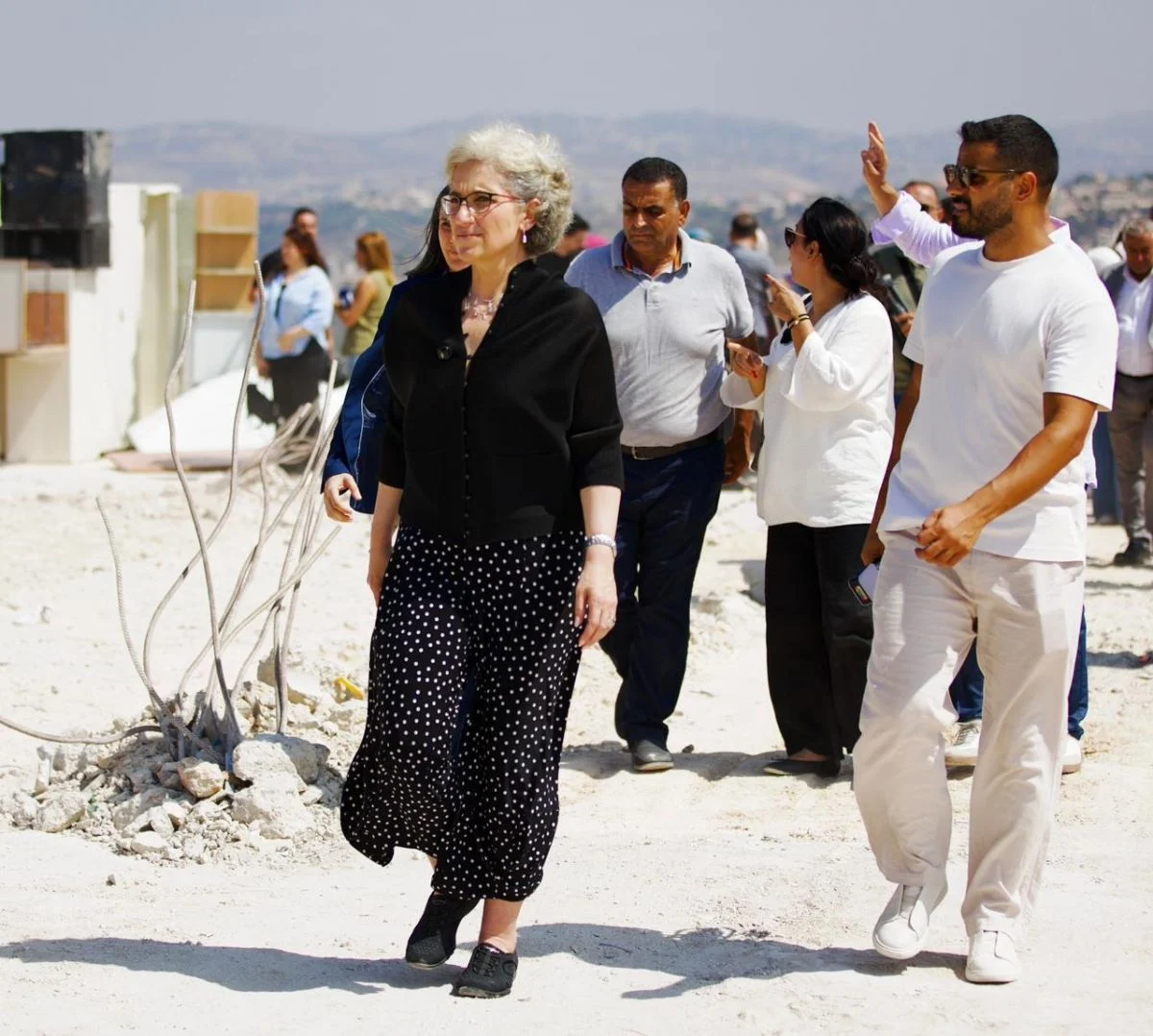
Lebanon's Education Minister Rima Karameh affirmed the government's commitment to ensuring continued education for students in southern Lebanon, announcing that some schools would begin the 2026 academic year with remote learning. Ms. Karameh toured several schools on Wednesday, September 2, 2026, visiting institutions in Nabatieh, Srifa, and the city of Sour. During her visit, Minister Karameh stated that "Continuing to invest in our children’s education is a response to Israel’s scorched earth policy." She also emphasized that "No one will be removed from a school without an alternative being offered," showing efforts to maintain educational continuity amidst the ongoing conflict. The minister's tour on Wednesday, September 2, 2026, provided a direct assessment of the educational landscape and the challenges faced by communities in the southern regions. Her presence in Nabatieh, Srifa, and Sour noted the government's direct engagement with the affected areas and its resolve to address the educational crisis.
Addressing Displacement and Damage
Hundreds of thousands of people remain displaced across Lebanon due to the ongoing conflict. This significant displacement has placed immense pressure on existing infrastructure and social services, including education. Many of these displaced individuals are currently sheltering in various facilities, including schools, which further complicates the reopening of educational institutions. For instance, in the village of Froun, schools are being utilized to house those who have been forced to leave their homes, creating a dual challenge of providing shelter while also preparing for the academic year. Froun is one of two non-occupied villages, alongside Srifa, that were designated as "pilot zones" by Washington, indicating areas of particular focus for relief or development efforts. These designations show the international recognition of the acute needs in these specific communities, where the impact of displacement and conflict on daily life, including education, is particularly severe. The widespread displacement necessitates full planning to ensure that all students, regardless of their current location, can access educational opportunities.
To address the immediate educational needs and infrastructure damage, plans are underway to install new facilities. In Burj Qalaway, for example, 17 prefabricated classrooms are slated for installation. This initiative aims to provide functional learning spaces for students whose regular schools may be inaccessible or damaged, contributing to the broader effort to ensure educational continuity for affected populations in southern Lebanon. The deployment of prefabricated classrooms is a key temporary measure designed to mitigate the immediate disruption caused by damaged school buildings and the ongoing security situation. This strategic intervention allows for the rapid establishment of safe and functional learning environments, ensuring that students do not fall behind in their studies. The scale of the damage and displacement requires flexible and adaptable solutions, and these temporary structures are a key component of the ministry's response.
Minister's Commitment and Strategy
Lebanon's Education Minister Rima Karameh outlined the ministry's strategic approach to educational continuity, emphasizing the importance of maintaining "in-person classes, wherever possible." Ms. Karameh affirmed that this commitment guides their planning for the academic year, reflecting a desire to restore a sense of normalcy and direct engagement in learning despite the prevailing challenges. The minister also provided assurances for displaced populations, stating that a "solution will be proposed" for residents who are unable to return to their original regions due to the ongoing conflict. This indicates a focus on adaptable educational provisions for those whose communities remain affected, acknowledging the long-term nature of displacement for many families. The commitment to finding solutions for displaced families shows the ministry's holistic approach, recognizing that educational access is deeply intertwined with the overall stability and well-being of affected populations. This strategy aims to prevent a lost academic year for thousands of students whose lives have already been uprooted.
Ms. Karameh further detailed efforts to address damaged or inaccessible school infrastructure. She confirmed that she is actively working to "provide prefabricated classrooms to guarantee continuity of education," a measure aimed at quickly establishing functional learning environments. This initiative is key for areas where permanent school buildings may be damaged or deemed unsafe for use, providing a rapid deployment solution for critical educational needs. Additionally, the ministry's plan includes a provision for students from schools located in high-risk areas. These students will be able to temporarily attend classes in nearby school buildings situated in safer locations, ensuring their access to education remains uninterrupted despite the prevailing security challenges. This flexible arrangement is vital for protecting students and educators from potential harm while maintaining their right to education. The ministry's multi-faceted approach, combining remote learning, prefabricated units, and relocation options, aims to cover all bases in a highly dynamic and challenging environment.
Voices from the Ground
Minister Rima Karameh's tour of educational facilities included visits to Froun and Burj Qalaway, two villages in southern Lebanon. During her visit, she met with Mansour Daou, the governor (mohafez) of southern Lebanon. This meeting facilitated direct communication between the central ministry and regional administration, allowing for a coordinated response to the educational crisis on the ground. The school in Froun, which serves as a critical educational hub in the area, recently underwent rehabilitation with funding provided by the Norwegian Refugee Council (NRC). This renovation aimed to restore facilities and ensure a conducive learning environment for students in the village, noting the key role of international partnerships in supporting local educational infrastructure. The collaboration with organizations like the NRC is essential for addressing the extensive damage and resource gaps in conflict-affected regions.
The ongoing challenges to education in the region have drawn attention from international organizations. Two months prior, UNICEF issued a warning regarding the potential disruption to schooling for a significant number of Lebanese students. The United Nations agency cautioned that at least 100,000 students might be unable to attend school for the upcoming term if urgent measures were not implemented. UNICEF emphasized the necessity of rehabilitating schools damaged by the ongoing conflict before the start of September to prevent widespread educational discontinuity. These concerns show the immediate need for infrastructure repair and logistical support to ensure student access to education. The warning from UNICEF serves as a stark reminder of the scale of the crisis and the urgency required to protect the educational future of Lebanese children. The combined efforts of the Lebanese government and international partners are critical to overcoming these formidable obstacles and ensuring that education remains accessible to all students in southern Lebanon.