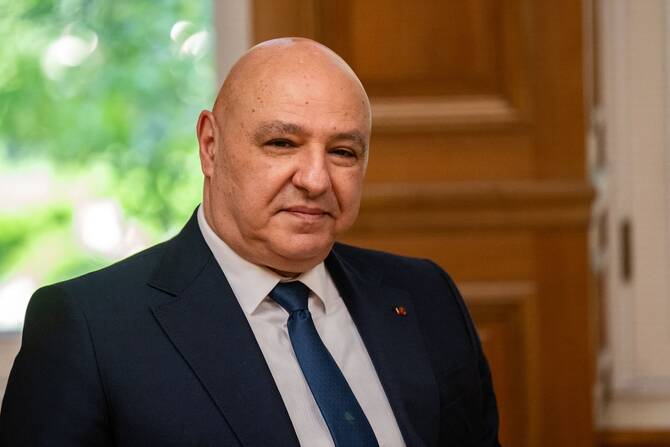
Lebanese President Joseph Aoun on Monday asked Greece for assistance in implementing a US-sponsored agreement with Israel, emphasizing that the deal requires bilateral action. The request, made in Athens, follows a framework agreement signed by Israel and Lebanon in late June. President Aoun stated, "The framework agreement… cannot be implemented unilaterally. It needs to be implemented on both sides," during his discussions. He further appealed for Greek diplomatic support, noting, "We request Greece’s assistance as much as possible to help Lebanon." President Aoun also asserted that a military resolution to the ongoing issues would be unsuccessful, stating, "Solving the problem by military force will not succeed." This plea for support shows Lebanon's precarious position amidst regional conflicts and its efforts to secure stability through diplomatic means. The Lebanese government views the implementation of this agreement as a critical step towards de-escalation and securing its southern border.
Framework Deal Details
The framework agreement between Israel and Lebanon, signed in late June, includes several key provisions designed to de-escalate tensions and establish a more stable security environment. A central component of the deal calls for the disarmament of Hezbollah, a powerful Iran-backed group that has played a significant role in recent conflicts. Additionally, the agreement outlines a phased withdrawal of Israeli forces from south Lebanon, a region that has historically been a flashpoint for conflict. Concurrently, the agreement stipulates the deployment of the Lebanese army to the area vacated by Israeli troops, aiming to assert state control and establish legitimate security forces in the region.
Lebanon is actively seeking a renewal of the mandate for the United Nations Interim Force in Lebanon (UNIFIL) peacekeeping force. This renewal is considered key for maintaining stability during the transitional period outlined in the framework agreement. UNIFIL's current mandate is set to expire at the end of this year, making its renewal a pressing diplomatic objective for Beirut as it navigates the implementation of the US-sponsored deal. The proposed steps aim to stabilize the southern border region and establish a more permanent security arrangement under Lebanese state control, following the terms outlined in the bilateral framework. The presence of UNIFIL is seen by Lebanon as an essential element for ensuring the phased withdrawal of Israeli forces and the subsequent deployment of its own army proceeds smoothly and without further incidents. However, the path to renewal is not without obstacles, as the United States and Israel have stated their opposition to a renewal of UNIFIL’s mandate, adding another layer of complexity to Lebanon's diplomatic efforts.
Regional Dynamics and Arms Trade
The broader regional context surrounding these diplomatic efforts includes significant military and political developments. Greece and Israel announced a multibillion-dollar arms deal on Monday, noting strengthening defense ties between the two nations. Greece confirmed its purchase of a $3.5 billion aerial defense system from Israel, a significant acquisition that reflects evolving security priorities in the Eastern Mediterranean. This development comes as the United States and Israel have stated their opposition to a renewal of the United Nations Interim Force in Lebanon (UNIFIL) peacekeeping mission's mandate. The UNIFIL mandate is set to expire at the end of the current year, creating uncertainty about the future of international peacekeeping efforts in the volatile region.
The security situation in the region remains a central point of international diplomatic efforts and bilateral agreements, with Lebanon bearing a heavy cost from ongoing conflicts. The regional context of these developments includes significant casualties and destruction in Lebanon. Israeli attacks since the latest war erupted have resulted in the deaths of more than 4,300 people in Lebanon. These attacks have caused widespread damage, destroying between 60 and 70 villages across the country, displacing thousands and creating a humanitarian crisis. The extensive destruction shows the urgency of finding lasting diplomatic solutions and implementing agreements that can bring an end to hostilities and allow for reconstruction and recovery.
Lebanon's Plea for Support
In an effort to de-escalate hostilities in the region, Israel and Lebanon initiated direct talks aimed at finding a resolution to ongoing tensions. This diplomatic engagement seeks to find a resolution to ongoing tensions and pave the way for a more peaceful coexistence. Lebanese President Joseph Aoun's direct appeal to Greece for support in implementing the US-sponsored agreement with Israel notes the multilateral nature of the challenges facing Beirut.
In response to Lebanon's request for assistance, Greek Prime Minister Kyriakos Mitsotakis affirmed Greece's commitment to the country's stability. Prime Minister Mitsotakis stated Greece supported 'the sovereignty, independence and unity of Lebanon', signaling Athens' diplomatic backing for Beirut. This statement provides key political support for Lebanon as it navigates complex regional dynamics and seeks international validation for its efforts to restore peace and security. The broader regional conflict has significantly impacted Lebanon, which was drawn into the Middle East war in March by Iran-backed Hezbollah. This involvement has led to severe humanitarian consequences within the country, exacerbating existing economic and political fragilities. Israeli attacks have resulted in more than 12,000 people wounded in Lebanon, adding to the extensive damage and casualties reported previously. The ongoing violence shows the urgency of diplomatic efforts and international support for Lebanon, as the country grapples with the human and infrastructural costs of prolonged conflict and seeks to implement agreements designed to secure its future.