Lebanon's Finance Ministry has denied that Iraq requested financial or banking information concerning corruption cases, amidst Baghdad's ongoing crackdown on illicit financial activities. The ministry stated that no such requests or corresponding communication had been received from Iraqi authorities regarding these matters. Lebanon’s Finance Ministry affirmed that reports of requests exchanged with Iraq over corruption cases “are completely and entirely untrue,” according to an official statement. This denial comes as Iraq intensifies its efforts to combat corruption and recover illicitly obtained funds.
Official Channels Denied
Lebanon’s Finance Ministry clarified that any request for information must follow established protocol. Such requests "can only be made through official correspondence between the governments, ministries and competent authorities of the two brotherly countries, in accordance with established procedures and approved official channels," the ministry stated. The ministry showed that official procedures are critical for any such bilateral exchanges. Access to banking records, it added, remains subject to legal procedure and runs through legally authorized bodies. The ministry emphasized that banking records "are not files that can be carried around and distributed upon request." The ministry further characterized the reports of such requests as fabrications with no connection to any official procedure, dismissing them as baseless.
Lebanon's Banking Secrecy
Lebanon's parliament has taken steps to address financial transparency, having lifted banking secrecy. This legislative action has been a subject of ongoing discussion within the country regarding its potential implications for financial oversight and international cooperation on matters of corruption. The move is significant given the country's historical banking practices, which have long been characterized by stringent secrecy laws. The decision to lift banking secrecy was made in an effort to enhance transparency and align Lebanon's financial regulations with international standards, particularly in the context of combating illicit financial flows and money laundering. This legislative change aims to facilitate greater scrutiny of financial activities within the Lebanese banking sector.
Iraq's Anti-Corruption Drive
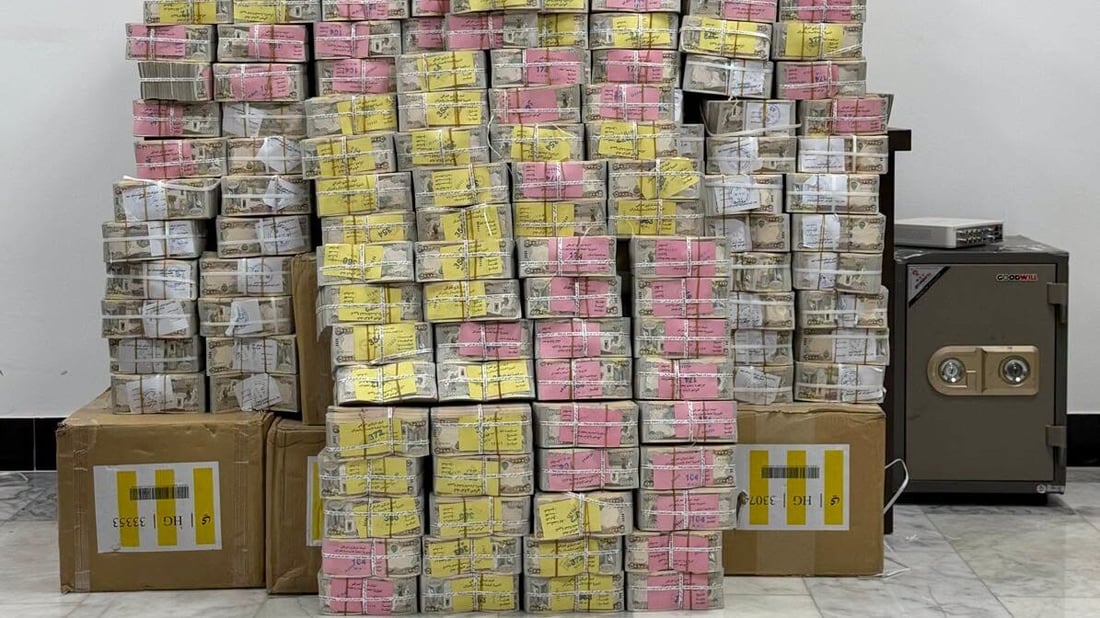
Iraq’s anti-corruption campaign has expanded significantly since the arrest of former Deputy Oil Minister Adnan al-Jumaili in May. This broad campaign is part of Baghdad's concerted effort to recover state funds and prosecute individuals involved in financial misconduct. By mid-August, the crackdown had yielded approximately 82 billion dinars and $152 million in cash, along with 484 kilograms of gold, demonstrating the scale of the assets being targeted. More recently, investigators on Monday seized an additional 7 billion dinars, $5.5 million, 35 properties, and six vehicles from al-Jumaili’s detained office director, further noting the ongoing nature of these investigations. Separately, Iraqi banks have been instructed to compile databases detailing the financial information of politicians and their relatives up to the third degree, as Baghdad intensifies efforts to combat illicit financial activities and identify potential avenues for corruption. These measures are designed to create a full overview of financial holdings among public figures and their close associates.
Alleged Offshore Assets
Former Iraqi lawmaker Sajad Salem alleged in June that one unnamed Iraqi armed faction possesses assets valued between $6 billion and $10 billion held outside Iraq. Salem claimed these substantial assets are distributed across multiple countries, indicating a complex network of offshore holdings. The former lawmaker stated that the alleged holdings are located in Spain, Italy, Lebanon, Turkey, Iran, various Gulf states, and Russia. These allegations show the international dimension of Iraq's corruption challenges and the potential for illicit funds to be moved across borders, making international cooperation key for recovery efforts. The reported presence of assets in Lebanon adds another layer to the ongoing discussions about financial transparency and cross-border information exchange.