U.S. Strikes conducted on Tuesday evening in Iran resulted in the deaths of at least 11 individuals, including four members of the Islamic Revolutionary Guard Corps. The incidents follow a separate Israeli drone strike on Wednesday morning in Lebanon, which killed Hezbollah member Mohammad Dayekh in the town of Nabatieh. These events unfolded after two supertankers carrying Saudi oil were hit by unidentified projectiles late on Monday while transiting outbound through the Strait of Hormuz. The strikes on the vessels occurred within minutes of each other, raising concerns about maritime security in the critical waterway. The U.S. Actions in Iran mark a significant escalation, targeting facilities linked to the recent regional tensions. Meanwhile, the Israeli operation in Nabatieh district continues a series of targeted actions in southern Lebanon. The attacks on oil tankers in the northern Gulf further complicate the volatile security situation in the broader Middle East.
Iran's Retaliatory Strikes
Iran’s Islamic Revolutionary Guard Corps claimed responsibility for a series of drone and missile attacks that targeted U.S. Bases located in Kuwait, Bahrain, the United Arab Emirates, Jordan, and Erbil, in Iraq’s Kurdistan region. The IRGC’s statement came after the U.S. Armed forces attacked two oil tankers belonging to the Iranian government on Tuesday. This U.S. Action was described as part of a new "tanker-for-tanker" policy.
Two people were confirmed dead following an attack on Saudi oil tankers earlier in the week. Saudi Arabia's Foreign Ministry stated Iran had hit a Saudi oil tanker while it passed through the Strait of Hormuz, resulting in fatalities among the crew. Specifically, two Filipino crew members were killed on board the oil tanker SIDR in the Strait of Hormuz two days prior. The IRGC had announced that two oil tankers were on fire in the Strait of Hormuz after hitting mines. The two supertankers carrying Saudi oil were struck by unknown projectiles within minutes of each other while transiting outbound through the Strait of Hormuz late on Monday, an incident that left two people dead.
Separately, in Lebanon, two airstrikes targeted Qantara in Marjayoun. These strikes were part of a broader pattern of military activity in the border region. Israeli artillery shelling also targeted the outskirts of Khiam in Marjayoun and Mansouri in Sour. The Israeli army carried out several strikes in the Nabatieh area at dawn. Israeli forces also conducted explosions in Houla and targeted this village and Qantara, both in Marjayoun, with artillery fire. Further movements of Israeli military vehicles were reported in Haddatha. These movements show the heightened military presence in the area.
Israel's Escalation in Lebanon
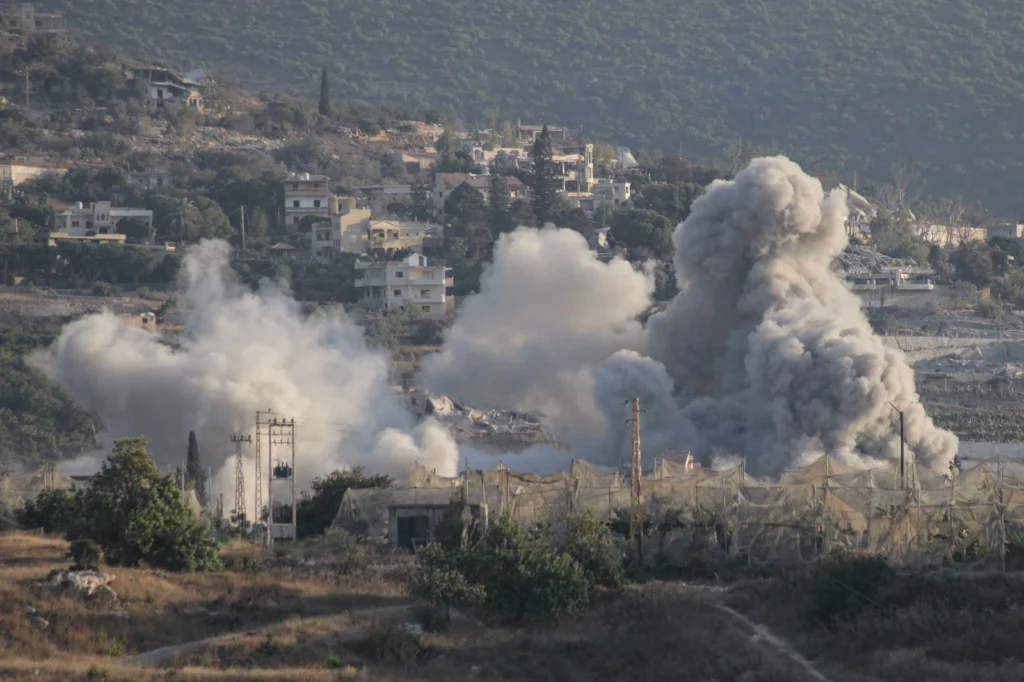
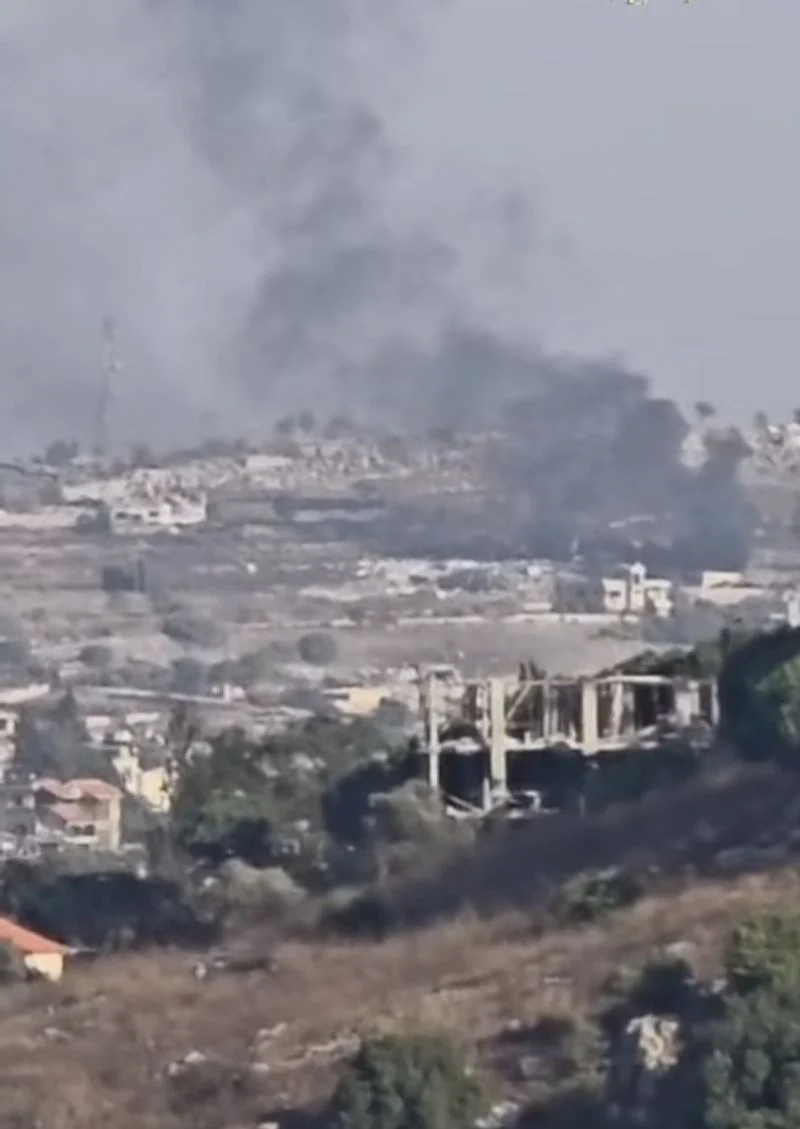
Israel carried out a powerful and sustained bombardment of the Ali Taher ridge and surrounding areas in southern Lebanon’s Nabatieh district, including Arab Salim, until dawn. This extensive operation involved multiple engagements throughout the day and night. In the evening, Israel conducted seven strikes in southern Lebanon, with three specifically targeting Ali Taher. An Israeli airstrike aimed at the outskirts of Haris in Bint Jbeil destroyed a house, adding to the damage in the region.
The Israeli army stated it had "struck terrorist infrastructure in the Nabatieh area," claiming the strikes were in response to "the launch of two attack drones by Hezbollah overnight" targeting its soldiers in the Ali Taher ridge area.
Israeli Defense Minister Israel Katz stated that Israeli fighter jets are "ready to take off" if the Iranians decide to attack Israel. Katz remarked, "We are prepared for a possible attack. They like to attack during Jewish festivals." He added, "If we are attacked, we will retaliate forcefully, without any restraint." Katz further noted, "We take all information seriously. We do not want to be caught off guard. The Israeli army is ready to attack Iran." The Israeli Defense Minister reiterated that Israeli fighter jets are "ready to take off" if the Iranians decide to attack Israel "because of its operations in Lebanon, the West Bank, or Gaza, or simply because they feel like it."
A small Israeli drone dropped explosive materials on the Ali Taher heights on August 16, 2026. This incident notes the variety of tactics being employed in the conflict. Separately, Israeli warplanes carried out a strike targeting Ali Taher hill in Nabatieh, but the missile did not detonate. Israeli warplanes also conducted three strikes targeting Nabatieh Fawqa in Nabatieh. Airstrikes additionally targeted Qantara in Marjayoun.
Heavy artillery shelling targeted Wadi Zibqin in Sour and the outskirts of Braasheet in Bint Jbeil. These shellings indicate a broad scope of operations across southern Lebanon. Israeli forces carried out a demolition in Beit Lif, located in Bint Jbeil, and in Houla, part of Marjayoun. These demolitions suggest a strategy of impacting infrastructure in these areas. Israeli army tanks were observed moving along the northern outskirts of Mais al-Jabal in Bint Jbeil, specifically in the al-Shandibeh and Wadi al-Jamal areas, reaching the western outskirts near Doubeih Castle. An Israeli drone also fired a stun grenade on the village of Yater. In Mansouri, located in Sour, Israel has carried out explosions, home demolitions using bulldozers, and rounds of targeted artillery fire. The Israeli army is also setting fire to several homes in the town of Arnoun, in the Nabatieh district. These actions in Arnoun further illustrate the intensity of the ongoing operations.
Regional and International Reactions
The Iranian foreign ministry condemned a U.S. "war crime" following a strike on a wedding in the Hormozgan region on Tuesday evening that killed at least four people. Mohammad Baqer Ghalibaf, spokesperson for the Iranian Parliament, called the United States the "Great Satan" after U.S. Air strikes killed people at a wedding in Iran the previous night. The Gulf Cooperation Council condemned Iran’s retaliatory attacks against Bahrain, Kuwait, and Jordan, describing them as “heinous.”
U.S. Treasury Secretary Scott Bessent stated on Wednesday that airlines, maritime companies, and digital assets could be targeted by U.S. Sanctions over Iran. Bessent added, "We’re going to systematically take out bad actors." Chinese President Xi Jinping announced that Beijing is ready to help Middle Eastern countries “ensure the safety” of shipping in the region.
Hezbollah confirmed in the afternoon that Mohammad Dayekh was one of its members. Dayekh was from the town of Jwayya, in the Sour district. The Israeli army said in a statement that it had “struck terrorist infrastructure in the Nabatieh area.” The Israeli army is on high alert against the backdrop of a fresh escalation between Iran and the United States, which reignited on Monday evening. Israeli forces carried out detonations in Markaba, located in Marjayoun, and Kfar Tibnit, in Nabatieh. Since midday, Israel has carried out an airstrike targeting Nabatieh Fawqa. Israel has also set fire to homes in Tallousa, in the Marjayoun district. A massive explosion was also carried out by the Israeli army in the town of Kfar Tibnit. This explosion shows the scale of military actions in the area.
Broader Context and Future Outlook
Iran's health ministry reported that overnight U.S. Attacks killed 18 people and wounded at least 108 individuals. These casualty figures highlight the severe impact of the U.S. Strikes. The Islamic Revolutionary Guard Corps (IRGC) announced the deaths of three members of the Basij paramilitary in a U.S. Strike on the island of Lavan. Three Basij fighters were martyred during the attack carried out last night by American criminals against the island of Lavan. Concurrently, Iranian border guards seized a vessel carrying 382,000 litres (101,000 gallons) of smuggled fuel in the northern Gulf and arrested 11 crew members. Iran’s top security official, Mohsen Rezaei, warned the United States that it would face a “new strategy” in the Middle East war. Separately, medium machine-gun fire targeted the direction of Wadi Slouqi in Bint Jbeil. An unidentified person was wounded in a strike on Nabatieh, where artillery fire also targeted Zawtar Sharqieh. Another, unidentified person was wounded in the strike on Nabatieh. Artillery fire further targeted Qantara in the Marjayoun region. The continuous artillery fire in these areas points to sustained military engagement.