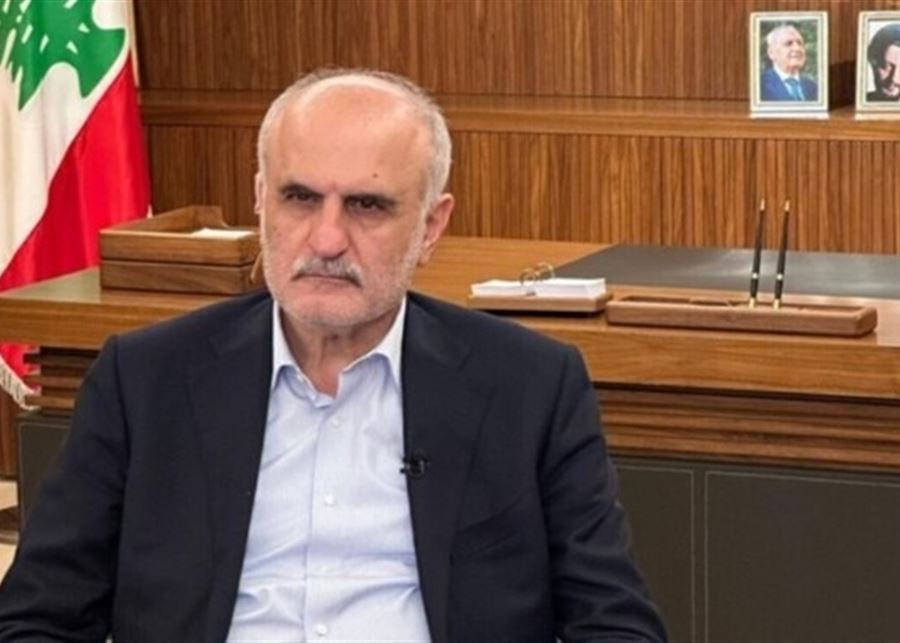
Ali Hassan Khalil addressed a memorial service for Ahmed Danash and Hussein Khalifa held at the Ghaziyeh Husseiniya on 22 October 2026. During his remarks, Ali Hassan Khalil warned that offering unconditional concessions will only encourage further Israeli aggression. The memorial service served as a platform for him to articulate his political stance on both regional threats and the current state of domestic security.
Regarding internal security concerns, Ali Hassan Khalil stated: "I believe that President Aoun will not accept a repeat of the events of 7 May, and if something similar happens, the army will intervene. I trust the army commander if he receives the orders properly, and then he will carry them out or resign, noting that the army commander is on the other political side."
Security and Army Intervention
Ali Hassan Khalil maintains that the Lebanese Army remains the primary institution capable of maintaining order should internal stability face a collapse similar to the 7 May 2008 unrest. He asserts that the military command would execute its mandate to restore security, contingent upon receiving formal directives from the executive leadership. According to his assessment, the military structure possesses the operational capacity to prevent a recurrence of those events, provided that the chain of command functions according to legal and administrative protocols.
Political differences within the state apparatus complicate this reliance on the military, Ali Hassan Khalil acknowledged. He pointed out that the current Army Commander holds positions within a different political camp than his own. Despite this divergence in political affiliation, he expressed a belief that the military leadership would prioritize its institutional duties over partisan interests when faced with a significant threat to national security. He suggested that the Army Commander would either carry out formal orders to intervene or choose to resign his position if the command structure were compromised. This perspective emphasizes a reliance on the existing military hierarchy as a necessary buffer against domestic volatility.
The remarks made at the Ghaziyeh Husseiniya highlight the ongoing tension between political factions in Lebanon. Ali Hassan Khalil’s focus on the memorial for Ahmed Danash and Hussein Khalifa shows the gravity of the current security environment. By explicitly referencing the potential for a repeat of the 7 May 2008 events, he signaled a deep concern regarding the fragility of the status quo. His confidence in the Lebanese Army is balanced by a clear recognition of the political divides that permeate the country’s security institutions. For Ali Hassan Khalil, the prevention of further Israeli aggression and the maintenance of internal stability are inextricably linked to the decisive role of the military, provided it functions under a clear and unified chain of command. The expectation that the Army Commander would act or resign if faced with an impasse reflects a rigid view of institutional accountability. Ultimately, his statements serve as a public declaration of his expectations for the state apparatus during periods of heightened uncertainty and potential conflict.